


Disclosure: This article contains affiliate links. We may earn a commission from purchases at no extra cost to you, which helps our travel content.
The pre-dawn light was breaking through my hostel window in Asunción when I laced up my running shoes for a morning jog along the Paraguay River. This wasn't a training run for my next marathon, but rather my favorite way to scout a new city's rhythm before diving into its flavors. Paraguay has been whispering to me for years – an overlooked culinary destination sandwiched between Brazil and Argentina's louder gastronomic reputations. But as I've learned from countless monastery kitchens across Asia and record shop recommendations in Eastern Europe, the quietest places often hold the most authentic treasures. This weekend journey through Lambaré and Asunción would prove no different – a budget-friendly expedition into a food culture where indigenous Guaraní traditions dance with Spanish colonial influences, creating something uniquely Paraguayan that few travelers ever truly taste.

Finding Paraguay's Soul in Mercado 4
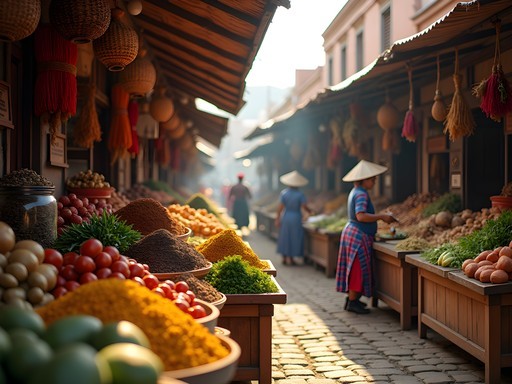
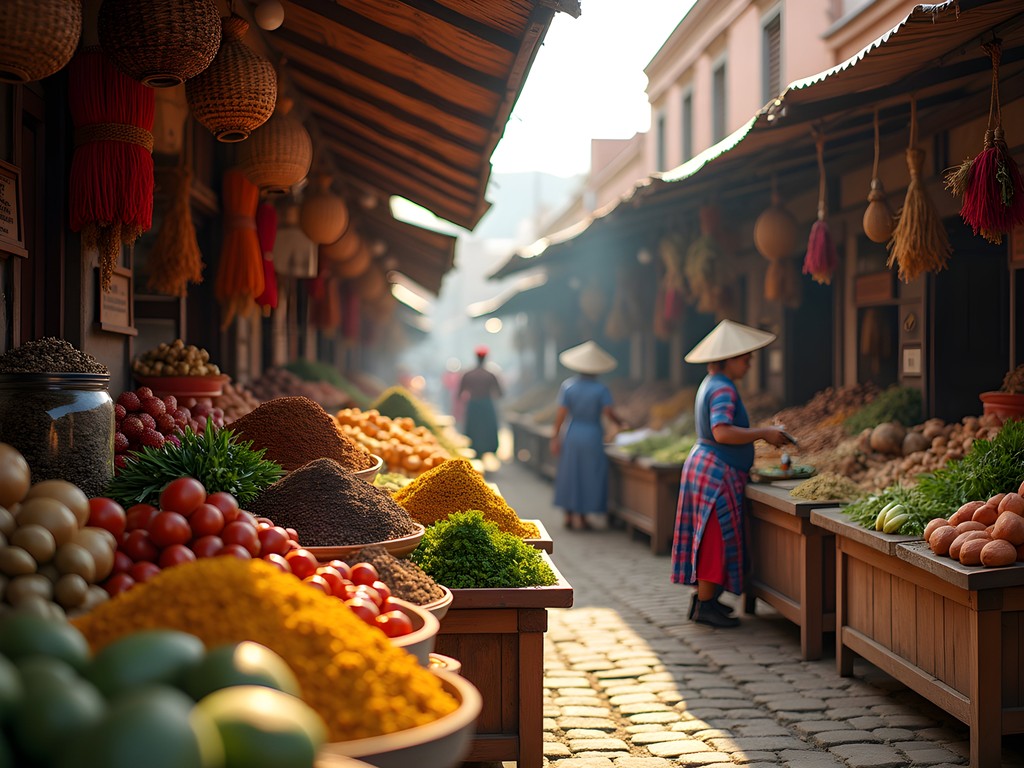
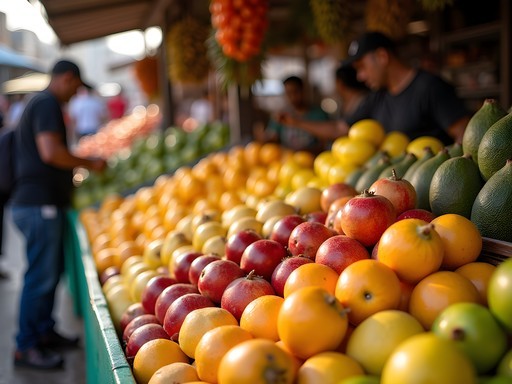
Every city has a beating heart, and in Asunción, it's undoubtedly Mercado 4. Unlike the sanitized markets that populate Instagram feeds, this sprawling labyrinth of commerce feels like stepping into Paraguay's living room – messy, authentic, and pulsing with life. I arrived just after 7 AM, when the market was already humming but before the midday heat turned the narrow pathways into saunas.
Navigating Mercado 4 requires the same mental focus as kilometer 30 of a marathon – stay present, mind your surroundings, and trust your instincts. Vendors called out prices in a melodic mix of Spanish and Guaraní that reminded me of the linguistic tapestry I'd encountered in monasteries across Thailand. I followed my nose to the food section, where women in traditional dress tended to massive pots of vori vori (chicken soup with corn dumplings) and so'o yosopy (meat soup with rice).
The market's crowning glory is its yerba mate section. Paraguay consumes more of this caffeine-rich tea than anywhere else, but they drink it differently – cold. Tereré, as it's called, is served in a guampa (traditionally a hollowed cow horn) and sipped through a metal straw called a bombilla. I purchased my own setup from a weathered vendor who patiently demonstrated the proper technique while explaining how different herb additions (yuyos) can heal various ailments.
"This isn't just a drink," she told me in Spanish, "it's our history in a cup."
I left with my new travel thermos filled with ice-cold tereré, already understanding that in Paraguay, food and drink are inseparable from identity.
💡 Pro Tips
- Arrive at Mercado 4 before 10 AM to avoid the most intense crowds and heat
- Keep small bills handy as most vendors don't accept cards or make change easily
- Ask before taking photos of vendors – a small purchase first goes a long way
The Humble Chipa: Paraguay's Bread of Life
My second day began with a pilgrimage that every food-loving visitor to Paraguay must make – tracking down the perfect chipa. These cheesy bread rings, baked with cassava flour and cheese, are to Paraguay what bagels are to New York or croissants to Paris. But unlike their famous cousins, chipas remain largely unknown beyond South America's borders.
The secret to finding exceptional chipa is timing. The best batches emerge from wood-fired ovens around 6 AM, which meant another early morning. I headed to Lambaré, a city adjacent to Asunción, where a local runner I'd connected with online promised the best chipa in the country.
"Follow the smoke," were his cryptic instructions, and sure enough, the thin wisps rising from behind a modest home led me to a family operation where three generations worked in synchrony around an earthen oven. The grandmother shaped the dough with practiced hands that reminded me of the Buddhist nun who taught me to make rice balls in a mountain monastery outside Kyoto.
I watched transfixed as dozens of golden rings emerged from the oven, their aroma creating what I can only describe as an olfactory embrace. The first bite was a revelation – crisp exterior giving way to a chewy, cheese-infused interior with a subtle tanginess that lingered. I purchased a dozen for less than $2 USD, carefully wrapping them in the reusable food wraps I always carry for spontaneous food discoveries.
Later that morning, I joined locals at a nearby plaza, where everyone from businesspeople to schoolchildren paused their morning commutes for chipa and tereré. This, I realized, is Paraguay's version of coffee break culture – a democratic ritual that transcends social boundaries and connects the community through shared flavors.

💡 Pro Tips
- Look for chipa vendors with wood-fired ovens (not electric) for the most authentic version
- Chipas are best eaten fresh and warm, ideally within hours of baking
- Try different varieties – some contain anise seeds or are made with different cheeses
Asunción's Hidden Culinary Temples
While researching Paraguay's food scene, one name kept appearing in local forums but was conspicuously absent from major travel guides: Bolsi. This unassuming restaurant in downtown Asunción has been serving traditional Paraguayan cuisine since 1960, unchanged by time or tourism. It was here I sought refuge from an unexpected afternoon thunderstorm that transformed Asunción's streets into temporary rivers.
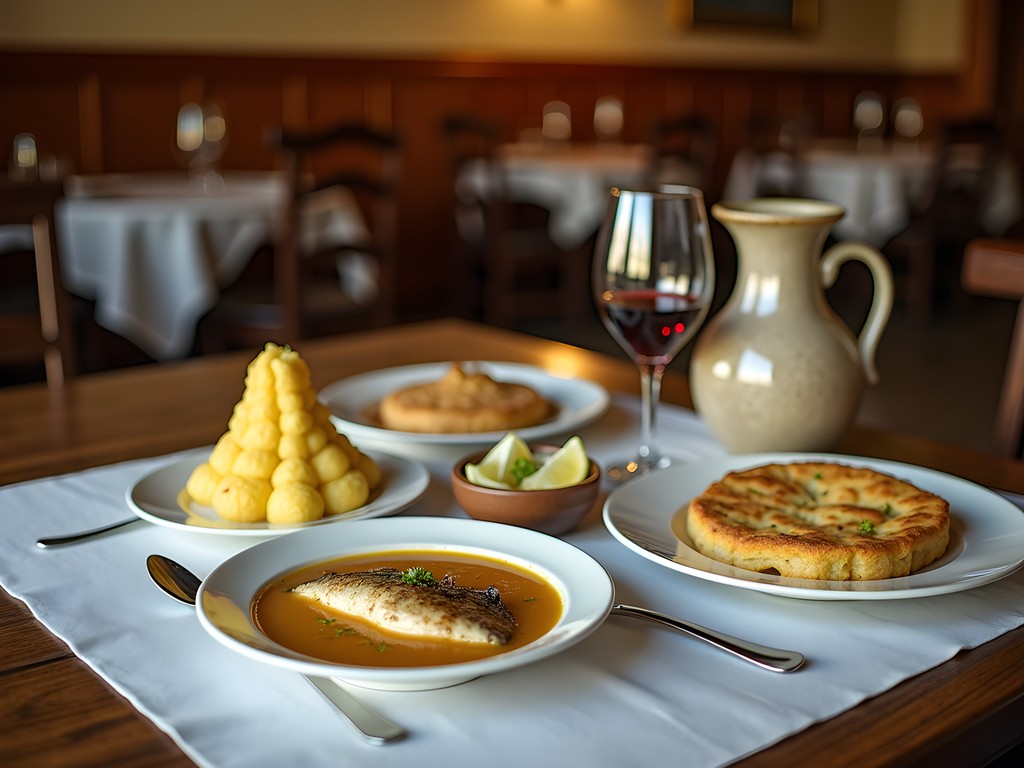
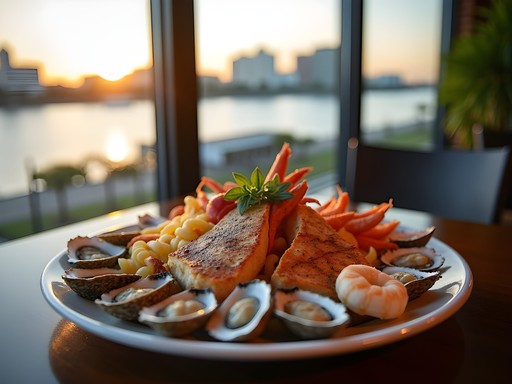
Bolsi's interior feels like stepping into a time capsule – wood-paneled walls adorned with vintage photos, ceiling fans spinning lazily overhead, and waiters in crisp white shirts who've been serving the same recipes for decades. The menu is an encyclopedia of Paraguayan classics, but I came for the holy trinity: sopa paraguaya (a dense corn bread that, despite its name, isn't soup at all), mbejú (a starchy pancake made from cassava starch and cheese), and surubí (a river fish that's the pride of Paraguay's waterways).
The portions were generous enough that my budget-conscious heart rejoiced – one meal here could easily fuel a marathon training session. Each dish arrived with minimal presentation but maximum flavor, the kind of food that makes you close your eyes involuntarily with the first bite.
For dessert, I ordered dulce de mamón, a sweet made from papaya preserved in sugar syrup and spices. The waiter noticed my enthusiasm and brought over a small extra portion of dulce de leche, explaining that while Argentina claims it as their own, Paraguayans have been making it just as long.
Beyond Bolsi, I discovered that Asunción's most authentic culinary experiences often hide in plain sight. Street vendors selling empanadas de so'o (beef empanadas) appeared on corners at dusk, their portable carts equipped with nothing more than a fryer and a smile. Near the National Cathedral, I found an elderly woman selling cocido paraguayo, a hot yerba mate drink caramelized with sugar and served with milk – the perfect companion for my pocket travel journal as I documented the city's flavors while watching the evening promenade of locals.
💡 Pro Tips
- At Bolsi, ask for a table near the window for people-watching along Calle Estrella
- Many traditional restaurants close between lunch and dinner (2-6 PM), so plan accordingly
- Look for places filled with locals during their lunch hour – always a good sign

Lambaré's Sunset Food Ritual
My most profound food experiences often come from following locals rather than guidebooks. This philosophy led me to Lambaré's Eco-Reserva, where I initially went for an evening training run but stayed for an unexpected culinary revelation.
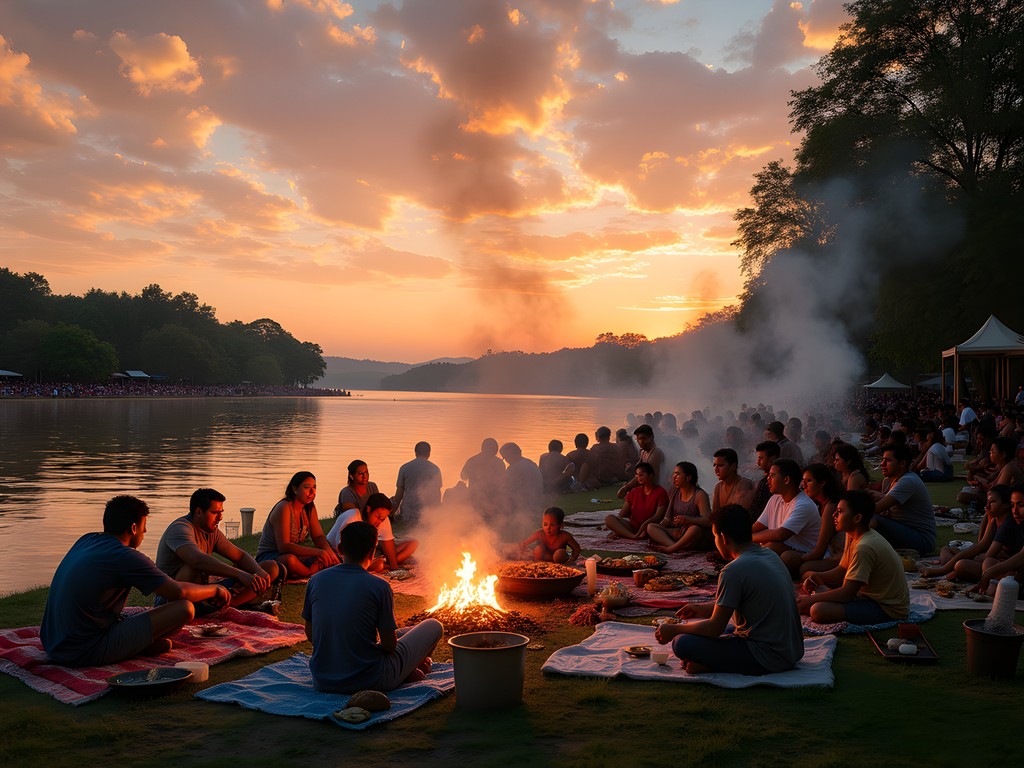
As the sun began its descent over the Paraguay River, families started arriving with coolers, thermoses, and folding chairs. What looked like a casual picnic was actually an elaborate communal ritual centered around food and sunset. I slowed my pace, eventually stopping to observe as blankets unfurled and grills materialized from car trunks.
A middle-aged couple noticed my curious glances and waved me over with the universal gesture of food sharing. Carlos and Elena, as they introduced themselves, were celebrating their anniversary with a sunset asado (barbecue). Before I could protest, a plate appeared in my hands laden with chorizo paraguayo (local sausage) and mandioca (cassava root) roasted directly in the coals until caramelized.
"Food tastes better with the sunset," Carlos explained in careful English, pointing to the spectacular orange-pink sky reflecting on the river. "And better still when shared with new friends."
They introduced me to mbeju – a pancake made from cassava starch and cheese cooked on a flat cast iron surface right there in the park. Elena showed me how to properly wrap it around strips of grilled beef, creating a Paraguayan version of a taco that dripped with flavors so primal and satisfying I momentarily forgot I was a guest in their celebration.
All around us, similar scenes played out – food bringing strangers together as the day's heat dissipated. Children ran between blankets, old men passed thermoses of tereré, and teenagers huddled over portable speakers playing gentle Paraguayan polkas.
I've spent years documenting how food creates community in monasteries across Asia, but here in Lambaré's riverside park, I witnessed perhaps its purest expression – spontaneous, generous, and completely authentic. My travel water filter came in handy as we shared water from the communal jug, a small contribution to the feast that had welcomed me so warmly.
💡 Pro Tips
- Visit Lambaré's Eco-Reserva around 5 PM on weekends to witness the sunset food gatherings
- Bringing something small to share (like fruit or cookies) makes it easier to connect with local families
- Pack a small blanket or towel to sit on – the ground can be damp near the river
Beyond Beef: Paraguay's Unexpected Plant-Based Treasures
Paraguay might be known for its beef culture, but my final day revealed a surprising counternarrative – a rich tradition of plant-based foods that predates modern vegetarianism by centuries. This discovery began at Mercado de Abasto, smaller and less chaotic than Mercado 4, where I encountered the vibrant world of Paraguayan produce.
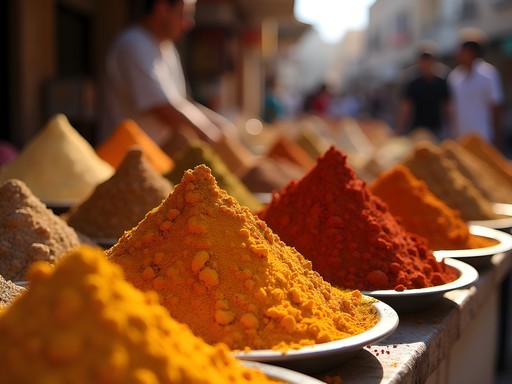
Here, indigenous ingredients that have sustained communities since pre-colonial times take center stage. Massive piles of mandioca (cassava) roots form the foundation of countless dishes. Vendors proudly displayed andai (squash), kumanda (beans), and dozens of varieties of corn, each with specific culinary applications explained through patient gestures when my Spanish vocabulary failed.
I was particularly drawn to the herb section, where bundles of ka'a he'ẽ (Stevia in its natural form) sat alongside medicinal plants with names I couldn't pronounce. An elderly vendor noticed my fascination and offered samples of various yuyos (medicinal herbs) added to tereré, explaining each one's purpose – some for digestion, others for energy, many for tranquilidad (calmness).
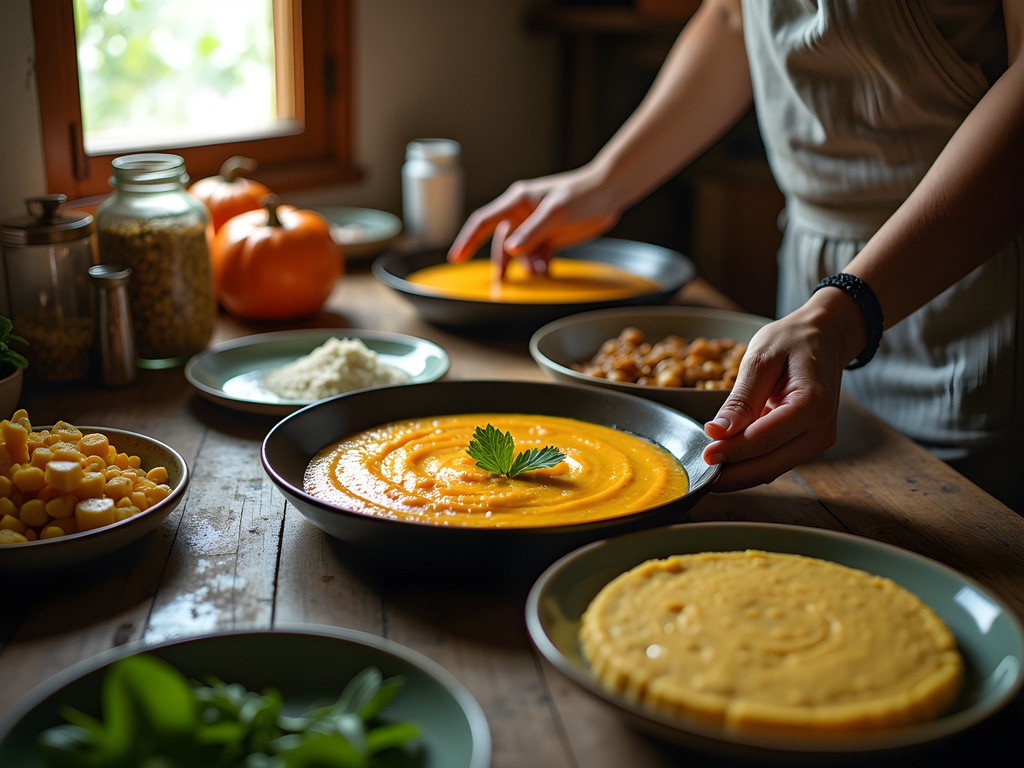
Armed with new ingredients, I joined a cooking class I'd found through a community board at my hostel. In a modest Lambaré home kitchen, our instructor Maria taught us to prepare kivevé, a velvety pumpkin puree enriched with corn flour, cheese, and milk that tastes like Paraguay's answer to comfort food. We also made chipa guasu, a savory corn cake that showcases the sweetness of fresh corn when in season.
"Our grandmothers could make feasts from gardens alone," Maria explained as we stirred bubbling pots. "Meat was for special days, plants were for survival."
The most revelatory dish was vorí vorí de verduras, a vegetarian version of the traditional soup where corn and cheese dumplings float in a rich broth made from roasted vegetables instead of the usual chicken base. The depth of flavor challenged everything I thought I knew about Paraguayan cuisine being meat-centric.
I recorded the recipes in my waterproof notebook, knowing these would be techniques I'd carry home to Toronto, where my marathon training diet could benefit from these nutrient-dense, plant-forward traditions that had sustained generations of Paraguayans.
💡 Pro Tips
- Visit Mercado de Abasto early on Tuesday or Friday mornings when produce selection is freshest
- Look for cooking classes through local hostels or on community boards – they're often very affordable
- Ask about seasonal variations – many Paraguayan vegetable dishes change ingredients throughout the year
Final Thoughts
As my weekend in Paraguay drew to a close, I found myself sitting at a small café near Asunción's Plaza de los Héroes, sipping one last tereré while watching the Sunday evening ritual of families strolling together. Paraguay had revealed itself to me not through grand monuments or tourist attractions, but through the humble, heartfelt language of food. Like the best marathon courses, this culinary journey had its challenging hills (the heat, the language barriers) and exhilarating descents (those first bites of fresh chipa, sunset asados by the river). What struck me most wasn't just the flavors, but how food in Paraguay creates community spaces as sacred as any monastery I've visited. In a world increasingly defined by digital connection, there's profound wisdom in cultures that still gather around real food, prepared by real hands, shared with genuine hospitality. Paraguay may be overlooked on the global culinary map, but perhaps that's its greatest strength – authentic traditions unspoiled by trends, waiting for those willing to lace up their metaphorical running shoes and explore beyond the obvious path.
✨ Key Takeaways
- Paraguay's food scene offers incredible value for budget travelers with most authentic experiences costing very little
- The combination of indigenous Guaraní and Spanish colonial influences creates unique flavors found nowhere else in South America
- Early mornings yield the most authentic food experiences, from fresh chipa to vibrant markets
- The ritual of tereré (cold yerba mate) is a cultural gateway that connects visitors with locals
📋 Practical Information
Best Time to Visit
Spring (September-November) or Fall (March-May)
Budget Estimate
$30-50/day including accommodations and food
Recommended Duration
2-3 days minimum
Difficulty Level
Easy
Comments
Megan Martin
Mason, excellent coverage of Paraguay's underrated food scene! I visited Asunción for a conference last year and completely agree about Mercado 4 - it's chaotic but absolutely worth it for authentic local food. One tip I'd add for readers: go with a local guide if possible, especially for your first visit to the market. The layout can be overwhelming and having someone who knows the best stalls makes a huge difference. Also, the tereré culture is so welcoming once you understand the social aspect of it. Did you try any of the sopa paraguaya variations while you were there?
photoone
Good call on the guide for Mercado 4. Is it safe to go solo or should you be worried about pickpockets?
Megan Martin
Standard precautions apply - don't flash expensive cameras or jewelry, keep bags close, be aware of your surroundings. I went solo during daylight hours and felt fine, but I kept my phone in my front pocket and didn't bring anything I couldn't afford to lose.
adventureking
Great post! Those sunset photos from Lambaré are stunning.
wavenomad
This looks amazing! I've never really thought about Paraguay as a food destination before. Quick question - how easy is it to find chipa outside of the markets? Like can you just grab it at corner stores or is it more of a special thing?
photoone
Not the author but I was there last year - chipa is literally EVERYWHERE. Street vendors, bus stations, gas stations. It's like their version of a quick snack.
wavenomad
Oh perfect! That's exactly what I wanted to hear. Thanks!
escapewalker
For anyone planning to visit, don't miss trying tereré with different yuyos (herbs). Each family has their own special mix! Ask locals for recommendations - it's a great conversation starter.
Sage Dixon
Mason, your description of that morning jog along the Paraguay River took me right back! I did almost the exact same thing last October. One tip for anyone heading to Asunción - don't miss Lido Bar near the port for the best surubí fish. The locals told me it's been around since the 1950s! I found having my pocket phrasebook invaluable since English isn't widely spoken, especially in the markets. The vendors really appreciate even basic Spanish attempts. Did you make it to any of the traditional asados outside of town? Those countryside barbecues were the highlight of my Paraguay trip.
Mason Sullivan
Thanks Sage! I did make it to an asado in a small village about 30km outside Asunción - incredible experience. The Lido Bar tip is spot on - their surubí is legendary. Next time I want to explore more of the countryside spots you mentioned!
coffeeguy
That chipa bread is AMAZING! I still dream about it.
escapewalker
Right? I bought a bag from a street vendor and demolished it before I got back to my hotel!
wanderseeker
This is exactly what I needed! I'm heading to Asunción next month and was wondering if Mercado 4 is safe for solo travelers? Also, what time of day is best to try that Lambaré sunset food ritual you mentioned?
Sage Dixon
I was in Mercado 4 solo last year! Go during daylight hours (9am-2pm is perfect) and keep valuables secure. The sunset ritual in Lambaré usually starts around 6pm - get there early for the best spots overlooking the river!
wanderseeker
Thanks so much, Sage! That's super helpful. Can't wait to try all the food!
nomadwalker
How did you get around between Asunción and Lambaré? Public transport or taxi?
backpackking
Not the author but I did this trip last month - the local buses are super easy and cheap! Just ask your hostel which number to take.
nomadwalker
Thanks! Good to know buses are an option.
Casey Andersson
Mason, your description of that sunrise jog along the Paraguay River took me right back to my time there! I stayed at El Nomada Hostel and had a similar morning ritual. For anyone planning to visit, I highly recommend the sunset food stalls in Lambaré that Mason mentioned - the view of the river while eating fresh empanadas is unbeatable. I found using the Pocket Spanish-Guarani Dictionary super helpful since many vendors, especially in Mercado 4, speak more Guarani than Spanish. Great post capturing the authentic flavors of Paraguay!
nomadwalker
El Nomada was awesome! Did you try their breakfast?
Casey Andersson
Yes! Their homemade bread with local honey was the perfect start to each day!
backpackking
This post makes me want to book a flight to Paraguay right now! I never considered it as a foodie destination but those descriptions of chipa have my mouth watering. Did anyone else get hungry just reading about Mercado 4? I'm planning a South America trip next year and definitely adding Asunción to my list now. How safe did you find it for solo travelers, Mason?
Casey Andersson
I was in Asunción last month and felt completely safe as a solo traveler! The locals were incredibly welcoming. Just use normal city precautions around Mercado 4 at night. And yes - the chipa is life-changing!
backpackking
Thanks Casey! That's really reassuring to hear. Any other must-try foods besides chipa?
Casey Andersson
Definitely try sopa paraguaya (which is actually a cornbread) and mbeju (starchy pancake). And don't leave without having proper tereré with locals in a park!
Venture X
Premium card with 2X miles, $300 travel credit, Priority Pass