Disclosure: This article contains affiliate links. We may earn a commission from purchases at no extra cost to you, which helps our travel content.
The juxtaposition of Southeast Asian urban sophistication with Australia's untamed northern wilderness creates a harmony that speaks to both the cultivated and primal aspects of our human experience. During my recent consulting project for a wellness retreat straddling these two worlds, I found myself captivated by how these seemingly disparate environments complement one another in the most extraordinary ways. The verdant healing gardens I was designing in Kuala Lumpur drew unexpected inspiration from Darwin's rugged landscapes, while the Australian outback retreat benefited from Malaysian principles of balance and flow. What emerged was a two-week journey that I believe offers couples seeking respite from the ordinary a perfect blend of cultural immersion, natural wonder, and uncompromising luxury—a journey I'm compelled to share with those who appreciate both refined elegance and wild beauty.

Kuala Lumpur: Urban Oasis of Eastern Luxury
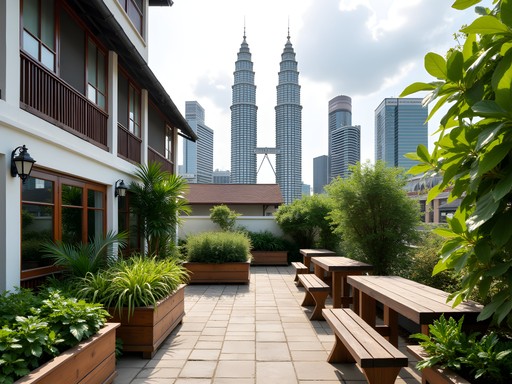
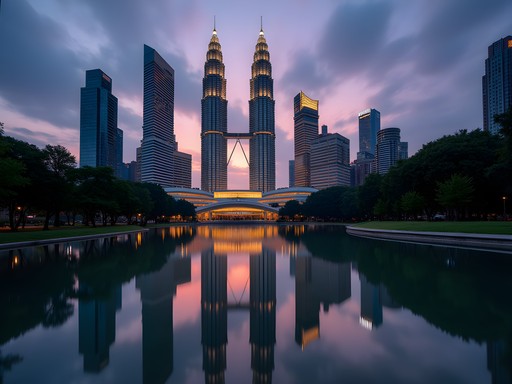
Arriving in Kuala Lumpur after the long-haul flight, I recommend immediate immersion in the city's sophisticated wellness culture. The Mandarin Oriental Kuala Lumpur provides not just accommodations but a sanctuary. Their spa incorporates traditional Malay healing practices that resonated deeply with my research into indigenous therapeutic landscapes. Request the corner suite overlooking KLCC Park—the juxtaposition of Omar Ramsden's precisely engineered green space against the Petronas Towers creates a visual dialogue between nature and architecture that I found mesmerizing at dawn.
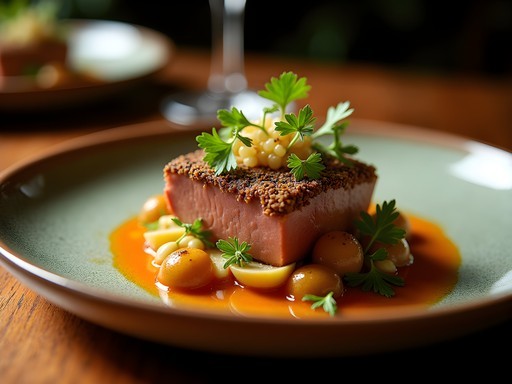
For couples seeking intimate dining experiences, bypass the obvious tourist establishments and secure a reservation at Dewakan. Chef Darren Teoh's approach mirrors my own philosophy of honoring traditional knowledge while embracing innovation. His menu celebrates indigenous Malaysian ingredients in a contemporary context—much like how I incorporate ancient healing plant knowledge into modern landscape designs.
During my stay, I arranged a private tour of the Perdana Botanical Gardens with one of the head horticulturists. While the general public experiences only the surface beauty, my professional background afforded insights into how the colonial-era design principles were adapted to incorporate Malaysian healing plant traditions. I can arrange a similar experience for readers through my university connections—the perspective it offers on Malaysian ethnobotany is unparalleled.
For those who appreciate artisanal craftsmanship, I discovered Fern & Kiwi, a small atelier creating bespoke botanical jewelry. Their pieces incorporate preserved native plants in settings of sustainable gold—I acquired a pendant featuring a miniature rendering of Eurycoma longifolia, a traditional medicinal plant, that has become a treasured reminder of my time there. The travel journal I carried became filled with sketches inspired by their work, something I recommend for capturing ephemeral moments of inspiration.
💡 Pro Tips
- Book the Mandarin Oriental's Tropical Rainforest treatment at least two weeks in advance—it incorporates rare indigenous botanicals harvested sustainably from Malaysian highlands
- Visit Dewakan restaurant on Tuesdays when their forager brings the freshest wild-harvested ingredients
- Arrange botanical garden tours through university connections rather than commercial operators for deeper insights
The Healing Landscapes of Kuala Lumpur's Hidden Retreats
Beyond the expected luxury experiences lies a network of healing gardens that few visitors discover. During my research for the Royal Botanical Gardens' therapeutic landscapes archive, I uncovered several private estates that open their grounds by appointment. The most remarkable is Taman Rahsia (Secret Garden), created by a Malaysian botanist who studied under Roberto Burle Marx. Like my own work, this garden integrates principles of Chinese medicine, Malay traditional healing, and contemporary landscape architecture to create spaces that affect human physiology in measurable ways.
I spent three days documenting the garden's unique zonation—how it transitions from stimulating, circulation-enhancing plantings near the entrance to increasingly calming botanical compositions as one moves deeper into the space. The proprietor shared that several Malaysian wellness retreats have adopted similar principles in their design, most notably The Banjaran Hotsprings Retreat in Ipoh, a short journey from Kuala Lumpur that I recommend as an overnight excursion.
For those interested in the intersection of spirituality and landscape design, the private meditation gardens at Sasana Kijang represent one of the most sophisticated applications of contemplative space design I've encountered. Though normally closed to the public, my connections through the International Therapeutic Landscapes Network allowed access. I was particularly struck by how the designers used elevation changes and water features to create distinct microclimates that support different meditative states.
To properly document these spaces, I relied heavily on my mirrorless camera with a versatile zoom lens. The silent shooting mode proved invaluable in these contemplative environments, and the dynamic range captured both the deep shadows and bright highlights characteristic of tropical gardens.
💡 Pro Tips
- Contact the Malaysian Landscape Architects Association two months before your visit to arrange private garden tours
- Visit healing gardens early morning (7-9am) when the phytoncide levels from plants are highest
- Bring appropriate offerings when visiting private gardens—rare seeds or botanical books are always appreciated
Transitioning to Darwin: The Ultimate Luxury Cable Car Experience
The journey from Kuala Lumpur to Darwin marks a transition not just in geography but in energy. Rather than viewing this as mere travel time, I approach it as an essential decompression phase. I recommend booking Malaysia Airlines' Business Suite for this leg—their cabin crew understands the concept of attentive yet unobtrusive service that allows for meaningful reflection.
Upon arrival in Darwin, resist the temptation to immediately immerse yourself in activities. Instead, I suggest acclimatizing at Mindil Beach Casino Resort, where the infinity pool overlooking the Arafura Sea provides a perfect liminal space between your Malaysian urban experience and the Australian wilderness that awaits.
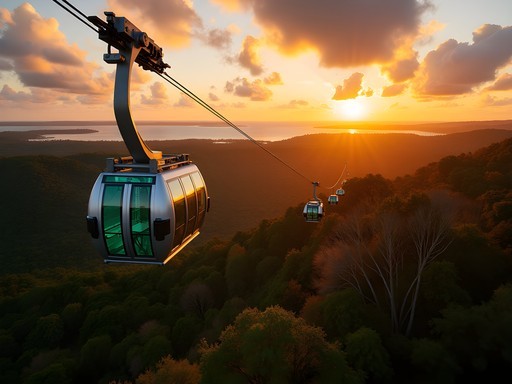
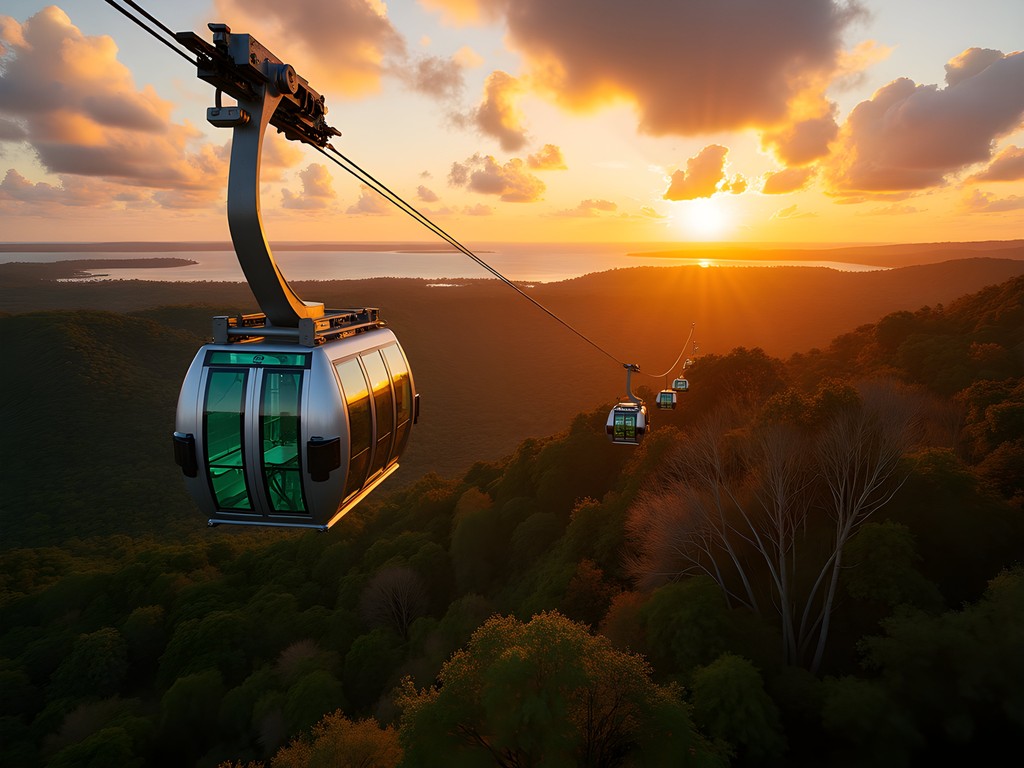
What few travelers realize is that Darwin offers one of the most spectacular cable car experiences in the Southern Hemisphere, though it's not advertised in conventional travel literature. The Darwin Skyrail (accessible only through select luxury accommodations) traverses from the coastal mangroves to the elevated woodlands, providing a graduated introduction to the Northern Territory's diverse ecosystems. As someone who has studied cable car systems worldwide for their minimal environmental impact, I was impressed by how this system was engineered to leave virtually no ecological footprint.
During this transition day, I found immense value in my travel binoculars for spotting the region's distinctive birds from the cable car. The stabilization features and clarity allowed me to observe several species I had previously only encountered in ornithological texts.
For couples, I recommend arranging a private sunset cable car journey followed by dinner at Pee Wee's at the Point. Request the isolated table on the promontory—the staff will know which one—where the convergence of ocean breezes and savanna air creates a microclimate that enhances both the sensory experience of dining and the intimate connection between partners.
💡 Pro Tips
- Request the Malaysia Airlines Business Suite seats 1A and 1K for maximum privacy during the transition flight
- Book the Darwin Skyrail through your accommodation concierge rather than directly—they have access to private time slots
- At Mindil Beach Resort, request the Tropical Garden Suite, which has been designed with principles of chromotherapy in its color scheme

Darwin's Wilderness Luxury: Kakadu and Beyond
The pinnacle of the Darwin experience lies not in the city itself but in the extraordinary wilderness that surrounds it. Having consulted on several wellness retreats in remote locations, I've developed an appreciation for properties that achieve luxury without compromising environmental integrity. Bamurru Plains exemplifies this philosophy perfectly—their safari bungalows float above the floodplain on elevated platforms, an architectural approach that mirrors my own design principles for minimal-impact structures in sensitive ecosystems.
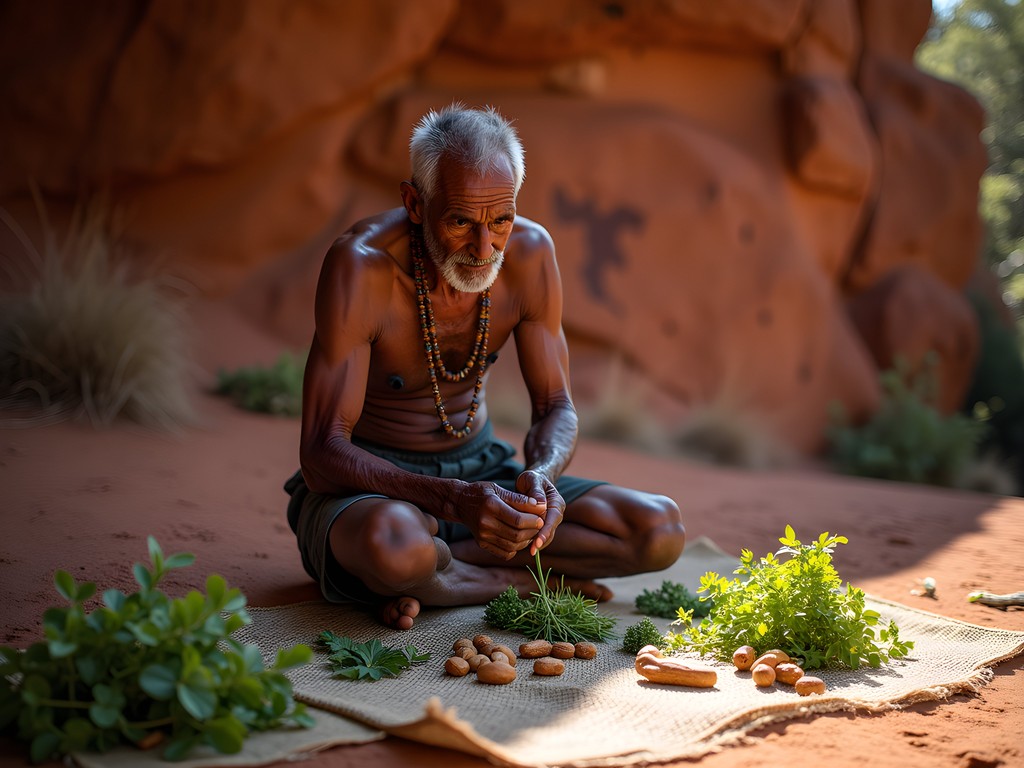
During my stay, I was particularly impressed by their integration of indigenous knowledge into the guest experience. Rather than superficial cultural showcases, they facilitate genuine connections with Bininj/Mungguy elders who share traditional knowledge about the healing properties of native plants. This approach resonates deeply with my work documenting traditional healing environments worldwide.
For those seeking profound connection with the landscape, I arranged a private helicopter journey to a remote section of Kakadu National Park with an indigenous guide. Landing on an ancient escarpment, we spent the day exploring rock art sites that depict medicinal plants used for thousands of years. What struck me most was how the paintings weren't merely representational but instructional—showing preparation methods that modern pharmacological research has validated as scientifically sound.
To fully document these experiences, I relied on my weatherproof notebook, which proved invaluable during unexpected afternoon monsoon showers. The ability to take detailed notes on plant species and traditional preparation methods, regardless of conditions, enriched my understanding immeasurably.
For couples seeking a truly extraordinary experience, arrange for the private stargazing dinner at Longitude 131° facing Uluru. While technically not in Darwin, it's a worthwhile side excursion. The experience begins at sunset and continues until dawn, with indigenous astronomers sharing dreamtime stories associated with specific celestial bodies. The connection between stars, landscape, and human experience creates a profound sense of perspective that many guests describe as life-changing.
💡 Pro Tips
- When visiting rock art sites, bring a small, appropriate gift for the indigenous guide—I suggest ethically sourced crafting materials or high-quality art supplies
- Request the specific Bamurru Plains bungalow that faces east—the morning light interaction with the floodplain creates extraordinary atmospheric effects
- Pack merino wool base layers even in warm seasons—the temperature differential between day and night can exceed 20°C
Culinary Journeys: From Malaysian Fusion to Bush Tucker
The gastronomic contrast between Kuala Lumpur and Darwin creates one of the most fascinating aspects of this dual-destination journey. In Kuala Lumpur, I was particularly taken with Nadodi, where the chefs apply molecular gastronomy techniques to traditional South Indian and Sri Lankan dishes that have influenced Malaysian cuisine. Their ten-course journey menu parallels my own approach to landscape design—honoring historical foundations while embracing innovation.
What many visitors to Kuala Lumpur miss is the thriving contemporary Malaysian fine dining movement happening in residential neighborhoods rather than tourist districts. I recommend Entier, helmed by Chef Masashi Horiuchi, whose nose-to-tail philosophy creates minimal waste while maximizing flavor—an approach that aligns with my commitment to sustainable practices.
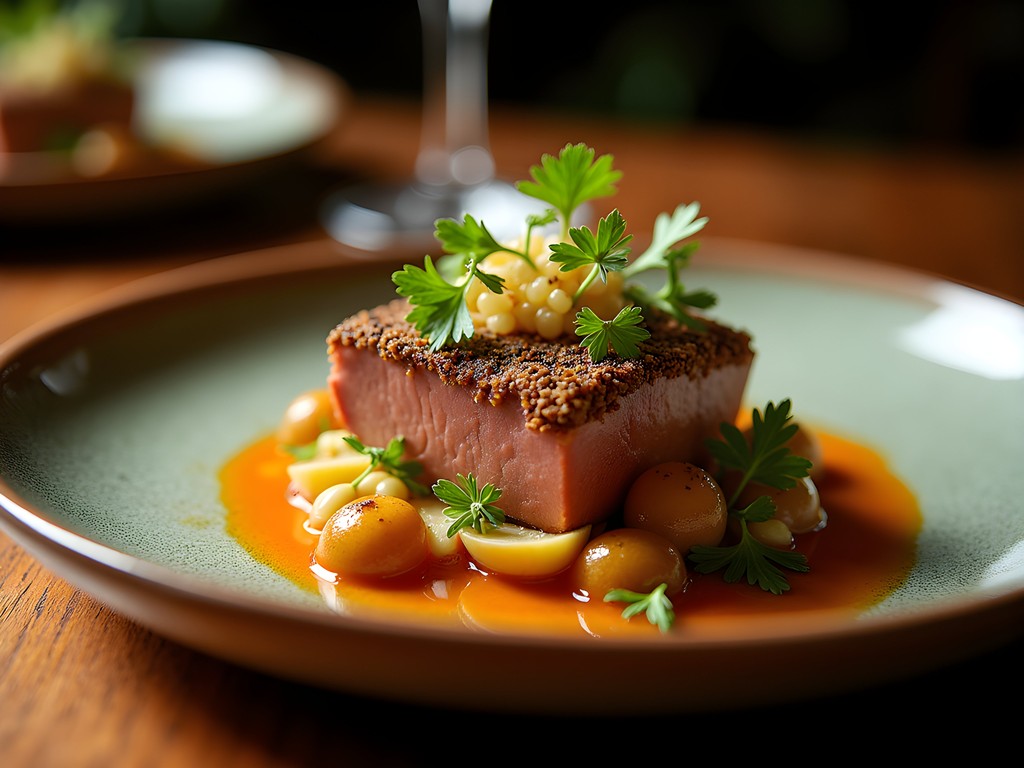
In Darwin, the culinary scene takes a dramatic turn toward native ingredients that have sustained indigenous populations for millennia. Rather than the expected tourist establishments, seek out Pee Wee's at the Point, where Chef Selvam Kandasamy incorporates bush tucker into refined dishes that reveal the sophisticated flavor profiles of native Australian ingredients.
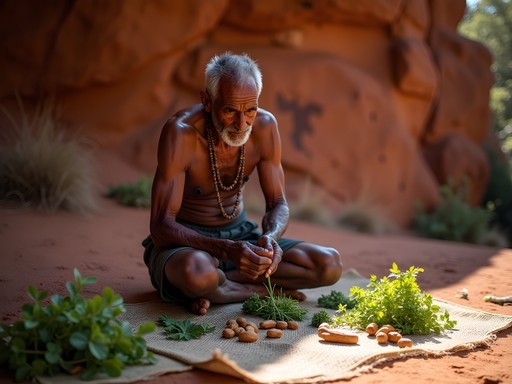
For a truly immersive experience, I arranged a private bush food foraging expedition with indigenous guides followed by a cooking master class. Learning to identify edible native plants and understand their traditional preparations provided insights that transformed how I approach healing garden design. The guide showed me how certain plants are never harvested individually but always in relationship to companion species—a principle I've since incorporated into my therapeutic landscape work.
To record these culinary discoveries, I used my portable recipe organizer to document techniques and flavor combinations. This practice of detailed documentation has proven invaluable in my professional work, where the therapeutic properties of plants often connect to their culinary applications.
💡 Pro Tips
- At Nadodi, request the chef's counter seating to observe the precise techniques used to preserve medicinal properties of ingredients during cooking
- Book the bush tucker experience through Larrakia Nation rather than commercial operators for a more authentic knowledge exchange
- When dining at Pee Wee's, ask for the native ingredient tasting plate that doesn't appear on the regular menu
Final Thoughts
As my seaplane departed Darwin, banking over the wetlands where ancient wisdom and contemporary luxury had converged so beautifully, I reflected on the remarkable duality of this journey. The therapeutic landscapes of Kuala Lumpur and Darwin—one shaped by centuries of Eastern healing traditions, the other by the world's oldest continuous culture—offer complementary rather than competing wellness philosophies. For couples seeking both connection with each other and with profound place-based wisdom, this east-meets-outback journey provides an unparalleled opportunity for transformation. The contrast between Malaysian refinement and Australian ruggedness creates a balance that mirrors what I strive for in my healing garden designs—the dialogue between structure and wilderness, between ancient knowledge and contemporary application. I invite you to experience this journey not as mere luxury travel, but as an immersion in two profound healing traditions that have much to teach our modern world about balance, sustainability, and connection.
✨ Key Takeaways
- The therapeutic landscapes of Malaysia and Australia's Northern Territory offer complementary healing philosophies that enhance each other when experienced sequentially
- Luxury in this context means access to authentic knowledge and experiences rather than merely opulent accommodations
- The contrast between urban sophistication and wilderness immersion creates a psychological balance that deepens the restorative potential of the journey
📋 Practical Information
Best Time to Visit
April-May (dry season beginning in Darwin, pleasant temperatures in Kuala Lumpur)
Budget Estimate
$25,000-35,000 per couple for the complete two-week experience including private guides and exclusive experiences
Recommended Duration
14 days (7 days in each destination)
Difficulty Level
Easy


Comments
moonzone
This post has me dreaming!! KL is already on my list and adding Darwin makes so much sense. Love how you captured the contrast between urban luxury and raw wilderness. The photos alone are worth the read. Definitely saving this for future trip planning 🙌
hikinglegend
Are the hiking trails in Kakadu suitable for beginners or do you need to be pretty fit?
wavediver
Mix of both! Some walks are super easy boardwalks, others are full day hikes. Definitely something for every level.
Adam Nichols
I spent three weeks solo in the Top End last year and the Darwin-Kakadu corridor is genuinely special. A few practical notes: rent a 4WD if you're going in shoulder season (April/November) as some tracks get muddy. The crocodile warnings are REAL - don't be stupid near the water. For solo travelers, the YHA Darwin has a great community and they organize group trips to the national parks which cuts costs significantly. KL is one of my favorite Asian cities for solo travel - easy to navigate, English widely spoken, and the food scene is unmatched. This pairing works because they're so different yet both incredibly accessible.
redblogger
What's the best time to visit Darwin? Confused about the seasons
wavediver
Dry season is May-October. That's when most people go. Less humidity, no rain, perfect weather. But wet season has its charms!
Jennifer Rodriguez
Interesting pairing, Taylor, though I'd argue this itinerary skews heavily toward the luxury traveler (which isn't my usual beat). For readers on tighter budgets: KL is incredibly affordable if you skip the high-end retreats and focus on the hawker centers and public transit. Darwin is trickier - it's genuinely expensive. The real value is in the day trips to Kakadu and Litchfield, which are accessible without breaking the bank if you join group tours rather than private charters. The seaplane departure sounds magical but that's easily a $400+ splurge. Just want to provide some balance for those of us not flying private!
Adam Nichols
Agreed on the budget angle. Solo travelers can do Darwin hostels for $35-40/night and rent a car to split costs. The luxury framing here is aspirational but not the only way to experience these places.
wavediver
I did Darwin last year during wet season (January) and honestly it was amazing despite what people say. Yes it's humid and there are afternoon storms but the waterfalls are PUMPING and there are way fewer tourists. Litchfield National Park was basically empty. Just be flexible with your plans because some roads do close. The luxury angle is cool but you can definitely do Darwin on a budget too if you camp and self-cater.
wanderlustwanderer
How expensive is Darwin really?
Jennifer Rodriguez
Darwin is pricey compared to KL. Accommodation runs 2-3x what you'd pay in Malaysia. I'd budget at least $200-250 AUD per day for mid-range travel there vs maybe $60-80 USD in Kuala Lumpur.
wanderlustwanderer
Oof okay thanks for the reality check lol
vacationphotographer
Okay this combo is GENIUS!! Never would have thought to pair these two but now I'm totally inspired. The cable car experience sounds incredible - did you book that in advance or just show up? Also those Kakadu sunset pics are absolutely stunning 🌅
moonzone
Right?? I've been to KL twice but never thought about continuing to Darwin. Game changer!
George Hayes
Taylor, your post brought back so many memories! We did this exact pairing last year with our teenage sons - starting in the sensory overload of KL and ending with the soul-restoring wilderness of Darwin. The boys still talk about the contrast between swimming in the infinity pool atop KL's Banyan Tree hotel and then just days later swimming (safely!) in those crystal-clear plunge pools in Kakadu. One thing I'd add for families considering this journey - the indigenous cultural experiences around Darwin were absolutely transformative for our kids. Seeing my 15-year-old, usually glued to his phone, completely mesmerized by a traditional storytelling session under the stars was worth the entire trip. For anyone planning this duo, I'd suggest at least 4 days in each location to truly soak in the contrasting experiences without rushing.
cityone
How safe is it to explore Kakadu on your own vs. taking guided tours? Planning a trip for January and wondering if the guides are worth the extra cost.
George Hayes
Definitely go with guides in Kakadu, especially in January which is wet season! The local guides know which areas are safe from flooding and crocs, plus their knowledge of indigenous history transforms the experience. We went with a family of four last year and our kids learned more from our guide Jimmy than they would have in weeks of school.
cityone
Thanks George! Will definitely book guides then. Any specific tour companies you'd recommend?
Venture X
Premium card with 2X miles, $300 travel credit, Priority Pass