
Disclosure: This article contains affiliate links. We may earn a commission from purchases at no extra cost to you, which helps our travel content.
There's something magical about returning to Canadian soil, especially when that soil is nestled between mountains and sea. As someone who grew up in Edmonton, Vancouver always felt like that glamorous coastal cousin—familiar yet exotic. During my recent weekend escape from Norfolk's veterinary clinic chaos, I rediscovered Vancouver through my camera lens, finding that perfect balance of urban sophistication and wild Pacific Northwest beauty. Whether you're wielding a professional camera or just your smartphone, Vancouver offers a visual feast that deserves more than a casual scroll-by on your feed. I've mapped out ten spots that not only photograph beautifully but tell the authentic story of this diverse city—places where cultural heritage, natural wonders, and architectural innovation converge to create images worth remembering.

Stanley Park Seawall: Where Ocean Meets Forest
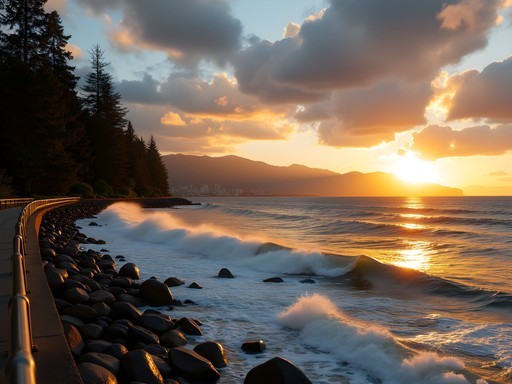
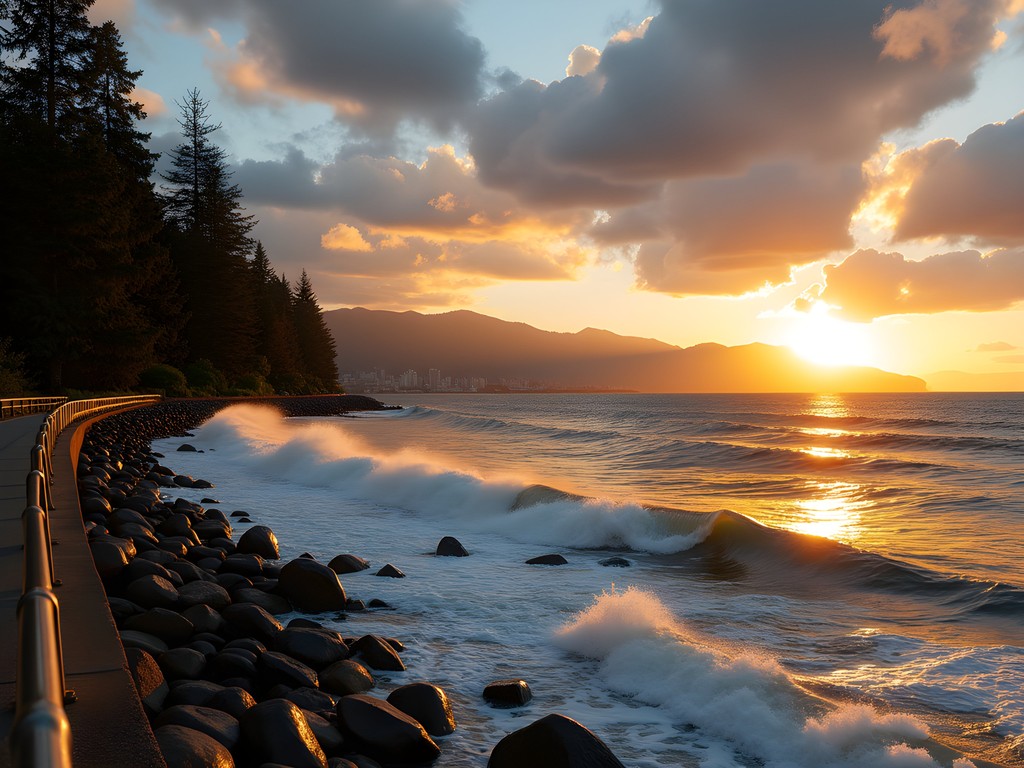
The 9-kilometer pathway circling Stanley Park isn't just Vancouver's most beloved recreational trail—it's a photographer's dream sequence unfolding with each step. I arrived at Third Beach just before golden hour, when the sunlight began painting the water with molten gold streaks and silhouetting the distant tankers against a gradient sky.
What makes the Seawall uniquely photogenic is its constant juxtaposition: dense temperate rainforest on one side, the vast Pacific on the other. Near Siwash Rock, I encountered a harbor seal popping its curious head above the waves—a moment my wildlife veterinarian instincts appreciated as much as my camera did.
For the most dramatic shots, position yourself at Brockton Point facing the North Shore mountains. The Lions Gate Bridge creates leading lines toward the mountains, while the foreground water adds depth and movement. I found my variable ND filter essential here for those silky water long exposures without blowing out the bright sky.
Don't rush this location—I spent nearly three hours walking the seawall, finding that each 500-meter stretch offers entirely different compositional opportunities. The light changes dramatically throughout the day, transforming familiar scenes into new visual stories.
💡 Pro Tips
- Visit during weekday mornings to avoid crowds in your shots
- The stretch between Second Beach and Siwash Rock offers the best mountain-meets-sea compositions
- Bring a polarizing filter to cut glare on water and enhance the rich forest greens
Granville Island Public Market: A Feast for All Senses
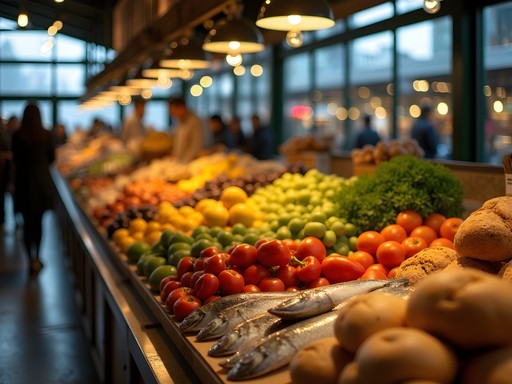
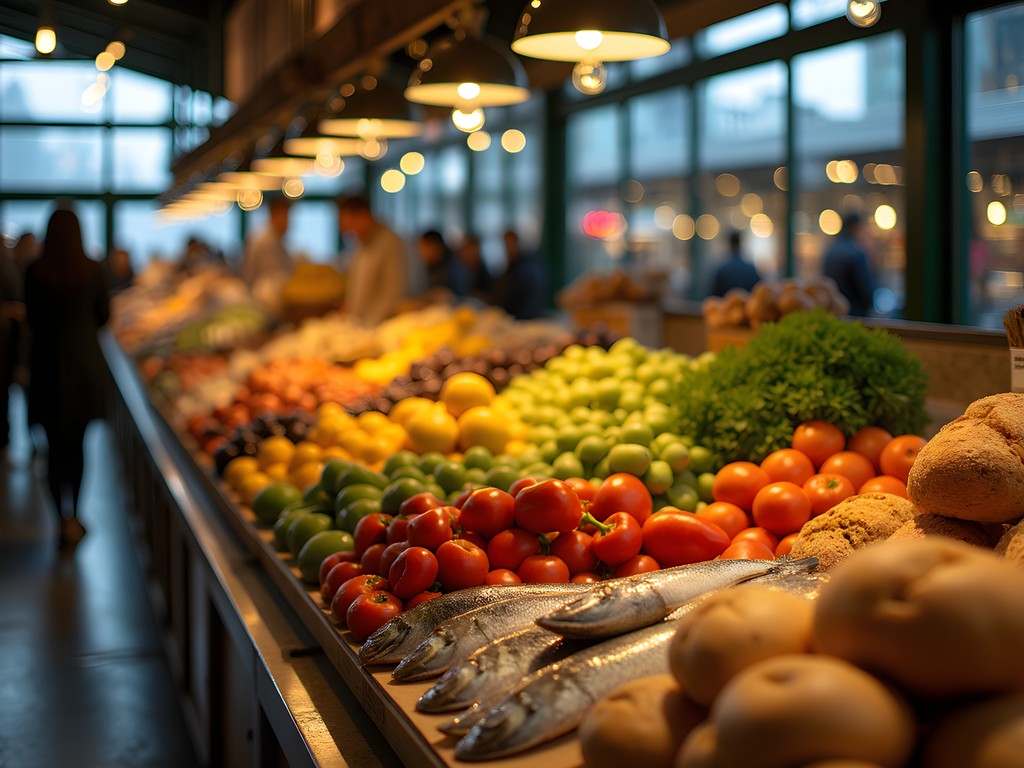
If Stanley Park captures Vancouver's natural beauty, Granville Island Public Market distills its multicultural essence into a sensory explosion. This isn't just a place to eat—it's a photographer's playground of colors, textures, and authentic human moments.
I arrived early on Saturday morning, when the first light streams through the market's east-facing windows, creating dramatic rays that illuminate the vibrant produce displays. The fishmongers were arranging their catches in gleaming patterns, creating inadvertent still-life compositions worthy of Dutch masters.
My approach here was to alternate between wide environmental shots capturing the market's bustling energy and macro details that tell intimate stories: the weathered hands of a baker kneading sourdough, the perfect geometric patterns of artisanal chocolates, the steam rising from fresh dumplings creating natural light diffusion.
The market's exterior offers equally compelling compositions. Position yourself on the dock behind the market for a classic cityscape view framed by the underside of Granville Bridge, with colorful houseboats providing foreground interest. This spot particularly resonated with me, reminding me of the houseboats I lived on during my Southeast Asian sabbatical—different cultural context but the same sense of water-based community.
While shooting, I kept my gear minimal with just my camera and a versatile prime lens that handles both the market's low light conditions and wider exterior shots. The fast aperture perfectly captured that delicious bokeh effect when photographing individual food items while maintaining enough sharpness for context.
💡 Pro Tips
- Visit between 8-9am for the best light and before crowds arrive
- Ask permission before photographing vendors or their goods—a small purchase often earns you photography privileges
- The second floor balcony offers excellent overhead composition opportunities
Capilano Suspension Bridge: Suspended Between Earth and Sky
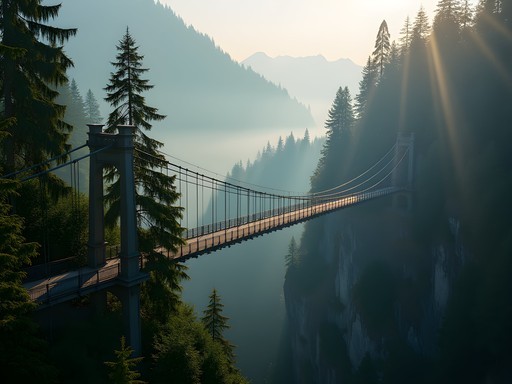
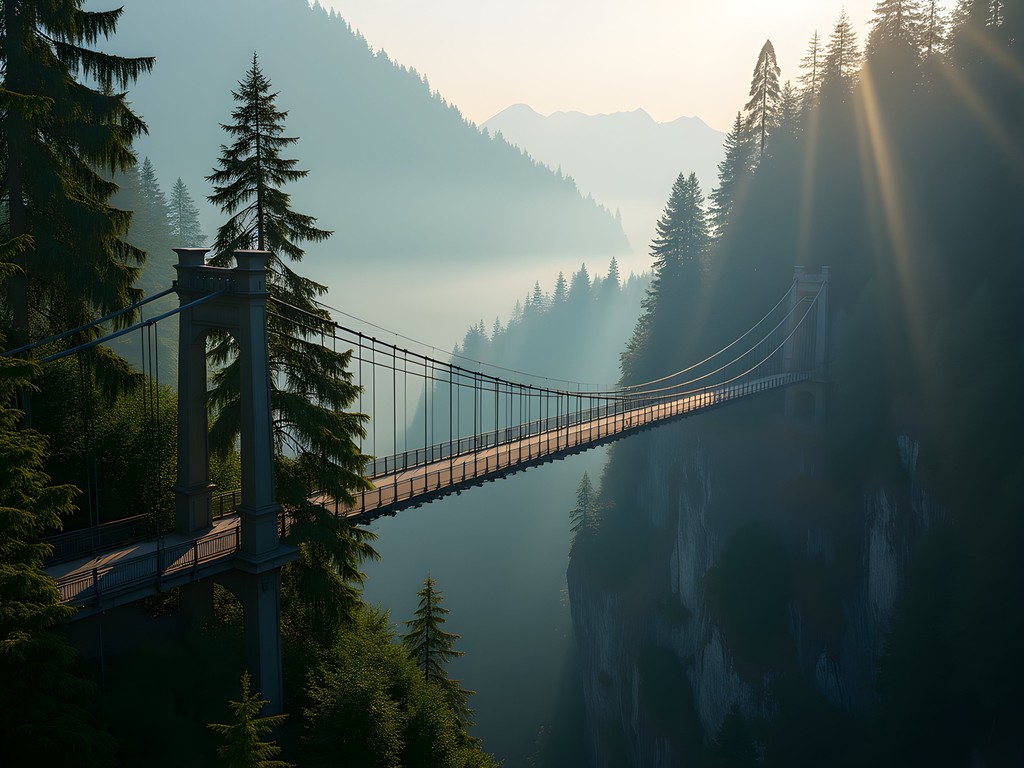
Yes, Capilano Suspension Bridge is undeniably touristy. Yes, you'll have to work around crowds. And yes, it's absolutely worth it for photographers willing to approach it creatively. This 137-meter-long bridge dangling 70 meters above the Capilano River creates visual drama that's hard to match elsewhere in Vancouver.
I arrived 15 minutes before opening time on a Monday morning—a strategy that rewarded me with about 20 precious minutes of relatively uncrowded shooting before the tour buses arrived. The early morning mist rising from the river valley created an ethereal atmosphere, with sunlight filtering through towering Douglas firs in visible rays.
The bridge itself offers compelling compositional elements: the converging lines of the cables, the repetitive patterns of the wooden planks, and the framing effect of the massive trees. But don't limit yourself to just shooting the bridge—the Treetops Adventure walkways through the forest canopy provide unique elevated perspectives of the rainforest ecosystem.
As a veterinarian with a background in wildlife rehabilitation, I was particularly drawn to the quieter corners of the park where I spotted a family of Douglas squirrels and several varied thrushes. The park's interpretive signs about local wildlife are excellent, providing context about the delicate ecosystem that might not be apparent to casual visitors.
Given the challenging lighting conditions—deep forest shadows contrasting with bright sky—I relied heavily on my camera backpack that allowed me to quickly access different lenses and my graduated filters. The backpack's weatherproof exterior also proved invaluable when an unexpected rainshower (so Vancouver!) passed through.
💡 Pro Tips
- Purchase tickets online in advance and arrive 15-20 minutes before opening
- For shots of the empty bridge, head directly there while others linger at the entrance
- Embrace overcast days—they provide even lighting and enhance the forest's mystical quality

Dr. Sun Yat-Sen Classical Chinese Garden: Framing Tranquility
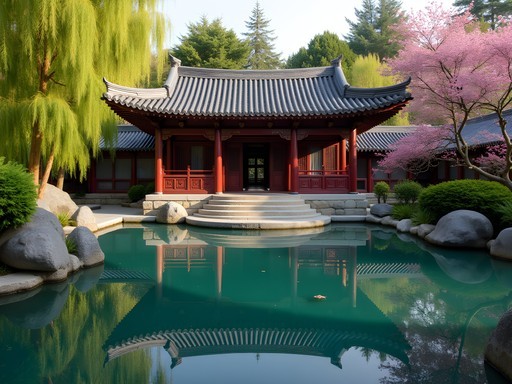
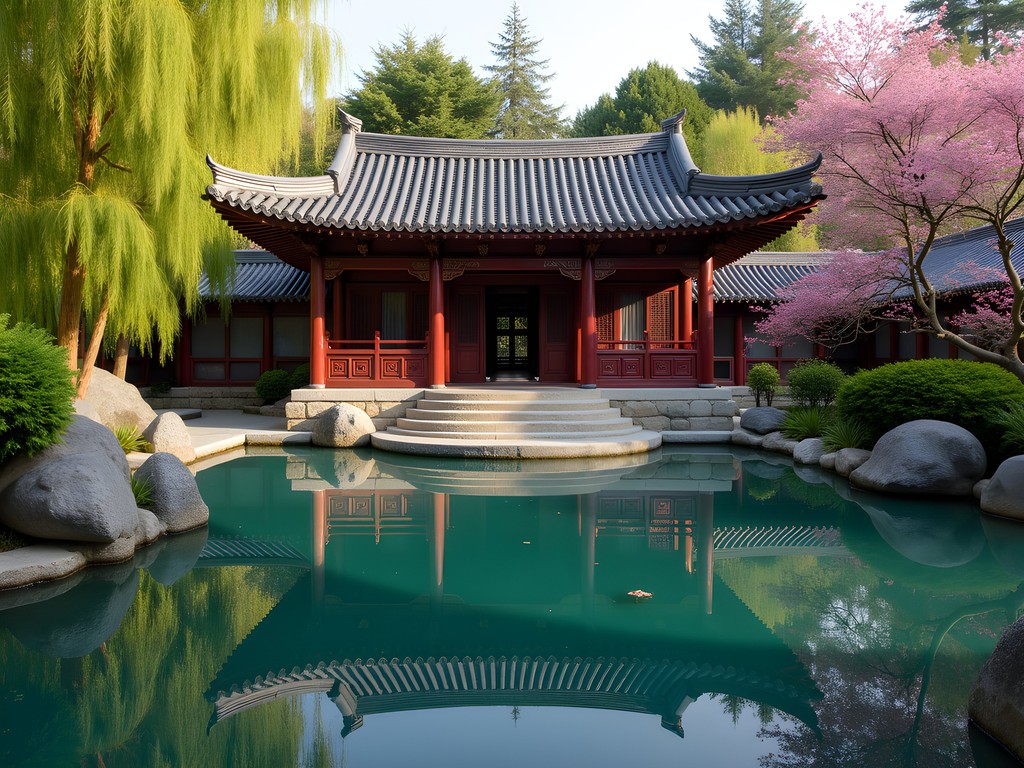
Tucked within Vancouver's vibrant Chinatown lies a photographer's secret weapon: the Dr. Sun Yat-Sen Classical Chinese Garden. Unlike the adjacent public garden (which is also beautiful but free), this meticulously designed Ming Dynasty-inspired space offers carefully composed vignettes that seem pre-framed for your camera.
I visited mid-afternoon when the jade-colored water of the central pond reflected the traditional architecture with mirror-like precision. The garden employs the classical Chinese principle of 'borrowed scenery,' where carefully placed windows and doorways frame specific views—essentially creating photographs within photographs.
The interplay of four main elements—water, stone, plants, and architecture—creates endless compositional possibilities. I found the most compelling shots came from positioning myself to capture reflections in the still water, using the arched bridges to create perfect circles when combined with their reflections.
The garden's white walls serve as natural reflectors, bouncing soft light onto subjects and creating even illumination in what might otherwise be challenging lighting conditions. This made it perfect for portrait photography—I asked a fellow visitor to take a few shots of me beside the flowering plum trees, which turned out to be some of my favorite self-portraits from the trip.
The garden staff are exceptionally knowledgeable about both the cultural significance and the botanical specimens. When I mentioned my veterinary background, one guide shared fascinating information about the garden's resident koi fish, including their remarkable longevity and historical significance in Chinese culture.
While you can capture beautiful images with any camera here, I found my telephoto zoom lens particularly useful for isolating architectural details and compressing layers of the garden into single, impactful compositions.
💡 Pro Tips
- Visit during the Jade Water Silk Light Festival in winter for magical illuminated night photography
- Look for 'leaking windows'—circular moon gates that perfectly frame garden scenes
- Attend a traditional tea ceremony for unique cultural photography opportunities
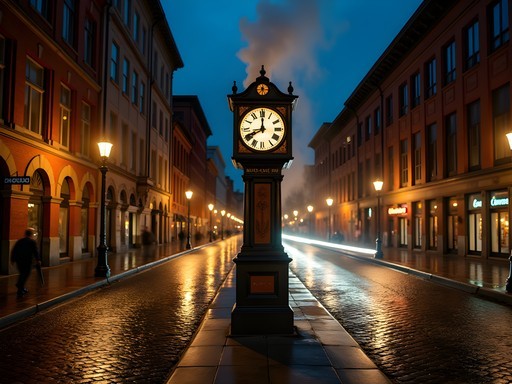
Gastown Steam Clock: Capturing Vancouver's Victorian Heart
Some might call it cliché, but I believe certain landmarks become iconic for good reason. Gastown's Steam Clock stands as one of Vancouver's most photographed objects, yet finding a fresh perspective remains an exciting challenge for photographers willing to think beyond the obvious shot.
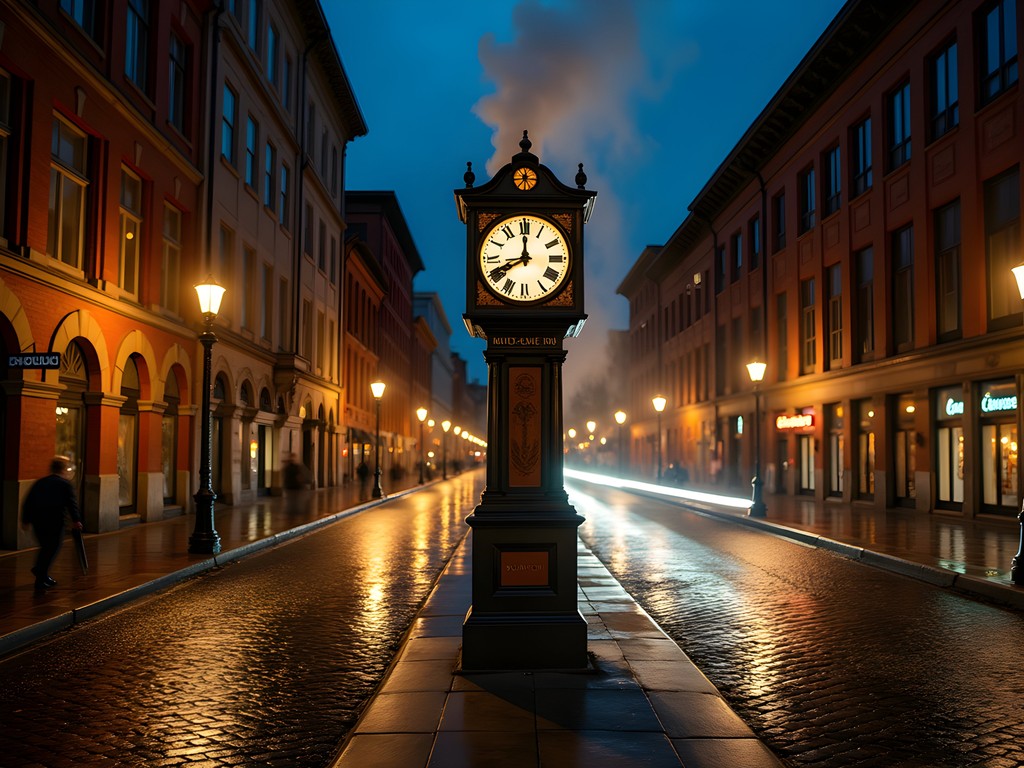
Rather than shooting mid-day with throngs of tourists, I visited twice: once at dawn when the streets were empty except for the occasional early worker, and again after dinner when the gaslights cast a warm glow across Water Street's cobblestones. The dawn visit yielded clean architectural shots highlighting the clock's Victorian aesthetic against modern glass buildings, while the evening created a moody, almost film-noir atmosphere.
What many visitors don't realize is that the steam clock 'performs' every quarter hour with whistles and steam releases, culminating in a more elaborate display on the hour. Timing your photography around these moments creates dynamic images with billowing steam catching the light. I used a faster shutter speed to freeze the steam patterns and a slower one to create a dreamy, ethereal effect.
The surrounding Gastown neighborhood offers rich photographic context with its brick buildings, vintage lampposts, and the contrast of old-meets-new Vancouver architecture. For compelling street photography, position yourself at the intersection of Water and Cambie Streets, where the historic Hotel Europe building creates a perfect 'flatiron' composition with the clock visible in the middle distance.
During my evening shoot, I was grateful for my compact tripod which allowed me to capture long exposures of light trails from passing cars while keeping the clock sharp in the foreground. Its compact size meant I could easily carry it throughout the day without adding significant weight to my camera bag.
💡 Pro Tips
- Photograph the clock at quarter past the hour when it whistles and releases steam
- Use the surrounding puddles after rain for creative reflection shots
- Include human elements like passing cyclists for scale and storytelling
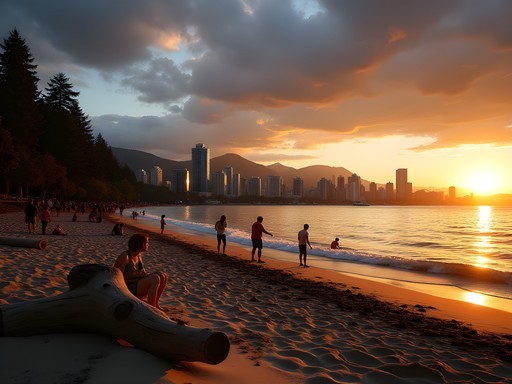
Kitsilano Beach: Coastal City Perfection
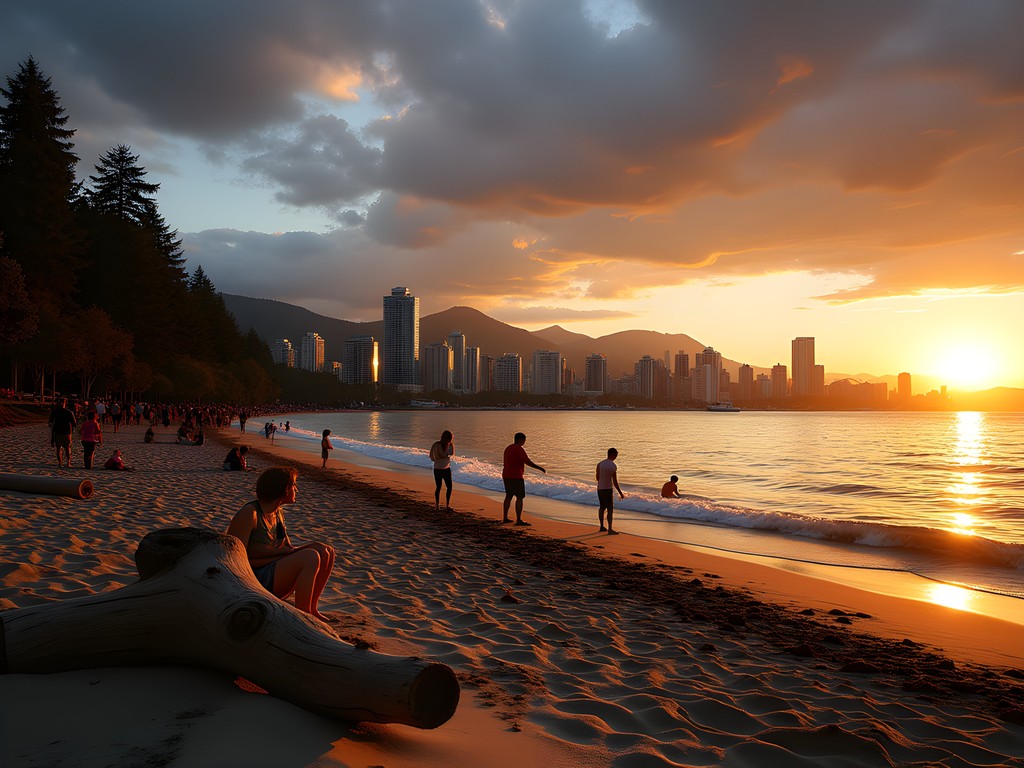
For the quintessential 'Vancouver lifestyle' shot that captures the city's unique blend of urban sophistication and natural beauty, Kitsilano Beach delivers every time. 'Kits Beach,' as locals call it, offers the perfect vantage point for cityscape photography with a foreground of beach activities and the dramatic backdrop of downtown Vancouver framed by mountains.
I arrived about an hour before sunset, when the beach was alive with activity: volleyball players, paddleboarders, yogis, and picnicking families. This human element adds scale and storytelling to what would otherwise be simply another pretty view. The golden hour light here is particularly magical, casting a warm glow that makes Vancouver's glass towers appear to be made of amber and gold.
For the classic postcard shot, position yourself near the Kitsilano Pool looking east toward downtown. The curve of the shoreline creates natural leading lines drawing the eye toward the city skyline. If you're lucky enough to visit during a clear day, wait for blue hour just after sunset when the city lights begin to twinkle while there's still deep blue in the sky.
As someone who grew up in Edmonton but spent summers along Canada's coasts, this particular viewpoint always fills me with a sense of Canadian pride—the harmonious coexistence of urban development with natural splendor that characterizes our approach to city planning.
During my visit, I witnessed an impromptu marine mammal rescue when a harbor seal pup hauled out on the beach. My veterinary instincts kicked in, but I was pleased to see the local marine mammal rescue team already on site, educating beachgoers about giving the animal space. This unexpected wildlife encounter reminded me that even in urban settings, Vancouver maintains strong connections to its wild surroundings.
I captured a wide range of images from wide-angle landscapes to detailed shots of beach life using my zoom lens which provided the versatility needed for this location's varied photographic opportunities.
💡 Pro Tips
- Arrive 90 minutes before sunset to claim a good spot and capture both daylight and twilight shots
- Include the distinctive Maritime Museum's St. Roch ship model in foreground compositions for added interest
- Use a graduated ND filter to balance exposure between bright sky and darker foreground
Lynn Canyon Suspension Bridge: The Wild Alternative
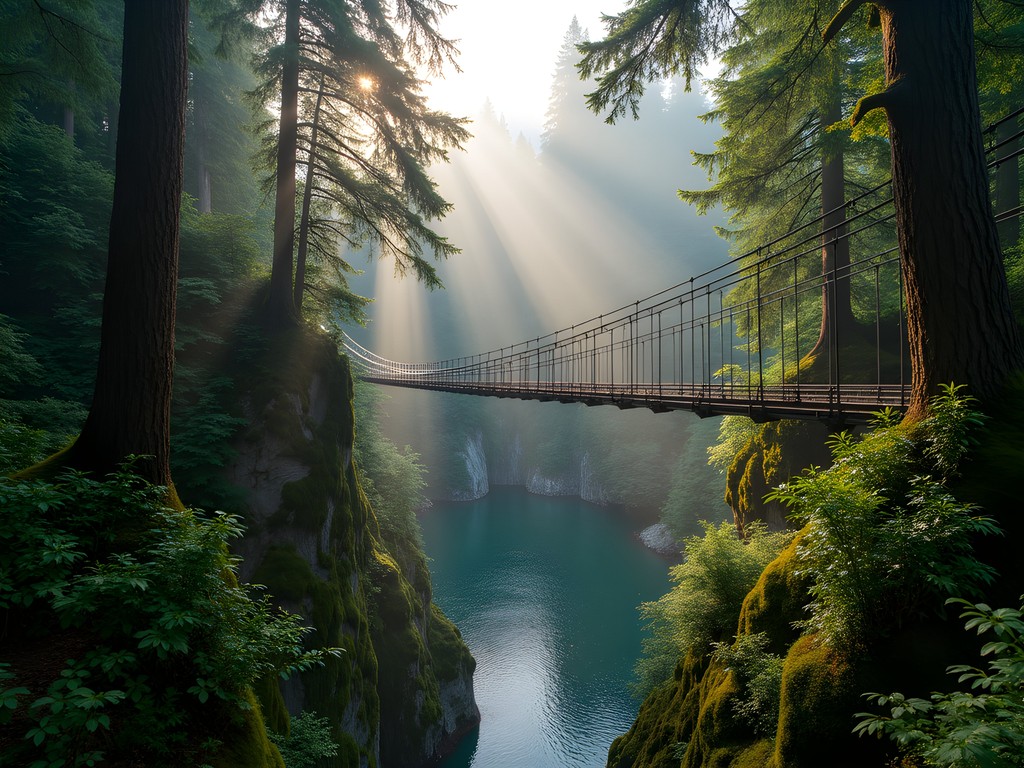
While Capilano gets the tourist glory, Lynn Canyon Suspension Bridge offers photographers something potentially more valuable: authenticity without the entrance fee. This lesser-known suspension bridge hangs 50 meters above Lynn Creek and leads to a network of trails through pristine temperate rainforest.
I arrived mid-morning on a Tuesday, finding the bridge relatively uncrowded compared to its famous counterpart. The morning light filtering through the dense canopy created spectacular crepuscular rays—those magical light beams that seem to connect heaven and earth. The mist rising from the canyon floor enhanced this ethereal quality.
Composing shots on a moving bridge presents unique challenges. I found bracing myself against the handrails and using a faster shutter speed essential for capturing sharp images. For more creative shots, I embraced the movement, using slower shutter speeds to convey the gentle swaying motion that adds to the sense of adventure.
Beyond the bridge itself, the surrounding Lynn Canyon Park offers spectacular photography opportunities often overlooked by visitors rushing to the bridge and back. The 30-Foot Pool, a short hike downstream, features crystal-clear emerald waters carving through ancient rock formations. Here, I spent nearly an hour experimenting with different shutter speeds to capture the water's movement against the unchanging stones—a meditation on time that photography uniquely enables.
As a veterinarian with wildlife rehabilitation experience, I was thrilled to spot a varied thrush and several Pacific salamanders along the mossy trail edges. The biodiversity here is remarkable, especially considering you're still technically within city limits.
The dense forest environment creates challenging lighting conditions with bright highlights and deep shadows. My polarizing filter proved invaluable for cutting glare on wet surfaces and enhancing the rich greens of the moss and ferns that carpet the forest floor.
💡 Pro Tips
- Visit on weekdays before 10am or after 3pm to avoid the busiest periods
- Bring a microfiber cloth to wipe your lens—the mist from the canyon can quickly fog glass elements
- Follow the Twin Falls Trail for additional photographic opportunities away from crowds
Grouse Mountain Skyride: Elevated Perspectives
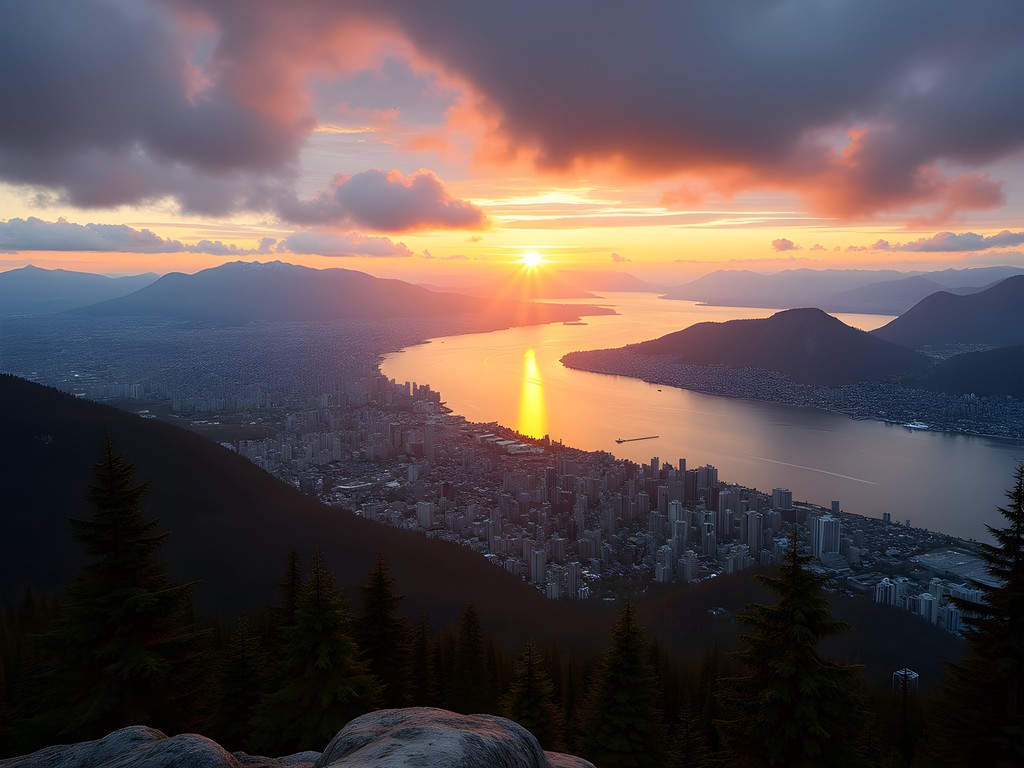
For photographers seeking literal and figurative elevation in their Vancouver portfolio, Grouse Mountain delivers spectacularly accessible alpine imagery. The Skyride gondola whisks you from sea level to 1,100 meters in just 8 minutes, transporting you from urban environment to mountain wilderness with remarkable efficiency.
I timed my visit for late afternoon, allowing for golden hour mountain photography followed by blue hour cityscape shots as Vancouver illuminated below. The transition between these two distinct photographic opportunities creates a compelling visual narrative about Vancouver's unique geographical situation.
At the summit, the Eye of the Wind viewPOD—a glass observation deck inside a functioning wind turbine—offers 360-degree views that include the city, ocean, and surrounding mountains. The curved glass creates interesting optical effects that can be incorporated creatively into your compositions. I found shooting through the glass at slight angles reduced reflections while maintaining clarity.
The resident grizzly bears, Grinder and Coola, present a unique wildlife photography opportunity. As a veterinarian, I appreciated the educational messaging about these rescued bears and the conservation challenges facing their wild counterparts. Photographically, their habitat provides a controlled environment to practice wildlife photography techniques like anticipating movement and capturing behavioral moments.
During summer evenings, the Birds in Motion demonstration showcases rehabilitated raptors in free flight. These presentations offered spectacular action photography opportunities—I captured a red-tailed hawk in mid-dive with mountains blurred in the background, one of my favorite images from the entire trip.
The rapidly changing mountain weather demands versatile equipment. My weather-resistant camera performed flawlessly despite conditions shifting from sunny to misty within minutes. Its in-body stabilization proved particularly valuable when shooting handheld in the dimming evening light.
💡 Pro Tips
- Book Skyride tickets online to avoid lines and secure your preferred time slot
- Bring extra layers—the temperature difference between city and summit can be 10°C or more
- Use the Peak Chair lift for additional elevated perspectives of the mountain terrain
Nitobe Memorial Garden: Zen and the Art of Photography
Hidden within the University of British Columbia campus lies one of Vancouver's most photogenic secrets: Nitobe Memorial Garden. Considered one of the most authentic Japanese gardens outside Japan, this 2.5-acre harmonious landscape offers photographers a masterclass in composition, balance, and the beauty of negative space.
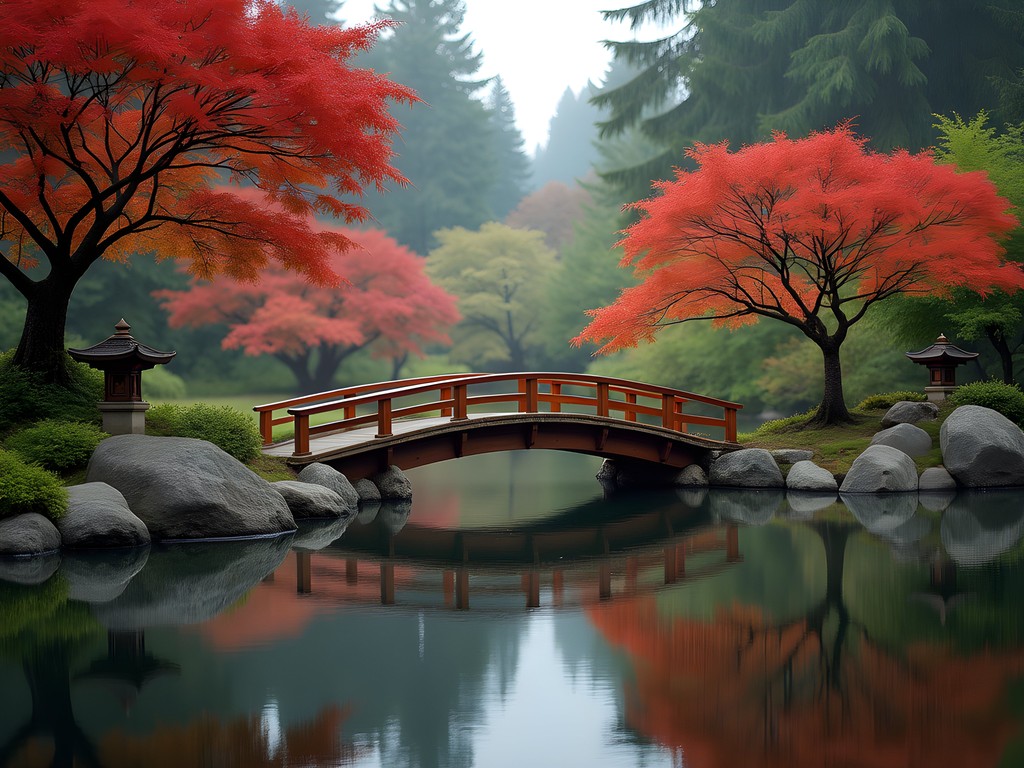
I visited mid-morning on a slightly overcast day—perfect conditions for this location as the soft, diffused light eliminates harsh shadows and allows the subtle color variations in the garden's carefully selected plants to shine. The garden is designed to represent the entire Japanese landscape in miniature, with each element placed with deliberate purpose.
Photographically, Nitobe Garden teaches patience and mindfulness. Rather than rushing to capture everything, I found myself settling into specific viewpoints for extended periods, observing how slight changes in light transformed the scenes. The central koi pond offers reflections that double the compositional possibilities, while the carefully raked zen garden presents studies in texture and pattern.
The traditional teahouse provides cultural context and architectural interest, especially when framed by Japanese maples or cherry trees (spectacular if you visit during spring bloom). I found the most compelling compositions came from using the garden's built-in 'frames'—stone lanterns, carefully positioned rocks, and arching branches—to create natural vignettes.
As someone who spent time living on houseboats in Southeast Asia, I felt a spiritual kinship with the garden's water elements—the way the designers use water as both mirror and metaphor resonated deeply with my own experiences of waterway cultures across the world.
The garden's intimate scale means a standard zoom lens covers most photographic needs, though I occasionally switched to my macro lens to capture the exquisite details of moss formations and the delicate patterns on koi fish as they glided beneath lily pads.
💡 Pro Tips
- Visit during light rain when most tourists stay away but the garden takes on a mystical quality
- Look for intentional sight lines where elements align perfectly from specific viewpoints
- Respect the contemplative atmosphere by moving slowly and being mindful of other visitors
Science World and False Creek: Futuristic Meets Waterfront
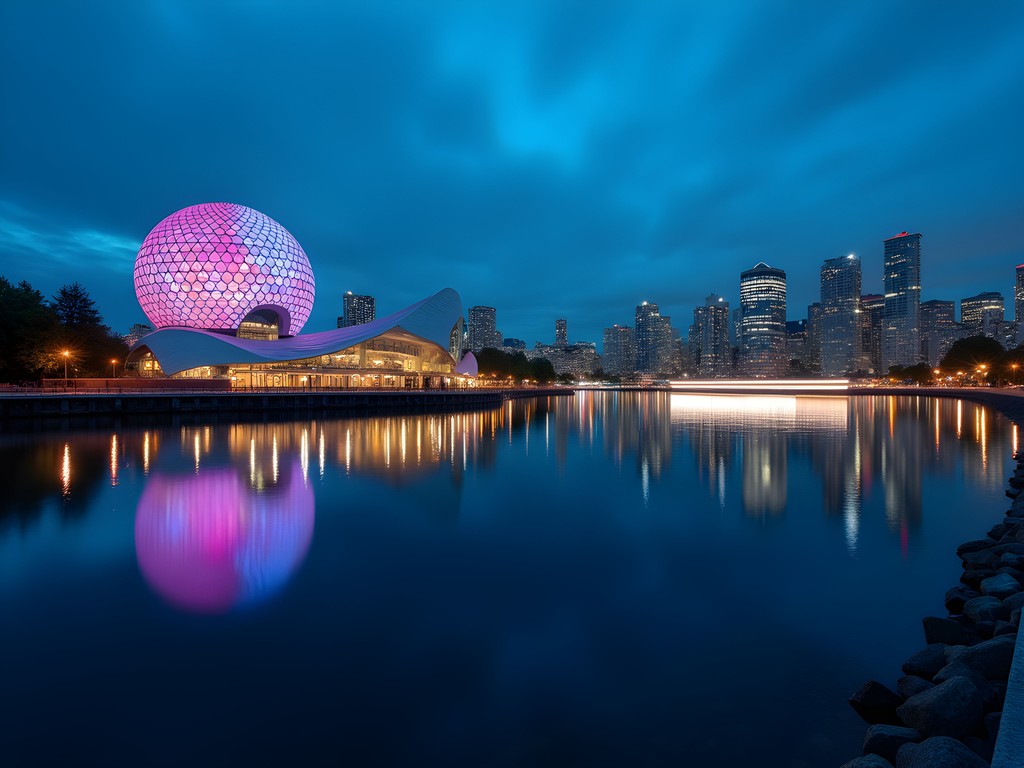
For photographers seeking that perfect urban landscape that balances architectural interest with natural elements, the False Creek area surrounding Science World delivers spectacular compositions. The iconic geodesic dome of Science World (officially Telus World of Science) provides a distinctive focal point that's recognizable as quintessentially Vancouver.
I arrived about 30 minutes before sunset, setting up my tripod along the seawall near Olympic Village. This position offered an unobstructed view of Science World with downtown Vancouver's skyline creating a layered backdrop. As blue hour descended, the dome's LED lighting system activated, reflecting brilliantly in False Creek's waters.
The area offers compelling juxtapositions: sleek modern architecture against mountain backdrops, urban development alongside active wildlife habitat, and industrial history meeting contemporary design. For photographers interested in visual storytelling, these contrasts create rich narrative possibilities.
The Aquabus and False Creek Ferries that crisscross the creek add delightful splashes of color and movement to long-exposure shots. By using a neutral density filter and longer exposure times, I captured these water taxis as colorful light streaks across the darkening water, adding dynamic energy to otherwise static cityscapes.
As a science enthusiast with a veterinary background, I appreciated photographing Science World not just for its architectural distinctiveness but for what it represents—Vancouver's commitment to scientific literacy and public education. During my visit, the building was illuminated in blue for World Oceans Day, creating a thematic connection to the waters it borders.
The False Creek area is also rich with bird photography opportunities. I spotted great blue herons fishing near the shoreline rocks, their patient stillness contrasting with the urban energy surrounding them. These unexpected wildlife encounters in urban settings make for particularly compelling photographic narratives.
For this location, I relied heavily on my graduated ND filters to balance the bright sky with the darker foreground, especially during the challenging transition lighting of sunset and blue hour when contrast is at its highest.
💡 Pro Tips
- Position yourself along the seawall between Olympic Village and Cambie Bridge for the classic Science World reflection shot
- Visit during special events when the dome features unique lighting displays
- Include the colorful Aquabus ferries in your compositions for scale and local character
Final Thoughts
As I packed away my camera on my final Vancouver evening, watching seaplanes land against a backdrop of mountains turned pink by alpenglow, I realized that this city's photogenic quality goes beyond mere scenery. Vancouver's visual appeal comes from its contrasts—wilderness meeting urbanity, ancient forests alongside modern architecture, and cultural diversity woven through every neighborhood. Whether you're wielding a professional camera or simply your smartphone, these ten locations offer endless creative possibilities that will elevate your Instagram feed while creating lasting memories of this Pacific jewel. Vancouver taught me again what I've learned in my travels across Southeast Asia and beyond—the most compelling photographs happen where worlds intersect, where boundaries blur, and where stories wait to be discovered through your unique perspective. So charge your batteries, clear your memory cards, and prepare to see Vancouver through new eyes. The city's most photogenic angles await your personal interpretation.
✨ Key Takeaways
- Visit iconic locations during off-peak hours (early morning or weekday evenings) for cleaner compositions with fewer crowds
- Vancouver's rapidly changing weather creates diverse lighting conditions—embrace rather than fight these changes for more varied imagery
- Include elements that tell Vancouver's unique story: mountains meeting ocean, urban wilderness, cultural diversity
📋 Practical Information
Best Time to Visit
Late May through September for longest daylight hours and best weather conditions
Budget Estimate
$150-250 per day including accommodations, transportation and meals
Recommended Duration
3-4 days minimum to visit all locations without rushing
Difficulty Level
Easy - Most Locations Accessible Via Public Transit Or Short Walks
Comments
wavemaster
Great post! For anyone planning to visit Granville Island Market, go early on weekdays (before 10am) to avoid the crowds. The light is better for photos then too. I took my compact tripod which was perfect for those low-light indoor market shots without being obtrusive. Also, take the Aquabus there instead of driving - gives you amazing views of False Creek and solves the parking nightmare!
cooltime
Thanks for the Aquabus tip! Is it easy to find where they pick up/drop off?
wavemaster
Super easy! There are stops all along False Creek with clear signage. The one near Science World is convenient if you're coming from downtown.
islandrider
Capilano Bridge is awesome but crazy expensive! Lynn Canyon has a free suspension bridge that's also super Instagram-worthy!
John Hart
Having photographed over 60 countries, I can confidently say Vancouver offers some of the most diverse urban photography opportunities anywhere. The juxtaposition of natural and built environments creates fascinating compositional possibilities. I would add one location to your excellent list: the Nitobe Memorial Garden at UBC. The controlled environment offers photographers a chance to practice the principles of Japanese garden photography without the crowds of Kyoto's famous gardens. I found early mornings in October particularly rewarding, when mist rises from the koi pond and the Japanese maples begin turning crimson.
wavemaster
John, I've been to Nitobe Garden too - totally underrated spot! Did you check out the Museum of Anthropology while at UBC? Another great photo op.
John Hart
Absolutely! The totem poles at the Museum of Anthropology provide fascinating studies in texture and cultural significance. The building's architecture itself is worth photographing.
cooltime
Your Stanley Park shots are incredible! The way you captured that seawall view with mountains in the background is exactly why I love Vancouver. Heading there next month and definitely adding these spots to my list!
Casey Torres
Thanks so much! Make sure to hit the seawall around golden hour - the light is absolutely magical then.
cooltime
Will do! Any specific spot on the seawall you'd recommend for sunset?
Casey Torres
Third Beach is my favorite sunset spot - less crowded than Second Beach and you get those gorgeous silhouettes of the trees against the water!
Douglas Bradley
Really nice work here, Casey. As a fellow Canadian, I appreciate how you've highlighted the cultural dimension of Vancouver beyond just the natural beauty. The Dr. Sun Yat-Sen Garden is particularly significant as the first authentic classical Chinese garden built outside China. For anyone planning to visit multiple attractions, the Vancouver Attractions Pass can offer decent savings if you're hitting 3+ paid sites. The key with Vancouver is understanding how the weather patterns work - June through September offers the most reliable conditions, but spring's cherry blossoms are spectacular if you can time it right.
sunsetzone
Adding this to my bucket list!
explorehero
great post! did the seawall bike ride last month and it was honestly one of the best things we did. rented bikes near coal harbour and the whole ride took us about 2 hours with stops for photos. the views around prospect point are insane. also grabbed lunch at granville island after - that place is a photographer's dream
sunsetlover
first time visiting vancouver next spring - is 3 days enough to see these spots?
Douglas Bradley
Three days is a solid amount of time for these highlights. I'd suggest dedicating one full day to Stanley Park and the Seawall - it's 9km if you do the full loop. Granville Island and the Chinese Garden can be combined in a single day since they're relatively close. Save Capilano for your third day, maybe pair it with Grouse Mountain if weather permits. Vancouver's public transit is excellent, so getting around is straightforward.
sunsetstar
is granville island worth it if you're not really into shopping? more interested in food
sunsetzone
100% yes! the food market alone is worth the trip. we spent like 2 hours just eating our way through different stalls. the mini donuts are a must and there's this amazing chowder place
Nicole Russell
Casey, this brings back so many memories! I spent a week in Vancouver last fall and that Chinese Garden was absolutely my favorite peaceful escape from the city buzz. The way you captured the moon gate reflection is stunning! I found the best light there was actually on overcast days - gave everything this soft, dreamy quality. Did you get a chance to check out the view from Queen Elizabeth Park? Another incredible spot that doesn't always make the Instagram lists but totally should!
Casey Torres
Yes! Queen Elizabeth Park almost made my list. The quarry garden there is incredible. Thanks for the kind words about the moon gate shot - that one took patience!
Venture X
Premium card with 2X miles, $300 travel credit, Priority Pass