


Disclosure: This article contains affiliate links. We may earn a commission from purchases at no extra cost to you, which helps our travel content.
The taxi driver looked at me with genuine confusion when I asked to be taken to Fernando de la Mora. 'You mean Asunción?' he clarified, assuming I'd made a mistake. I smiled and shook my head, pulling out my hand-drawn map of Paraguay's overlooked urban gem. After spending decades exploring architectural traditions across Asia, I've developed a fondness for places that exist in the shadows of their more famous neighbors. Fernando de la Mora—sandwiched between Paraguay's capital and the commercial hub of San Lorenzo—is precisely such a place: unassuming, authentic, and refreshingly devoid of tourist infrastructure. What it lacks in conventional attractions, it makes up for with genuine cultural immersion and architectural contrasts that tell the story of Paraguay's rapid urbanization. This spring, I dedicated a week to slow-traveling this city on foot, seeking connections between traditional Paraguayan building techniques and modern adaptations in this evolving urban landscape.

Finding My Bearings in Paraguay's Urban Mosaic
Fernando de la Mora exists in a fascinating liminal space—neither fully urbanized like Asunción nor maintaining the rural character that once defined the region. Named after a hero of Paraguayan independence, this city of roughly 170,000 inhabitants sprawls across just 21 square kilometers, making it one of South America's most densely populated areas outside major capitals.
My journey began at a modest posada near the city center, where my host Rodrigo—a retired carpenter—immediately began sharing stories of how the city transformed during his lifetime. His hands, weathered like mine but from different woods and climates, traced invisible building lines in the air as he described how neighborhoods evolved from low adobe structures to the concrete and brick constructions that now dominate.
'People forget that Paraguay has its own architectural language,' he told me in halting English, supplemented by my rudimentary Spanish. 'Before the concrete came, we built with the earth.'
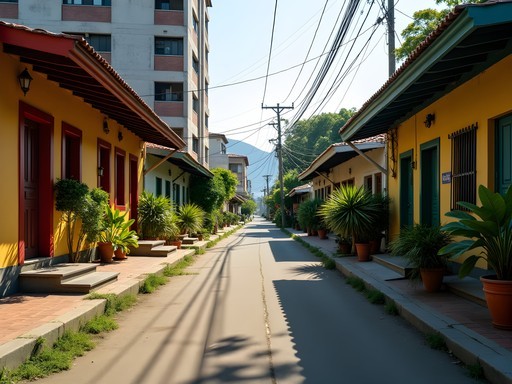
Armed with my travel journal and a city map Rodrigo had annotated with architectural points of interest, I set out on foot. Unlike the structured grid of Asunción, Fernando de la Mora grew organically, with neighborhoods developing around commercial corridors rather than central planning. The resulting urban fabric creates a fascinating study in contrasts—pockets of traditional homes with shaded galleries nestled against modern commercial structures.
What struck me most was how the city's density hasn't eliminated its connection to nature. Many homes maintain small but lush gardens, with mango and avocado trees providing natural cooling—a traditional passive cooling technique increasingly relevant in our warming world.

💡 Pro Tips
- Learn basic Spanish phrases before arriving—English is rarely spoken outside tourist areas
- Use the city's central location as a base for day trips to Asunción and San Lorenzo
- Ask locals for recommendations rather than relying on outdated guidebooks
Architectural Discoveries Off the Beaten Path
In my decades of architectural exploration, I've learned that the soul of a city reveals itself not in monuments but in everyday structures—the homes, markets, and community spaces where life unfolds. Fernando de la Mora offers a particularly rich study in vernacular architecture precisely because it hasn't been preserved as a tourist attraction.
I spent my mornings wandering residential streets, my compact binoculars allowing me to study rooflines and construction details from a respectful distance. Unlike the colonial architecture that draws visitors to Asunción, Fernando de la Mora showcases a more organic architectural evolution—from traditional single-story homes with deep verandas designed for Paraguay's intense heat to contemporary interpretations that blend modern materials with climate-responsive design principles.
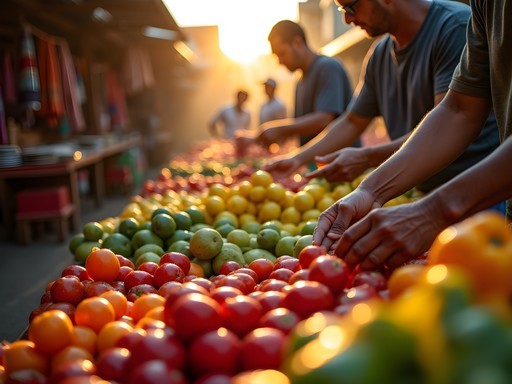
The Mercado Municipal became my afternoon ritual. Beyond the practical advantage of affordable meals, the market's structure itself tells a story—its vaulted metal roof supported by an elegant system of trusses creates a naturally ventilated space that remains remarkably cool despite the spring heat. This marriage of function and form exemplifies the pragmatic ingenuity I've always admired in vernacular building traditions.
One unexpected discovery came through a chance conversation with Elena, a local teacher who noticed me sketching a particularly interesting roof junction. She invited me to visit her grandfather's home—one of the few remaining examples of traditional Paraguayan quincho construction in the area. The quincho (an open-sided structure with a thatched roof) demonstrated sophisticated passive cooling techniques that modern architects are now rediscovering as sustainable design solutions.
'My grandfather refused to replace it with concrete,' Elena explained as we sat in the naturally cooled space. 'He always said, why waste electricity on air conditioning when the answer is in how we build?'
These encounters reinforced what I've observed across continents: traditional building wisdom often contains solutions to our most pressing contemporary challenges.

💡 Pro Tips
- Visit the Mercado Municipal in late afternoon when locals gather and the light is perfect for photography
- Look for traditional quincho structures in older residential areas
- Respect privacy when photographing residential architecture—always ask permission
Finding Community Through Craft
One of the joys of solo travel at my age is the freedom to follow curiosity without constraint. When I noticed a small workshop with handcrafted wooden furniture displayed on the sidewalk, I was immediately drawn to investigate. The proprietor, Carlos, was applying traditional Japanese joinery techniques to Paraguayan hardwoods—a surprising cultural fusion that immediately resonated with my own mixed heritage.
'I learned from YouTube,' he admitted with a laugh when I asked about his Japanese-inspired methods. 'But the woods—these are Paraguayan treasures.'
Carlos invited me to spend an afternoon in his workshop, where I found myself surrounded by the familiar comfort of woodshavings and sawdust. Though we spoke different languages, we communicated fluently through the universal vocabulary of craft. I showed him a few joinery techniques my Japanese grandfather had taught me, while he demonstrated how he adapts them to work with the dense local lapacho and curupay woods.
This exchange led to an invitation to a weekly gathering of local artisans at a nearby cultural center. Here, I witnessed how traditional crafts remain vital in Fernando de la Mora despite rapid urbanization. From woodworkers to ñandutí lace makers, these craftspeople preserve cultural knowledge while adapting to contemporary markets.
For those interested in similar connections, I recommend bringing a small sketchbook to facilitate communication across language barriers. My quick sketches of building details and joinery techniques opened more doors than my limited Spanish ever could, proving once again that craft creates community across cultures.
These encounters underscored what draws me to places like Fernando de la Mora—the opportunity to witness living traditions rather than museum pieces, and to connect with people through shared appreciation for craftsmanship and creative problem-solving.

💡 Pro Tips
- Visit small workshops and repair shops to observe traditional crafts in practice
- Bring a sketchbook to communicate across language barriers
- Ask about community cultural centers where local artisans gather

Daily Rhythms and Culinary Discoveries
Solo travel demands adaptation to local rhythms, and nowhere is this more true than in Paraguay. Fernando de la Mora operates on a schedule dictated by climate and tradition—early mornings buzz with activity, afternoons slow to a crawl during the heat, and evenings extend late into the night as temperatures cool and social life resumes.
I quickly adjusted my routine, rising before dawn to capture the city awakening with my compact drone. These early flights revealed Fernando de la Mora's fascinating urban pattern—dense development interspersed with surprising green spaces and the constant presence of water tanks on rooftops, a practical response to inconsistent municipal water supply.
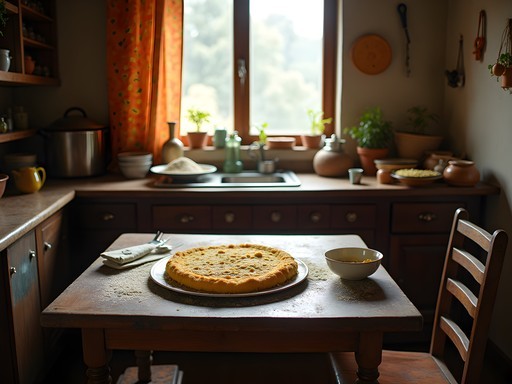
My daily explorations were fueled by Paraguay's distinct culinary traditions. Unlike neighboring Argentina's meat-centric cuisine, Paraguayan food maintains stronger indigenous Guaraní influences. At small family-run fondas, I discovered mbeju (starchy cassava flatbread), chipa guasu (corn soufflé), and my personal favorite, sopa paraguaya—a dense cornbread that, despite its name, isn't a soup at all.
These meals became opportunities for connection. At one corner comedor, the owner María insisted I try her vori vori (corn and cheese dumplings in chicken broth), explaining that it represented Paraguay's resilience—a hearty dish born from making the most of limited ingredients during difficult times.
'We Paraguayans know how to create abundance from what others might see as little,' she told me, a philosophy that resonated with my own approach to sustainable building.
Evenings brought the ritual of terere, Paraguay's cold yerba mate infusion. Unlike the hot mate shared in Argentina and Uruguay, terere is uniquely adapted to Paraguay's climate. In plazas and front yards across Fernando de la Mora, people gather in circles passing the guampa (drinking vessel) while discussing everything from politics to football.
Joining these circles as an obvious foreigner required overcoming initial shyness on both sides, but the Paraguayan commitment to hospitality inevitably won out. These impromptu gatherings provided insights no guidebook could offer—local perspectives on urbanization, climate change, and the preservation of cultural identity in a rapidly changing world.

💡 Pro Tips
- Adjust your schedule to local rhythms—early mornings and late evenings are most active
- Seek out small family-run fondas for authentic Paraguayan cuisine at budget prices
- Accept invitations to join terere circles—they're the best way to understand local perspectives
Navigating Challenges with Patience and Perspective
Solo travel in less-touristed destinations inevitably presents challenges, and Fernando de la Mora was no exception. The city's limited tourist infrastructure means few English speakers, minimal signage, and transportation systems designed for locals rather than visitors. Yet these very challenges create the authentic experience many travelers seek.
Navigating the city's colectivo (bus) system became my greatest logistical puzzle. Routes are known by numbers but rarely displayed, stops are unmarked, and schedules exist more as general suggestions than fixed timetables. After several misadventures—including one memorable ride that took me to the opposite side of the metropolitan area—I developed a strategy: always carry a detailed map, ask multiple locals for directions, and embrace the inevitability of occasional wrong turns.
The language barrier presented another hurdle. Despite my efforts to learn basic Spanish before arriving, Paraguayan Spanish incorporates significant Guaraní vocabulary and unique regional expressions. I found my pocket translator invaluable for complex conversations, though simple exchanges were better handled through gesture, patience, and good humor.
Perhaps the greatest challenge was one familiar to solo travelers everywhere—occasional loneliness. While the days filled easily with exploration and documentation, evenings sometimes brought a yearning for familiar conversation. I developed a ritual of evening video calls to my wife in Mumbai, sharing the day's discoveries while she offered architectural insights from her historian's perspective.
These challenges, however, pale in comparison to the rewards of experiencing a place few travelers visit. Without the buffer of tourist infrastructure, every interaction becomes more meaningful, every discovery more personal. The very absence of a well-worn tourist path means creating your own—following curiosity down unmarked streets, accepting impromptu invitations, and developing a relationship with place that feels uniquely your own.
As my week in Fernando de la Mora progressed, I found myself moving more slowly, observing more carefully, and connecting more deeply—the ultimate luxury in our rushed world.

💡 Pro Tips
- Download offline maps before arriving as internet connectivity can be unreliable
- Learn basic Guaraní phrases in addition to Spanish—locals appreciate the effort
- Build flexibility into your schedule to accommodate transportation uncertainties
Final Thoughts
As my final evening in Fernando de la Mora faded into night, I sat sketching in the small garden of my posada, trying to capture the essence of this place that exists between rural tradition and urban transformation. The city had revealed itself slowly, not through grand monuments or tourist attractions, but through countless small moments—Carlos's workshop where Japanese joinery meets Paraguayan hardwoods, the terere circles where strangers become temporary community, the resilient architecture adapting to climate and resource constraints. For the independent traveler willing to navigate its challenges, Fernando de la Mora offers something increasingly rare: an unfiltered glimpse into everyday Paraguayan life and a chance to witness the ongoing dialogue between tradition and change. As I prepare to return to Mumbai, I carry with me not just architectural observations but a deeper understanding of how communities maintain cultural identity amid rapid urbanization—lessons as relevant in India as in Paraguay. Perhaps the true value of places like Fernando de la Mora lies precisely in their unassuming authenticity, reminding us that the most meaningful journeys often happen far from the well-traveled path.
✨ Key Takeaways
- Fernando de la Mora offers authentic cultural immersion without tourist infrastructure
- The city showcases fascinating architectural contrasts between traditional and modern building styles
- Community connections through craft and shared meals provide the most meaningful experiences
- Navigating challenges independently creates a more personal relationship with the destination
📋 Practical Information
Best Time to Visit
Spring (September-November) or Fall (March-May)
Budget Estimate
$30-50 USD per day including accommodation, food and local transport
Recommended Duration
3-7 days
Difficulty Level
Moderate



Comments
Nicole Russell
Hayden, this really resonates with me! I love how you captured that initial taxi driver confusion - I get that ALL the time when I travel solo to lesser-known spots. The craft community section was my favorite part. Did you end up connecting with any local artisans long-term? I'm always looking for ways to build those authentic connections beyond just a quick visit. Also your sketches sound amazing - do you always travel with art supplies? I've been thinking about bringing a small watercolor set on my next trip.
smartlife
wait is this actually worth visiting? never even heard of it before lol. where did you stay?
Nicole Russell
That's what makes it so cool! Most people skip right to Asunción but these smaller cities have so much character. I had a similar experience in Ecuador visiting places outside Quito.
smartlife
ok you convinced me to look into it more
cityclimber
Just booked my flights to Paraguay and definitely adding Fernando de la Mora to my itinerary!!! Your post convinced me! Any food spots I absolutely shouldn't miss?
Hayden Takahashi
Awesome! Don't miss the small market on Calle Independencia - there's a woman who makes the best sopa paraguaya in the morning. And try Mercado Municipal for lunch - stall #14 has incredible surubí fish!
cityclimber
Screenshot taken! THANK YOU!!
happydiver
Those architectural photos are stunning! Who knew?
Adam Nichols
Fantastic piece on urban exploration beyond the typical South American circuit. I've been researching Paraguay for a potential trip, and the transportation insights here are invaluable. How did you find the local bus system? I've found that in many overlooked cities, public transit can be the best window into daily life. Also, I'd recommend anyone heading to these less-touristed parts of Paraguay pick up a pocket dictionary - smartphone translation apps often fail in areas with spotty connection, and the locals really appreciate the effort.
Hayden Takahashi
The local buses were quite an adventure, Adam! No official schedules that I could find, but they run frequently. Locals were incredibly helpful in pointing me to the right stops. And yes, a physical dictionary saved me multiple times when my phone had no signal!
cityclimber
I'm planning a South America trip and LOVE finding these hidden spots!! Did you feel safe on the local buses? Any tips for a solo female traveler?
Savannah Walker
I love how you captured the essence of discovering places that aren't in guidebooks! Last year I had a similar experience in a small town outside Montevideo that everyone kept telling me to skip. Those confused taxi driver moments are often the start of the best adventures. Did you find any good cafés in Fernando de la Mora? The food markets you mentioned sound amazing - I'm always hunting for those authentic food experiences where you're the only tourist in sight!
Hayden Takahashi
Café Doña Luisa near the central plaza was my go-to! Family-run place with the best chipa guasu I've ever had. And yes - being the only tourist definitely makes for more genuine connections!
coolchamp
Never even heard of this place before! Cool find!
wanderbackpacker
This is so refreshing to read about somewhere totally off the usual tourist trail! How was safety there as a solo traveler? Did you have any language barriers since it's not a typical tourist spot?
Hayden Takahashi
Safety was actually great! Definitely needed basic Spanish to get by - very few people spoke English, which made for more authentic interactions. The locals were genuinely curious about why I was visiting!
wanderbackpacker
Thanks for the reply! Adding this to my South America backpacking itinerary for next year.
journeymaster
What was the food like? Any must-try dishes besides what you mentioned in the post?
Sophia Gomez
Not Hayden, but when I was there I became obsessed with mbeju (a starchy pancake made with mandioca flour) and the fresh fruit juices from the market stalls. The local version of empanadas are amazing too!
Megan Martin
Excellent coverage of a destination that rarely makes it onto travel itineraries, Hayden. I'm particularly impressed by how you've highlighted the accessibility of Fernando de la Mora for independent travelers. For anyone planning to visit, I'd add that having a decent grasp of Spanish is quite beneficial here, as English is less commonly spoken than in more tourist-oriented destinations. I found that a pocket phrasebook or translation app was essential during my time in Paraguay's secondary cities. The culinary section of your post resonated with me - Paraguayan cuisine deserves more recognition, especially the fresh produce available at local markets. Looking forward to your next off-the-beaten-path discovery!
Venture X
Premium card with 2X miles, $300 travel credit, Priority Pass