
Disclosure: This article contains affiliate links. We may earn a commission from purchases at no extra cost to you, which helps our travel content.
There's something magical about Hoi An that transcends its famous lanterns and tailor shops. As a doctor who prescribes travel as the ultimate antidote to burnout, I've found this Vietnamese jewel to be particularly therapeutic. My first visit was actually a happy accident—I'd planned to attend a tennis exhibition in Da Nang but found myself with three extra days when it was postponed. ¡Qué suerte! (What luck!) Those unplanned days wandering Hoi An's labyrinthine alleys became the highlight of my entire Southeast Asian journey. Having returned twice since then, I've developed what my medical colleagues might call a chronic condition: Hoi An addiction. This guide distills my experiences into a week-long prescription for solo travelers seeking the authentic pulse of this ancient trading port, without hemorrhaging your savings in the process.

The Dawn Ritual: Hoi An Before the Crowds
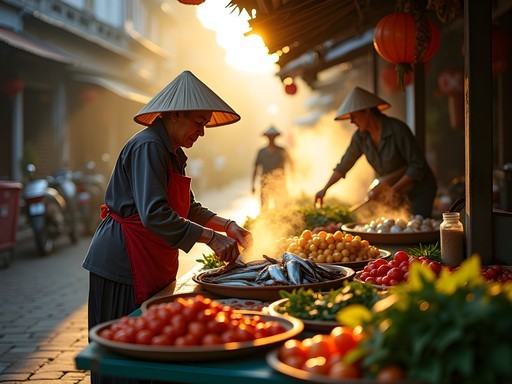
As an anesthesiologist, I'm accustomed to early mornings, which serves me well when traveling. In Hoi An, the 5AM wake-up call is richly rewarded. While tourists sleep, the Ancient Town belongs to locals, and this is when you'll witness the city's authentic rhythm.
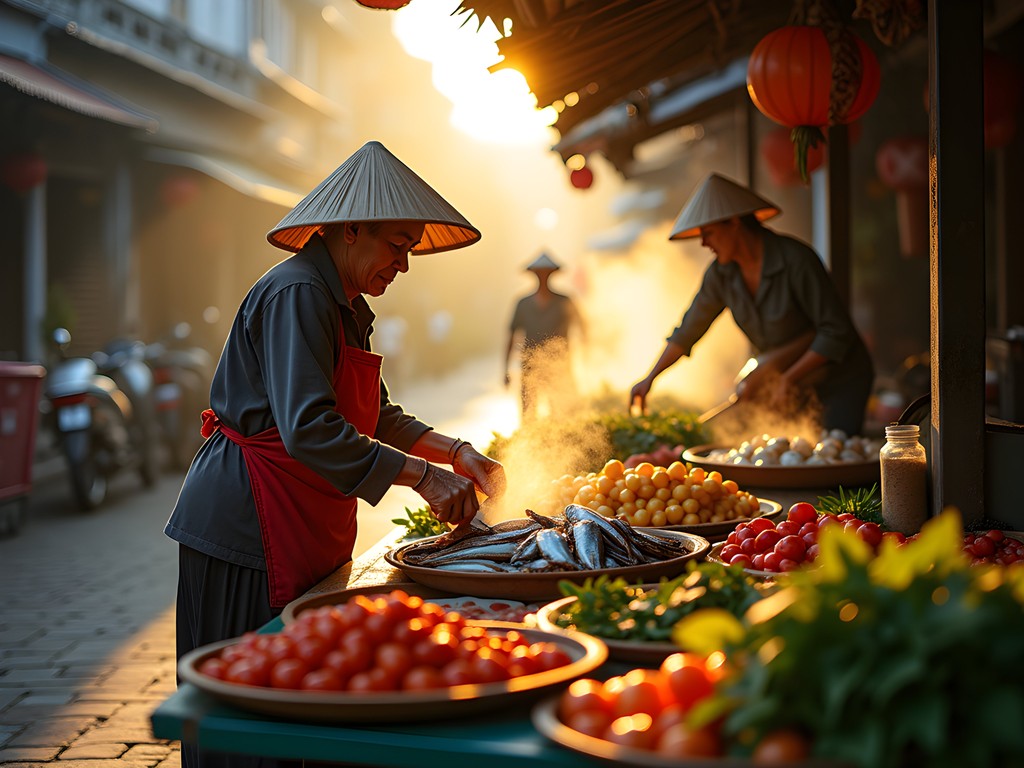
My routine begins at the central market by 5:30AM, where fishermen deliver their night's catch and farmers arrange produce with mathematical precision. The market women—formidable negotiators with razor-sharp humor—will warm to you if you return multiple mornings. By my third visit, Madame Thuy was saving me the crispest bánh xèo (Vietnamese pancakes) and teaching me phrases that made other vendors laugh uproariously (I'm still not entirely sure what I was saying).
After market explorations, I recommend walking the Japanese Covered Bridge while it's gloriously empty. The morning light filtering through the ancient wood creates a photographer's dream. I captured some of my favorite shots with my travel camera, which handles low light beautifully without the bulk of my professional gear.
Finish your morning ritual with coffee at Reaching Out Tea House on Tran Phu Street—a silent café staffed by hearing-impaired individuals where communication happens through notes and smiles. Their Vietnamese egg coffee is transcendent, and the enforced quietude offers rare contemplative space.
💡 Pro Tips
- Bring small bills (dong) for market purchases—vendors appreciate exact change
- Wear shoes you can easily slip on/off as you'll be entering many temples and homes
- Learn basic Vietnamese greetings—they open doors to genuine interactions
The Alleyway Chronicles: Mapping the Unmapped
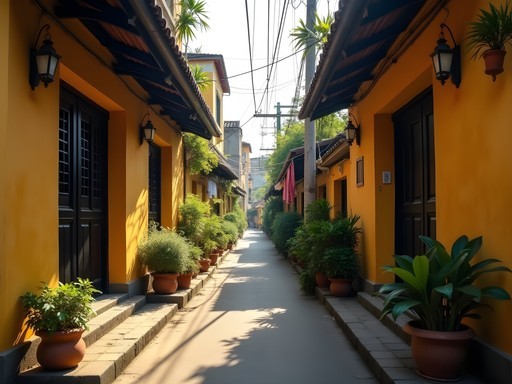
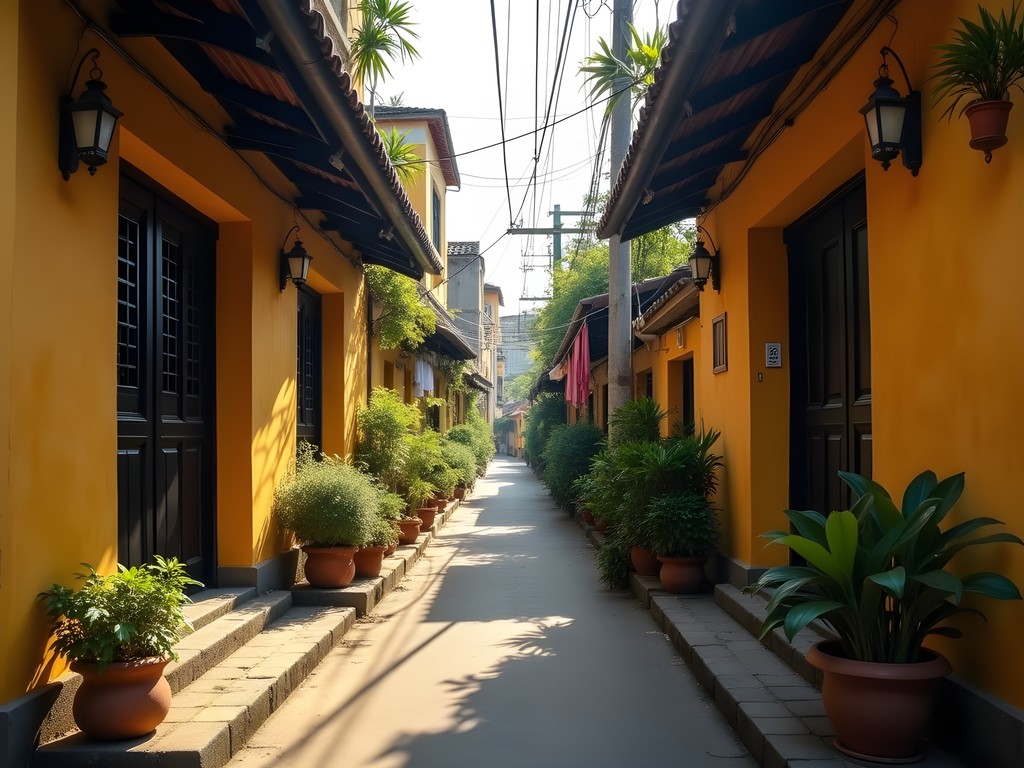
The true essence of Hoi An lies in its network of narrow alleyways that spider out from the main tourist arteries. My medical background has given me an appreciation for complex systems—whether vascular or urban—and Hoi An's hidden pathways constitute a fascinating circulatory system worth exploring methodically.
Start with Cam Nam Island, accessible via a small footbridge from the Ancient Town. While technically not an alley system, this island neighborhood remains delightfully untouched by tourism. The northeastern shore hosts impromptu morning exercise groups where I've been welcomed into tai chi sessions despite my obvious lack of coordination.
For true alley exploration, I've developed what I call the 'Three Turn Rule': from any main street, make at least three consecutive turns down progressively smaller alleys. This formula has led me to family-run food stalls serving the best cao lầu (Hoi An's signature noodle dish) I've ever tasted.
The alley network between Nguyen Thi Minh Khai and Tran Phu streets holds particular treasures. Here I discovered a third-generation lantern maker who taught me the basics of lantern construction during an impromptu two-hour session that cost nothing but resulted in my purchasing three lanterns out of appreciation.
To document these explorations, I've found my waterproof notebook invaluable during Vietnam's unpredictable summer showers. The ability to jot down directions, vendor names, and food recommendations regardless of weather has saved me countless times.
💡 Pro Tips
- Take photos of street signs or save GPS pins to avoid getting permanently lost
- Carry a lightweight scarf for impromptu temple visits in residential areas
- The best food stalls have plastic stools of uneven heights—this is a reliable quality indicator
Culinary Detours: Beyond Bánh Mì
While Anthony Bourdain made Bánh Mì Phuong deservedly famous, my medical perspective on nutrition (and borderline obsessive approach to food research) has led me to some exceptional alternatives that won't have you queuing with fifty other tourists.
First, let's talk about the Hoi An specialty cao lầu. This dish—featuring noodles made with ash water from a specific local tree and only found in Hoi An—is my benchmark for judging local eateries. The best version comes from an unmarked stall on Thai Phien Street, operated by a grandmother who makes only 50 portions daily. Look for wooden tables under a blue tarp around 11:30AM—when they're gone, they're gone.
For breakfast, skip the tourist cafes and head to 65 Nguyen Truong To Street for bánh bèo (steamed rice cakes with dried shrimp) and bánh vạc (white rose dumplings). The family has been making these for four generations, and their technique is unmatched.
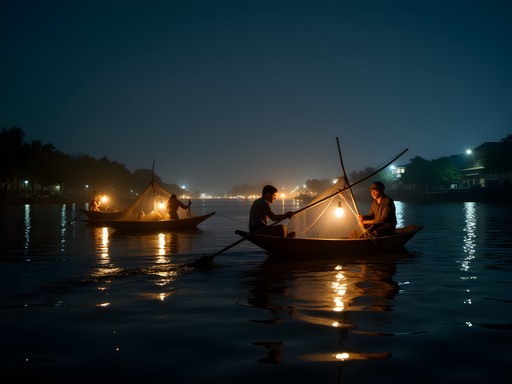
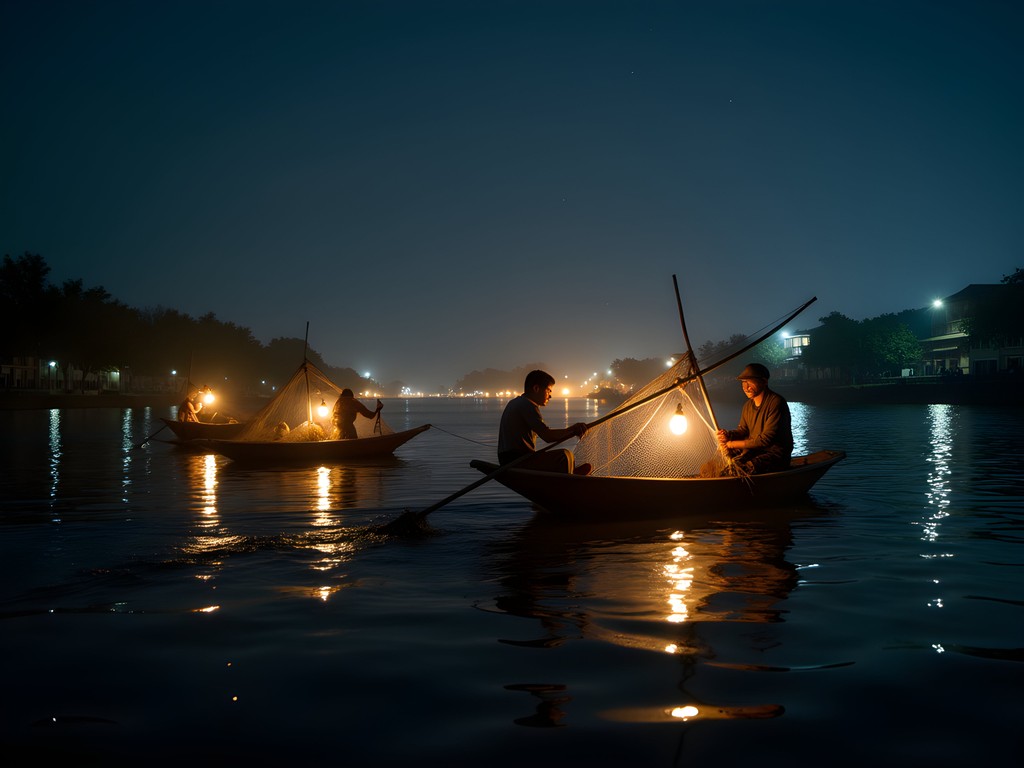
My most unexpected discovery came through my passion for tennis. While searching for a place to watch the Australian Open (challenging with the time difference), I befriended a local sports enthusiast who introduced me to Hoi An's night fishing community. For about 150,000 VND (roughly $6), fishermen will take you on their boats after sunset, teach you traditional net casting, and grill your catch on makeshift charcoal burners. The simplicity of freshly caught fish seasoned only with salt, lime, and chili remains one of my most vivid culinary memories.
To keep track of these culinary discoveries, I use my travel journal religiously, creating detailed maps with tasting notes that have become invaluable on return visits.
💡 Pro Tips
- Eat where elderly locals eat—they have the highest standards and lowest tolerance for tourist pricing
- Learn to say 'không MSG' (no MSG) if you're sensitive to it
- Street food is generally safe, but places that handle money and food with the same hands are best avoided

The Countryside Circuit: Exploring by Electric Scooter
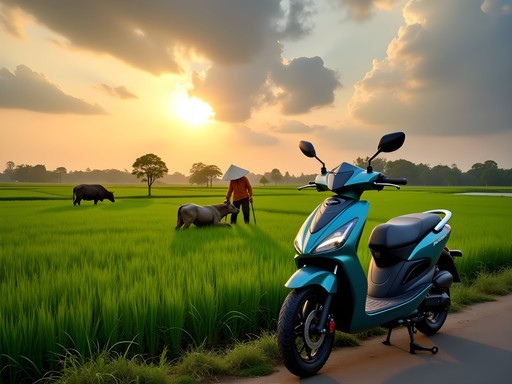
As someone who drives an electric vehicle at home in Oakland, I was delighted to discover Hoi An now offers electric scooter rentals—perfect for exploring the surrounding countryside while minimizing your environmental footprint. Sostenibilidad primero, as my Catalan grandfather would say (sustainability first).
The countryside circuit I've refined over multiple visits creates a perfect day trip that avoids the standard tourist routes. Begin by renting from Hoi An Scooter Rental on Hai Ba Trung Street (approximately 150,000 VND/day for electric models). Their scooters come with phone mounts—essential for navigation.
Head first to Tra Que Vegetable Village, but instead of stopping at the tourist-oriented entrance, continue to the northern fields where actual farming happens. I've spent meditative hours watching elderly farmers tend their immaculate rows of herbs, occasionally being drafted into watering duty.
From there, take the small road toward Kim Bong carpentry village on Cam Kim Island. The bridge views are spectacular, but the real treasure is meeting woodworkers practicing centuries-old techniques. Master Huynh Van Ba allowed me to try my hand at carving (with predictably disastrous results that amused everyone).
Continue to the pottery village of Thanh Ha, timing your arrival for late afternoon when the light gives the clay a golden glow. The pottery workshops here operate much as they have for centuries.
For this countryside exploration, I rely heavily on my portable power bank to keep my phone charged for navigation and photography. Vietnamese summer heat can drain batteries quickly, and being stranded without GPS in the countryside isn't ideal.

💡 Pro Tips
- Download offline Google Maps of the area before setting out
- Carry twice as much water as you think you'll need—the countryside heat is deceptive
- Learn the phrase 'Xin lỗi, tôi bị lạc' (Excuse me, I am lost) as a precaution
The Tennis Connection: Surprising Sporting Culture
Few travelers realize that Vietnam has a growing tennis culture, and Hoi An is no exception. As someone who has planned many trips around tennis tournaments (my friends joke that my Tesla's navigation system is programmed primarily for tennis courts), discovering Hoi An's tennis scene was a delightful surprise.
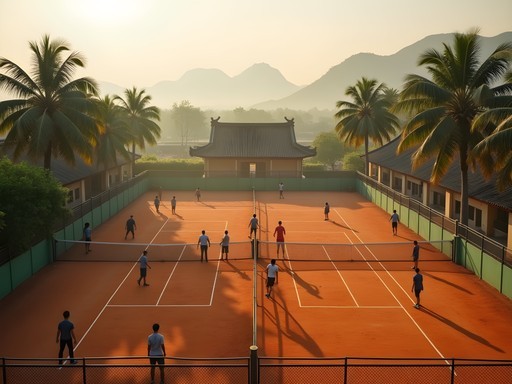
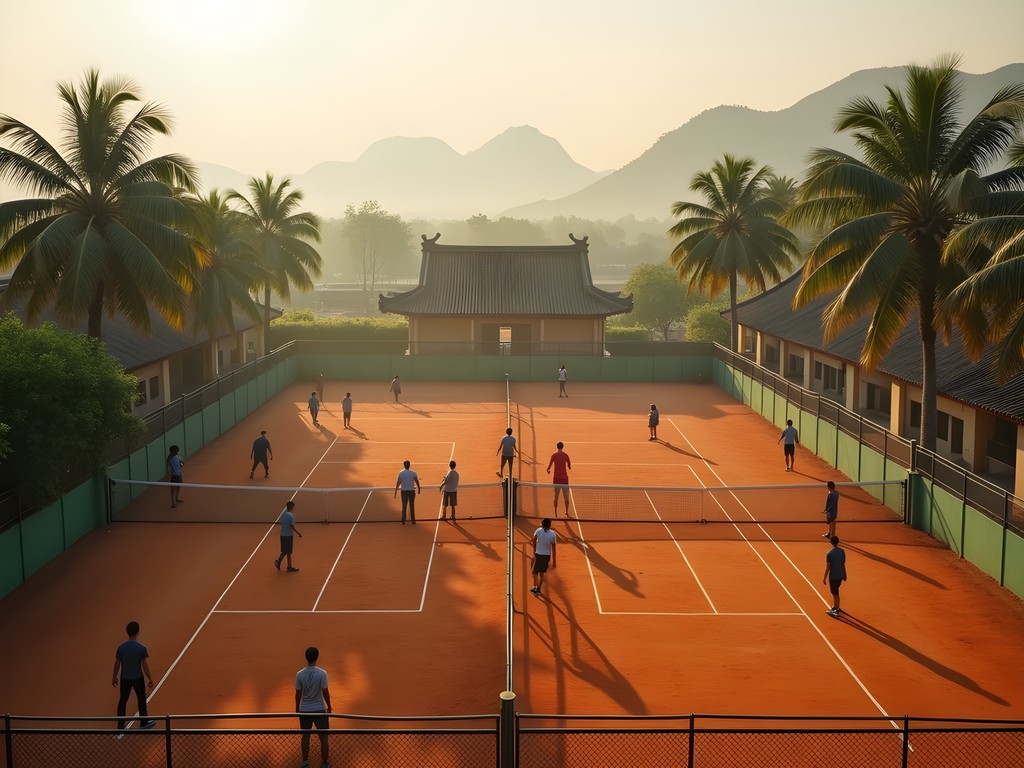
The Hoi An Tennis Club, located about 3km from the Ancient Town near An Bang Beach, offers clay courts that remind me of my childhood courts in Barcelona. For around 100,000 VND (about $4), you can play for an hour, and they often have spare racquets if you haven't brought your own.
What makes this a unique cultural experience is the opportunity to play with locals. Vietnamese tennis enthusiasts are incredibly welcoming to foreign players, and I've had some of my most insightful conversations about local life while catching my breath between sets. My hitting partner Minh, a hotel manager, provided insider tips about Hoi An that no guidebook mentioned, including a spectacular seafood restaurant frequented exclusively by Vietnamese families.
Even if you're not a player, the club's small café offers excellent vantage points to watch matches while enjoying fresh coconut water. It's a slice of local life completely removed from the tourist experience.
For serious players traveling in summer, remember that Hoi An's humidity makes for challenging conditions. I bring my cooling towel which provides remarkable relief in the Vietnamese heat. Simply wet it, wring it out, and it stays cool for hours—essential for both tennis and general sightseeing.
💡 Pro Tips
- Morning sessions (before 8AM) offer the most comfortable playing conditions
- Bring a small gift from your home country if you arrange to play with locals—tennis balls from international tournaments are especially appreciated
- The club can arrange informal matches with local players if you ask in advance
Final Thoughts
As I sit writing these final thoughts at the Reaching Out Tea House, watching Hoi An's famous lanterns begin their evening glow, I'm reminded why this place pulls me back despite having explored destinations across five continents. Hoi An offers that rare balance of accessibility and authenticity—a place where the tourist infrastructure makes travel comfortable without sanitizing the experience. The city rewards curiosity and punishes rigid itineraries. My medical training taught me that the most accurate diagnoses come from careful observation rather than hasty conclusions, and Hoi An demands the same patient approach. Give yourself permission to get lost, to follow the wrong alley, to accept an unexpected invitation. Vale la pena—it's worth the effort. Your Hoi An won't be identical to mine, but if you venture beyond the lanterns, I guarantee it will leave an equally indelible impression.
✨ Key Takeaways
- Early mornings reveal Hoi An's authentic character without the tourist crowds
- The 'three turn rule' leads to genuine local experiences in the city's hidden alleyways
- Electric scooters provide the perfect balance of mobility and sustainability for countryside exploration
- Local connections through shared interests like tennis can open doors to experiences no guidebook mentions
📋 Practical Information
Best Time to Visit
February-April or August-September (avoiding peak summer heat and winter rain)
Budget Estimate
$30-50/day including accommodations, food, and activities
Recommended Duration
Minimum 4 days, ideally 7
Difficulty Level
Intermediate




Comments
beachchamp
What's the best area to stay if you want to explore the countryside easily?
Casey Andersson
Lars, this resonates so much! I spent three weeks in Hoi An last year and those hidden alleyways became my daily meditation. There's this incredible family-run ceramics workshop down one of those unmarked lanes near An Bang beach - the grandmother taught me how to paint traditional patterns while her daughter translated. Those unplanned moments, away from the lantern-lit main drag, are where Hoi An's real soul lives. The Reaching Out Tea House you mentioned is pure magic too. Have you discovered the secret rooftop at the old Phung Hung house yet? Sunrise views that'll make you weep.
beachclimber
The dawn ritual thing is SO true. We got up at 5:30am one morning and it was like a completely different city. Watched the locals doing tai chi by the river and had the best pho of our lives at this tiny place near the market. By 9am the tour groups arrived and it was packed. Definitely worth the early alarm!
summerwalker
ok you convinced me, setting my alarm now lol
wildbackpacker
How easy is it to rent the electric scooters? Do you need an international license or anything?
beachclimber
Not the author but when I went last year most places didn't check. Just needed passport copy. But technically you should have one!
wildbackpacker
Thanks! Good to know
summerwalker
Love this! Going in July, super excited now 😍
Sophia Gomez
Lars, this resonates so much! I spent three weeks in Hoi An last year working remotely and those early morning walks became my ritual too. There's a tiny coffee shop on Tran Phu that opens at 5:30am - the owner remembers everyone and makes the best cà phê sữa đá. I'd grab one and just wander before my meetings started. The alleyways you mentioned near the Central Market are incredible - I found this grandmother who makes fresh rice paper rolls every morning and she let me watch her process. Those unplanned moments are what travel is really about. Also seconding the Reaching Out Tea House - such an important social enterprise.
winterseeker2512
What's the coffee shop called? Adding to my list!
Sophia Gomez
Honestly can't remember if it even has a name - no sign in English. It's between the market and the bridge, blue door with plants outside. You'll know it when the smell of coffee hits you!
winterseeker2512
Love this! Going in August, definitely doing the dawn walk now.
redphotographer
Do it! Bring water though, it gets hot fast even that early
redphotographer
YES to the dawn ritual!! I got up at 5am and had the Japanese Bridge basically to myself. The light was incredible for photos. Also totally agree on the electric scooter - rented one from a shop near An Bang beach and spent two days just getting lost in the rice paddies. Best decision ever. Did you make it out to the Tra Que vegetable village?
Sophia Gomez
The early morning light there is unreal! Which scooter shop did you use? I'm heading back in March and want to do the countryside circuit properly this time.
redphotographer
Can't remember the exact name but it was the green storefront right across from the beach entrance. Guy there spoke good English and the scooters were in great shape!
Sophia Gomez
Lars, your section on 'Culinary Detours' resonated with me so much! I was in Hoi An for a business conference last year and escaped every evening to explore the food scene. Everyone talks about Bánh Mì Phượng (yes, it's good) but the real gems are those family-run spots down the unmarked alleys. That tiny place you mentioned near Cam Nam Bridge serving the cau lau with the secret family recipe? Changed my life! I'd add one more recommendation: there's a woman who sets up a temporary seafood grill on An Bang beach around sunset - just look for the blue plastic chairs and the crowd of locals. Her grilled scallops with spring onions are worth the trip alone. Did you make it to any of the cooking classes? I took one at Market Restaurant and learned techniques I still use weekly.
Lars Gordon
Sophia, that seafood grill sounds amazing! Putting that on my list for next time. I did take a cooking class at Red Bridge - highly recommend their market tour beforehand too. They taught us how to make those delicate rose dumplings that I'd been admiring everywhere!
dreamwanderer
Can you share more details about the countryside circuit? How long did it take and is it safe for someone who hasn't driven a scooter much before?
Lars Gordon
The full circuit took about 4 hours with stops, but you could do a shorter version. If you're not confident on a scooter, I'd recommend hiring a driver with a car instead - many hotels can arrange this for around $25-30 for half a day. Much safer and still lets you see everything!
Venture X
Premium card with 2X miles, $300 travel credit, Priority Pass