
Disclosure: This article contains affiliate links. We may earn a commission from purchases at no extra cost to you, which helps our travel content.
As someone who typically documents the sleek smart cities of Asia and Europe, my weekend detour to the gateway settlements of South Luangwa National Park in Zambia offered a fascinating counterpoint to my usual urban explorations. Here, 'urban' takes on an entirely different meaning—one where traditional village structures and emerging tourism infrastructure create a compelling juxtaposition. Mfuwe and its surrounding communities represent a fascinating case study in how conservation economies reshape rural settlements. Having spent years analyzing how technology transforms established metropolises, I found myself equally captivated by these emerging micro-urban spaces where the development trajectory is being written in real-time, influenced by both global tourism demands and deeply rooted local traditions. This isn't the Singapore or Helsinki I typically document, but these gateway towns offer equally valuable insights into how human settlements evolve when wildlife conservation becomes the economic engine.

Mfuwe: Where Safari Tourism Meets Village Life
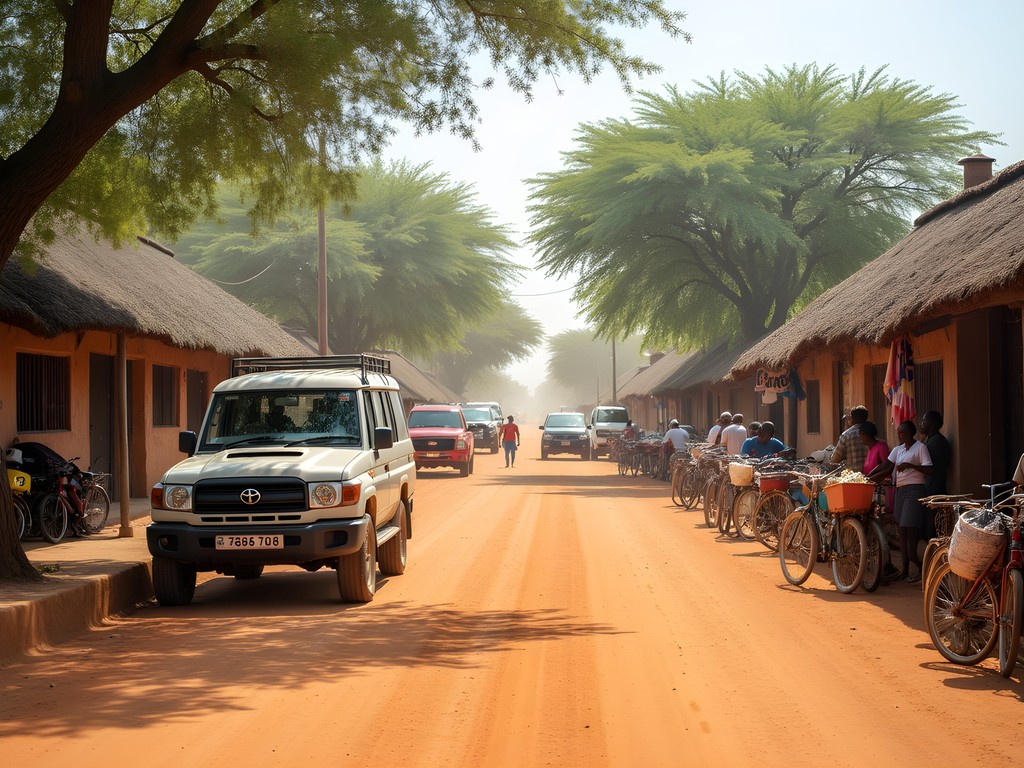
Mfuwe serves as the primary gateway to South Luangwa National Park, and its urban fabric reflects this pivotal role. Unlike the meticulously planned smart cities I frequently document, Mfuwe has developed organically around the safari industry, creating a fascinating hodgepodge of traditional structures and modern amenities.
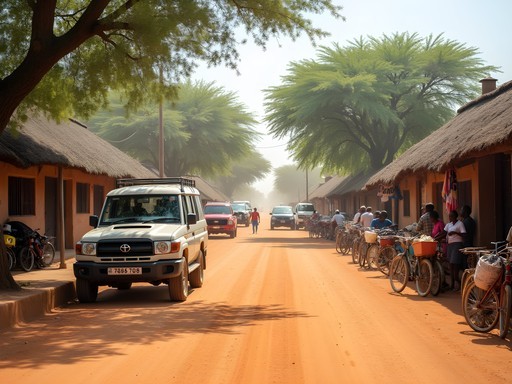
The town's main road—a stretch of asphalt that eventually surrenders to dirt—serves as its commercial spine. Here, small shops selling everything from local crafts to mobile phone credit cards stand alongside safari outfitters and modest restaurants. What struck me immediately was the juxtaposition of satellite dishes atop traditional thatched roofs—a visual representation of Mfuwe's position at the intersection of traditional rural life and global connectivity.
I spent my first morning documenting this main corridor, where Land Cruisers loaded with camera-wielding tourists share the road with locals on bicycles transporting impossibly large bundles of charcoal or produce. The infrastructure here is developing in direct response to tourism demands rather than following any master urban plan. Power outages remain common, making a reliable portable power bank an absolute necessity for keeping my various devices operational throughout the day.
What makes Mfuwe particularly interesting from an urban development perspective is how tourism revenue is gradually transforming the built environment while local traditions persist. New lodges and guesthouses continue to sprout along the periphery, while the core village structure remains largely intact—a development pattern markedly different from the wholesale transformations I've documented in rapidly evolving Asian tech hubs.
💡 Pro Tips
- Exchange currency in Lusaka or Chipata before arriving in Mfuwe, as local exchange options are limited and often offer poor rates
- The cellular network is surprisingly robust for such a remote area—Airtel offers the best coverage
- Most accommodations in Mfuwe can arrange airport transfers, which is advisable as public transport options are limited
The Emerging Digital Infrastructure
What continually fascinates me about emerging urban centers is how digital connectivity often leapfrogs traditional infrastructure development. Mfuwe exemplifies this phenomenon perfectly. While reliable electricity remains a challenge and paved roads are limited, mobile connectivity has transformed daily life and commerce in ways that parallel what I've observed in more established urban centers.
Mobile money services like Airtel Money and MTN Mobile Money have become ubiquitous, enabling financial transactions in an area with minimal banking infrastructure. Even the smallest roadside stands often display mobile payment options—a pattern of digital adoption I've documented across developing urban centers globally.
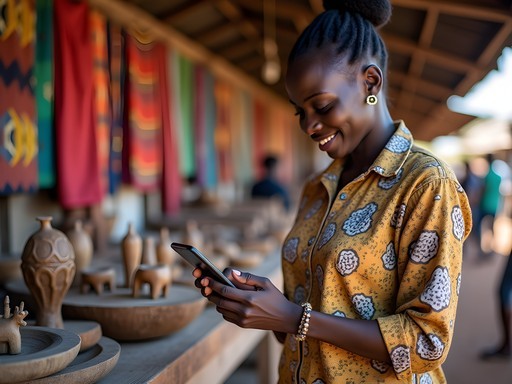
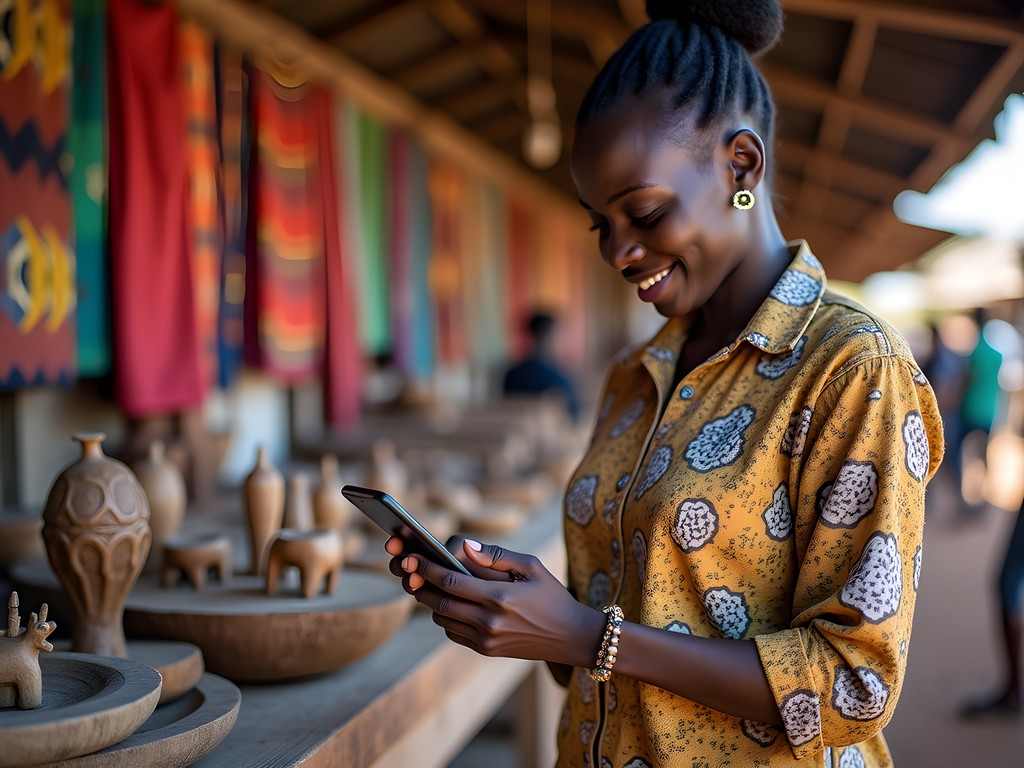
During my exploration, I visited the Mfuwe Community Market, where I observed vendors using basic smartphones to process payments and manage inventory. One particularly entrepreneurial craft seller explained how WhatsApp has transformed his business, allowing him to showcase products to safari lodge operators without making the journey in person—a digital efficiency that mirrors practices I've documented in far more developed urban environments.
For travelers, this digital layer means you can navigate this remote region with surprising ease if properly equipped. I relied heavily on my satellite communicator when venturing beyond cellular coverage areas, particularly when exploring the more remote villages outside Mfuwe proper. The ability to maintain emergency communication capabilities while documenting these transitional spaces provided necessary security without compromising the authenticity of the experience.
💡 Pro Tips
- Download offline maps before arrival as Google Maps coverage is spotty in more remote areas
- Consider purchasing a local SIM card at the Lusaka airport for better rates on data
- Many lodges offer WiFi, but connections are frequently interrupted—plan digital activities accordingly
Beyond Mfuwe: The Satellite Communities
While Mfuwe serves as the primary gateway to South Luangwa, the surrounding satellite communities offer equally compelling insights into how conservation-based economies reshape settlement patterns. I dedicated a full day to exploring these peripheral villages, each existing in various stages of tourism-influenced development.
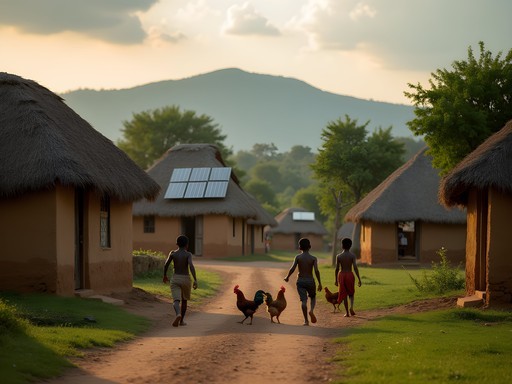
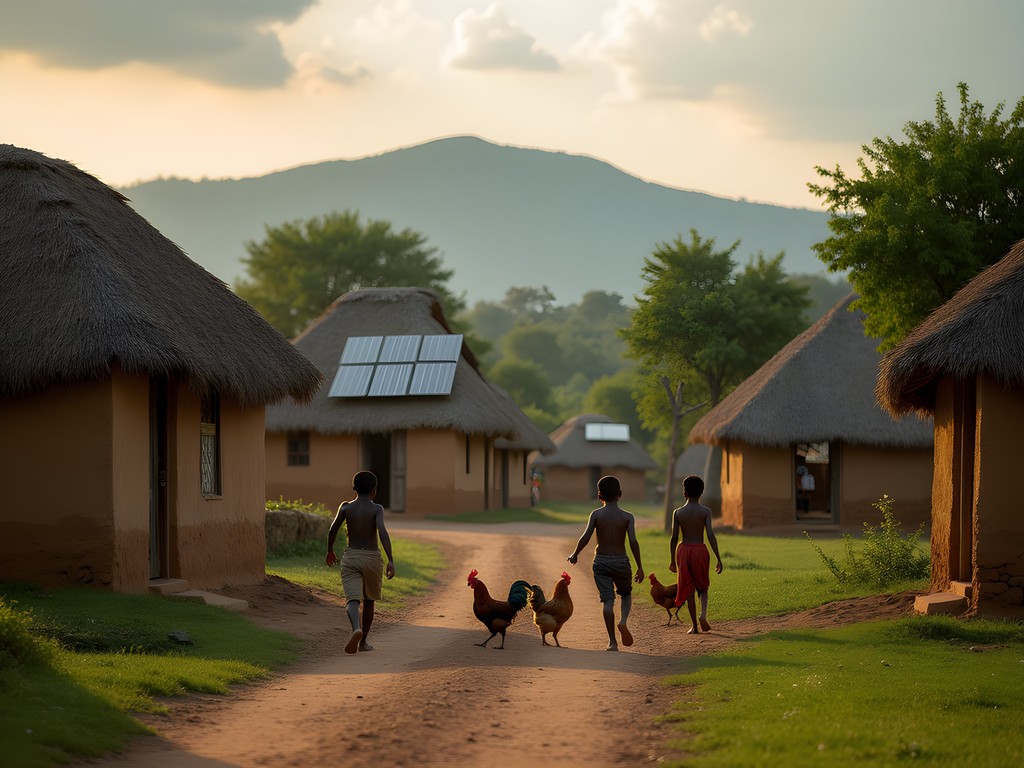
Masumba, located roughly 8 kilometers from Mfuwe's center, presents a fascinating case study. Here, the influence of safari tourism is more diluted, with traditional agricultural practices remaining dominant. Yet subtle changes are evident—improved school facilities funded by conservation NGOs, solar panels appearing on select structures, and small-scale craft production oriented toward the tourist market.
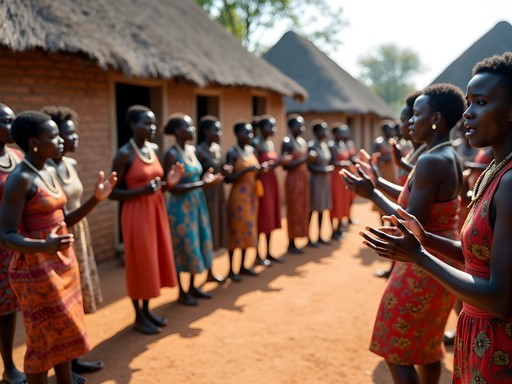
In contrast, Kakumbi, situated closer to the park entrance, displays more pronounced tourism-related development. Several community-based tourism initiatives have emerged here, including guided village walks and cultural demonstrations. The architectural landscape reflects this economic shift, with more permanent structures and modest guesthouses appearing alongside traditional dwellings.
Navigating between these communities requires adaptability. The dirt roads connecting these settlements become challenging during the rainy season, and public transportation is virtually non-existent. I opted to hire a local guide with a vehicle, which proved invaluable not just for transportation but for facilitating meaningful community interactions. My travel backpack proved perfectly sized for these day excursions, allowing me to carry essential documentation equipment while maintaining mobility in the often challenging terrain.
💡 Pro Tips
- Hiring a local guide is not just convenient but provides crucial cultural context and supports the local economy
- Visit the Tribal Textiles workshop near Mfuwe to see how traditional craft production has evolved to meet international markets
- When photographing in villages, always ask permission first—offering to share digital copies of photos via WhatsApp is often appreciated

The Urban Planning Challenges
What makes the gateway communities of South Luangwa particularly intriguing from an urban development perspective is the absence of conventional planning frameworks. Unlike the meticulously designed smart cities I typically document, these settlements are evolving through a complex interplay of traditional governance structures, conservation imperatives, and tourism market forces.
The result is both inspiring and concerning. On one hand, the organic development has preserved cultural authenticity and prevented the cookie-cutter tourism development that plagues many destination communities. On the other, challenges related to waste management, water resources, and land use conflicts are becoming increasingly apparent as visitor numbers grow.
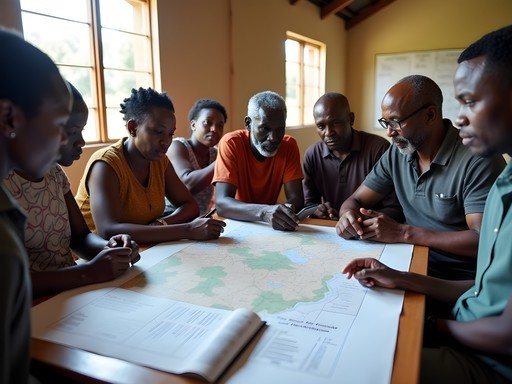
During my conversations with local community leaders, I learned about emerging grassroots initiatives to address these challenges. The Mfuwe Community Development Board, for instance, has begun implementing basic zoning guidelines to balance tourism development with traditional land uses. Similarly, several safari operators have partnered with the community to develop waste management systems that serve both tourism businesses and local residents.
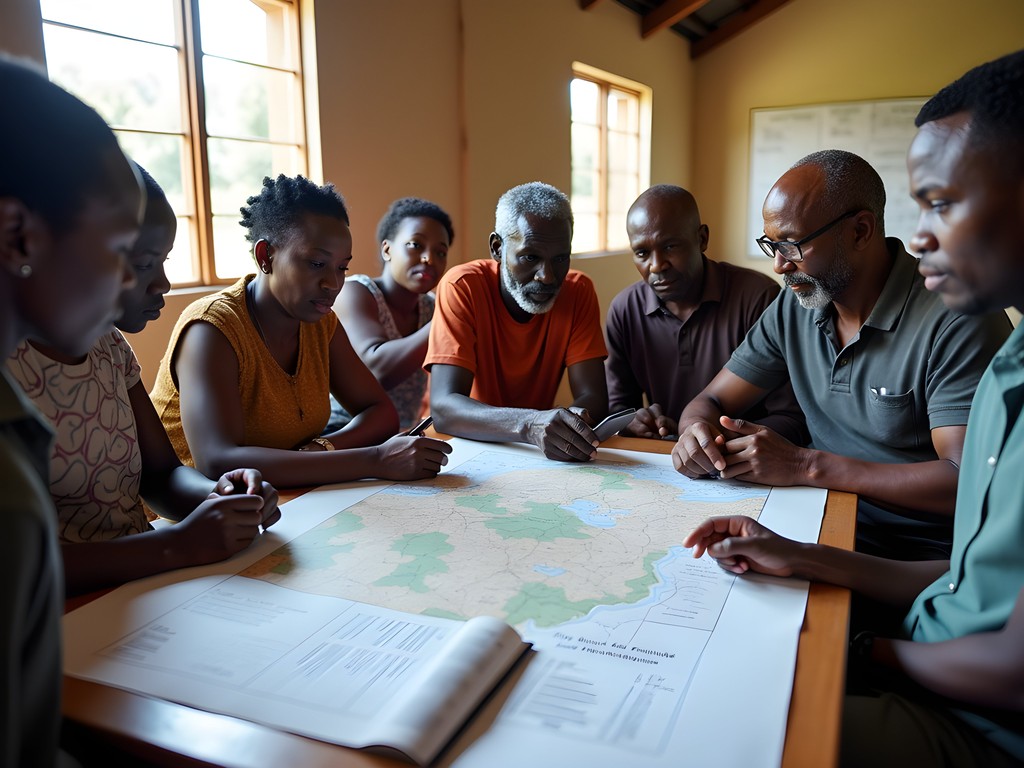
What's particularly notable is how digital tools are supporting these planning efforts despite limited resources. One local conservation NGO has initiated community mapping projects using open-source GIS platforms, enabling residents to document traditional land uses and natural resources. This bottom-up approach to urban planning represents a fascinating counterpoint to the top-down smart city initiatives I've documented elsewhere.
For those interested in sustainable tourism development, these communities offer valuable lessons in how conservation economies can drive urban evolution in ways that potentially preserve cultural heritage while improving living standards—though the long-term outcomes remain to be seen.
💡 Pro Tips
- Visit the Conservation South Luangwa headquarters to learn about community development initiatives tied to wildlife protection
- The Mfuwe Community Library offers insightful historical documentation about the region's development
- Consider joining a community development tour that specifically addresses the challenges and opportunities of tourism-driven growth
Navigating as a Budget-Conscious Student Traveler
While my typical urban explorations involve higher-end accommodations and seamless transportation, I deliberately adopted a more budget-conscious approach to better understand how student travelers might experience these gateway communities. The insights proved valuable both for understanding the economic accessibility of the region and for documenting the full spectrum of its urban offerings.
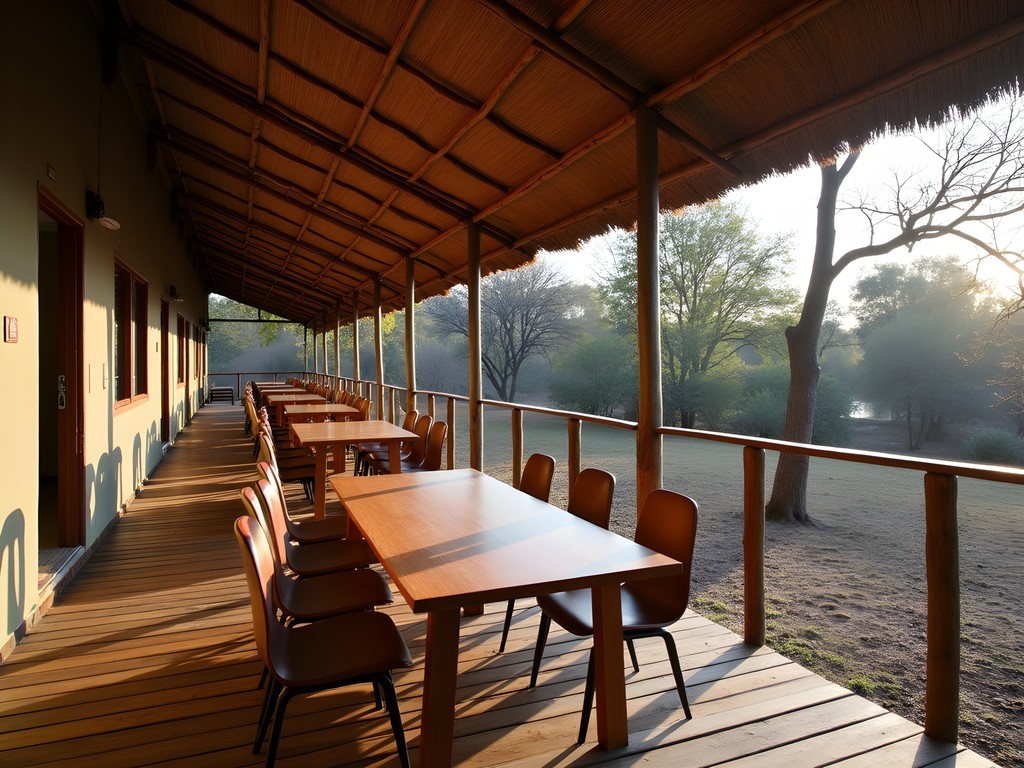
Accommodation options in Mfuwe span a remarkable range. At the upper end, luxury safari lodges within and adjacent to the national park offer all-inclusive experiences at premium prices. However, a growing number of budget-friendly guesthouses and hostels have emerged to serve independent travelers. Croc Valley Camp and Flatdogs Camp offer particularly good value with their camping options and basic dormitory accommodations, while still providing essential amenities like hot showers and restaurant facilities.
Food costs can be managed effectively by alternating between modest safari camp meals and local establishments. The Mfuwe Market offers fresh produce at remarkably low prices, and several small restaurants serve traditional Zambian dishes like nshima (maize porridge) with various stews at very reasonable rates. For students with dietary restrictions, I'd recommend packing some supplementary items, as options can be limited outside safari camps.
Transportation represents perhaps the greatest challenge for budget travelers. While shared taxis occasionally run between Mfuwe and nearby communities, schedules are unpredictable. Many budget travelers form ad-hoc groups to share the cost of hiring vehicles for game drives and community visits. A good travel daypack is essential for carrying water, snacks, and documentation equipment during these excursions—the compact design proved ideal for balancing mobility with capacity during my village explorations.
Internet connectivity, increasingly essential for student travelers, is available but inconsistent. Several lodges and the Mfuwe Community Library offer WiFi, though connection speeds vary dramatically. Purchasing a local SIM card with data remains the most reliable option for staying connected.
💡 Pro Tips
- Book accommodation directly via email rather than through booking platforms to negotiate better rates, especially during shoulder season
- The Mfuwe Day Market (Mondays and Thursdays) offers the best prices on food and basic supplies
- Connect with other travelers at budget accommodations to share transportation costs for game drives and excursions
Final Thoughts
The gateway communities of South Luangwa offer a compelling case study in how conservation economies shape emerging urban spaces in ways distinctly different from the technology-driven development I typically document. Here, the urban narrative isn't about smart infrastructure or digital innovation but rather about the delicate balance between preserving cultural authenticity and accommodating tourism growth. For students of urban development, sustainable tourism, or conservation economics, these settlements provide invaluable real-world laboratories where theory meets practice in often unpredictable ways. As these communities continue evolving in response to growing tourism pressure, they will undoubtedly face increasing challenges in maintaining this balance. Yet the grassroots planning initiatives emerging in Mfuwe and surrounding villages suggest a promising path forward—one where community voices remain central to the development narrative. I'll be watching with interest to see how these urban frontiers continue to evolve in the coming years.
✨ Key Takeaways
- Gateway communities like Mfuwe demonstrate how conservation economies create unique urban development patterns distinct from technology-driven growth
- Digital connectivity often precedes traditional infrastructure in emerging tourism destinations, creating hybrid development patterns
- Community-led planning initiatives offer promising alternatives to conventional top-down urban development approaches
- Budget travelers can access these communities through strategic planning and local connections
- The juxtaposition of traditional village structures with tourism infrastructure creates unique learning opportunities for students interested in sustainable development
📋 Practical Information
Best Time to Visit
May-October (dry season)
Budget Estimate
$30-50 per day for budget travelers
Recommended Duration
2-3 days for gateway towns (plus additional time for safari activities)
Difficulty Level
Moderate


Comments
luckyseeker
Your photos are amazing! What's the best way to get from Lusaka to Mfuwe? Fly or drive?
mountaingal
Not the author but we flew - the drive is like 10+ hours on rough roads. Flight is only an hour!
roamguy
Going in July!! This is so helpful, thanks for posting!
Marco Flores
Really appreciate you highlighting the urban planning challenges, Dylan. As someone who documents emerging tourism destinations, I think Mfuwe is at a critical crossroads. The infrastructure can't keep up with the tourist influx during high season, but there's this beautiful organic development happening. I watched a new market being built entirely by local craftsmen using traditional methods alongside modern materials. The satellite communities you mentioned - especially the ones near Flatdogs - are fascinating. They're creating their own micro-economies around the tourism overflow. Have you considered doing a follow-up piece on the seasonal workers who migrate to Mfuwe? That's another layer to this story.
travelclimber
How's the internet really? Can you work remotely from there or is it too spotty?
Marco Flores
Not Dylan, but I was there in 2025. Internet is decent in town during the day, slower at night. Managed to do some editing work but wouldn't rely on it for video calls. Bring a local SIM card as backup.
Sage Dixon
Dylan, this is such a refreshing take! I spent three weeks in Mfuwe last year and you've captured something most safari blogs completely miss. The contrast between the luxury lodges and the village infrastructure is stark, but there's this amazing energy in town. I stayed at a small guesthouse run by a local family and got to see the real economic impact of tourism. The digital infrastructure point is spot-on - I was surprised I could video call home most evenings. Did you get a chance to visit the community school that partners with some of the safari companies? That's where you really see the conservation economy at work.
luckyseeker
Which guesthouse did you stay at? Looking for budget options!
Sage Dixon
It was Mama Tembo's Guesthouse - super basic but clean and the family was wonderful. About $25/night.
mountaingal
Love this perspective! Never thought about the town itself, always just focused on the safari part.
roamguy
Same here! Makes me want to spend more time exploring Mfuwe before heading into the park.
freelover
Great article! Did you feel safe walking around Mfuwe on your own? Planning to go solo next month.
wavemood
I went solo last year! Super safe during daytime. Everyone was friendly. Just don't walk between lodges and town after dark (no streetlights and wildlife roams freely).
islandlover
Just returned from South Luangwa and can confirm everything in this post! Pro tip: the market in Mfuwe on Wednesday mornings is where locals shop - much better prices than tourist shops and more authentic crafts.
Brian Torres
Dylan, your urban planning angle is fascinating! When I took my family to South Luangwa last year, my kids were equally interested in the wildlife and the village life. The contrast between Mfuwe's main road (with its safari companies and souvenir shops) and the quiet life just 500 meters away in the traditional settlements really struck them. One thing I'd add about the satellite communities - we visited Kawaza Village as part of a community tourism initiative, and it felt much more authentic than similar experiences I've had elsewhere in Africa. The village school visit was the highlight for my kids, and the traditional lunch they prepared was incredible. Did you notice how the different villages each seem to specialize in different crafts or services for the tourism industry?
islandlover
Brian - we're planning to take our kids (8 and 10) next year. Was it kid-friendly? Any specific lodges you'd recommend for families?
Brian Torres
Absolutely kid-friendly! We stayed at Flatdogs Camp - they have family safari tents and guides who are amazing with children. The pool was a hit during midday breaks between safari drives. Just bring good mosquito repellent and some games for downtime!
beachnomad
Great post! How did you get around between the villages? Rental car or local transport?
Brian Torres
Not the author, but when I visited, we used a mix of the local minibuses (super cheap but crowded) and occasionally hired a driver for day trips to more remote villages. The minibus experience is an adventure in itself!
Venture X
Premium card with 2X miles, $300 travel credit, Priority Pass