
Disclosure: This article contains affiliate links. We may earn a commission from purchases at no extra cost to you, which helps our travel content.
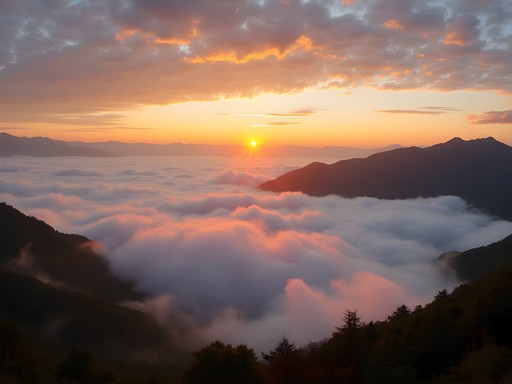
The predawn chill nipped at my fingers as I clutched my thermos of oolong tea, a small beacon of warmth in the darkness. Around me, hushed voices spoke in Mandarin and Japanese as we all waited, pilgrims of a sort, gathered for one of nature's most spectacular performances. Having witnessed sunrises across four continents, I can say with certainty that Alishan's 'sea of clouds' (yúnhǎi) phenomenon ranks among Earth's most magical morning displays—a symphony of light, mist, and mountain that resonates long after you've returned home.

Understanding Alishan's Cloud Magic
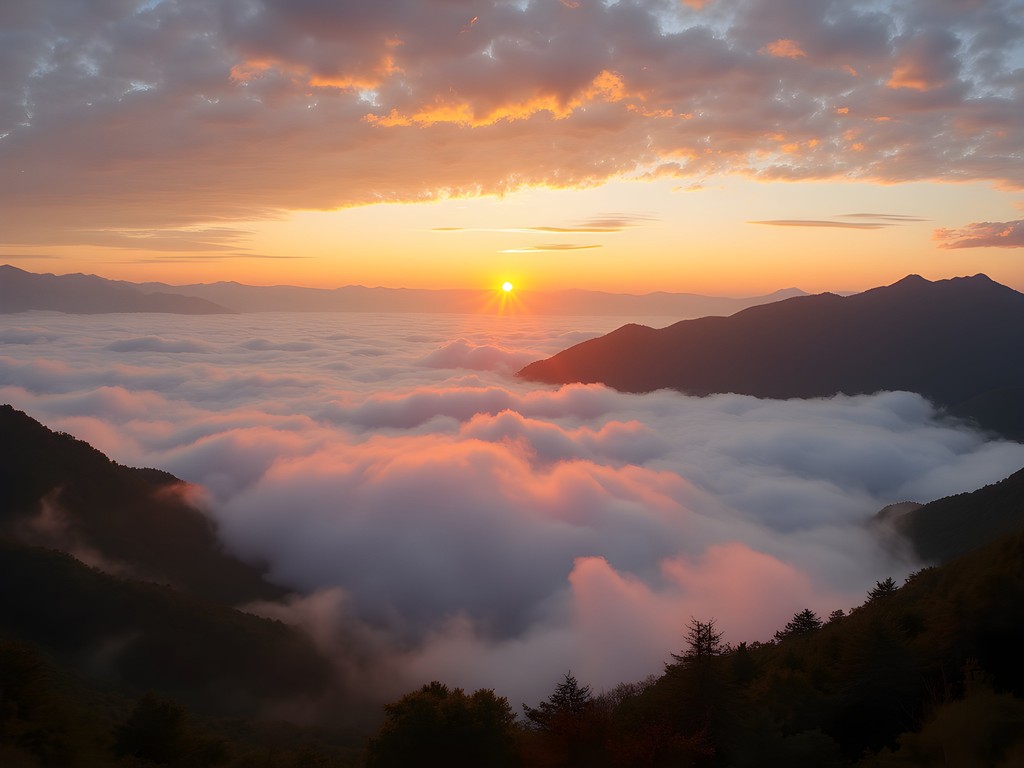
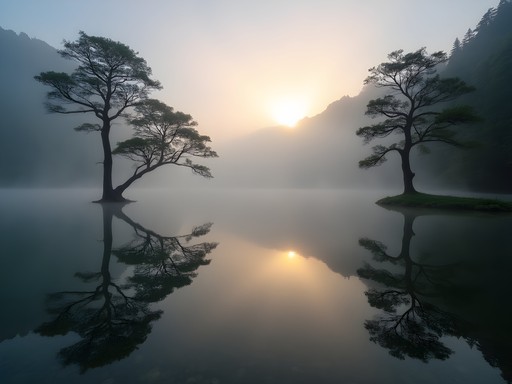
Nestled in Taiwan's central mountain range at elevations between 2,000-2,500 meters, Alishan creates perfect conditions for what locals poetically call the 'sea of clouds.' This meteorological marvel occurs when temperature inversions trap a dense layer of clouds and mist below the mountain peaks, creating the illusion of floating above an endless white ocean.
What makes Alishan's cloud sea particularly special is its reliability—especially during spring months when cool mornings and warming days create ideal conditions. Unlike similar phenomena in China's Huangshan or Japan's Northern Alps that can be frustratingly elusive, Alishan delivers this spectacle with remarkable consistency between March and May.
During my first visit years ago, a local tea farmer explained that the region's unique topography—deep valleys surrounded by multiple mountain ranges—creates natural 'cloud basins' where mist collects overnight. When dawn breaks, you're treated to not just a sunrise, but a dynamic dance as light plays across this undulating white landscape below.
💡 Pro Tips
- The best viewing months are March-May when cloud formation is most reliable
- Book accommodations within the Alishan Forest Recreation Area to avoid pre-dawn transportation issues
- Even on 'cloudy' forecast days, the sea of clouds often forms—don't cancel your sunrise plans!
Planning Your Sunrise Adventure
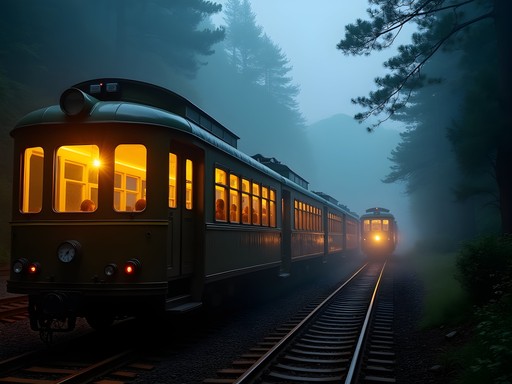
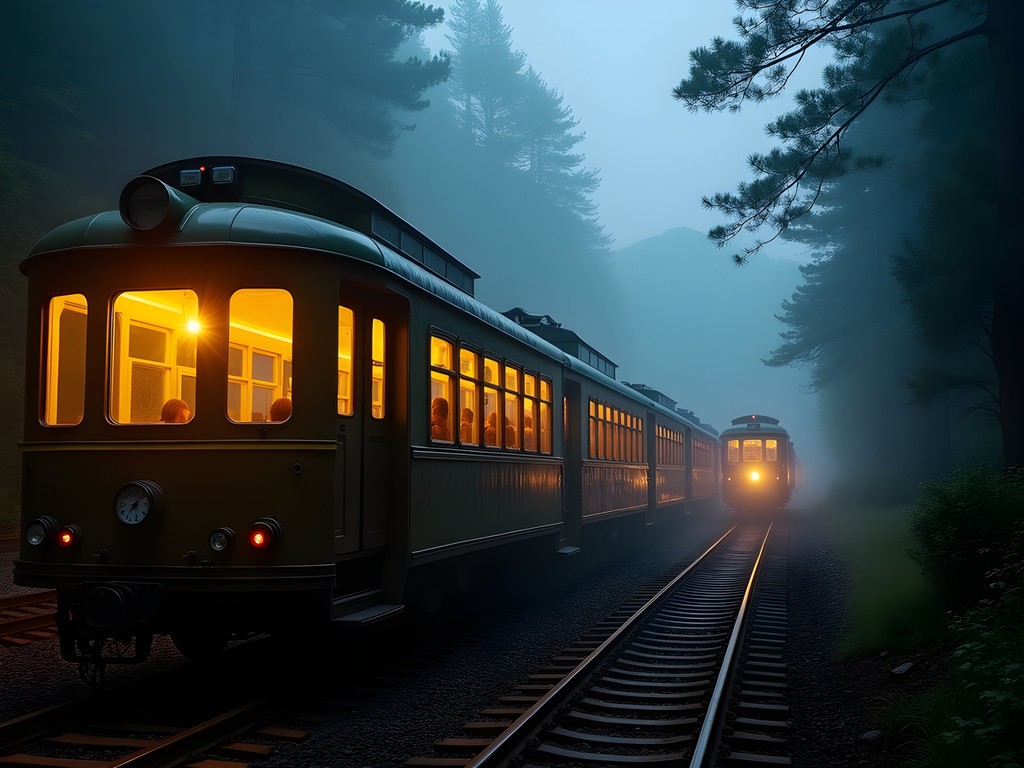
Witnessing Alishan's cloud sea requires some strategic planning. The most popular viewing spot is Zhushan (Bamboo Mountain) Viewing Platform, accessible via a special pre-dawn train that departs from Alishan Station. This narrow-gauge forest railway is an experience itself—a historic timber line that now ferries eager sunrise-chasers through misty forests in near darkness.
Tickets for this sunrise train are limited and sell out quickly, especially during peak season and weekends. I learned this lesson the hard way on my first visit, naively assuming I could purchase tickets on arrival. After securing your accommodations, immediately reserve your sunrise train tickets through the Alishan Forest Recreation Area website or through your hotel.
If you miss out on train tickets, don't despair. The hiking alternative to Zhushan takes approximately 40-50 minutes along well-marked paths. I actually preferred this option on my second visit, as it allowed me to experience the forest awakening—the haunting calls of Formosan whistling thrushes providing a natural soundtrack to my journey. Just be sure to bring a reliable headlamp as the trails are dark before dawn, and pack a thermal flask filled with hot tea to keep you warm at the viewing platform.
💡 Pro Tips
- Reserve sunrise train tickets online at least 2-3 days in advance during peak season
- If hiking instead of taking the train, depart your hotel at least 90 minutes before sunrise
- The temperature at the viewing platform can be 10-15°C cooler than in Alishan Village—dress accordingly
The Sunrise Experience: What to Expect
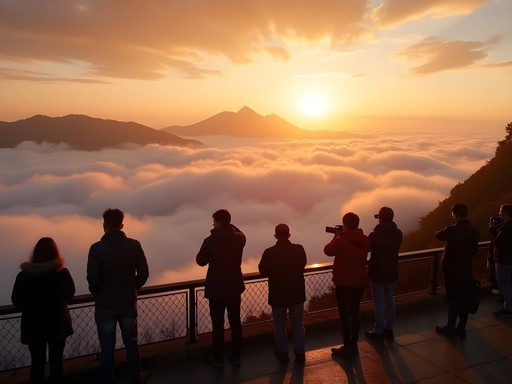
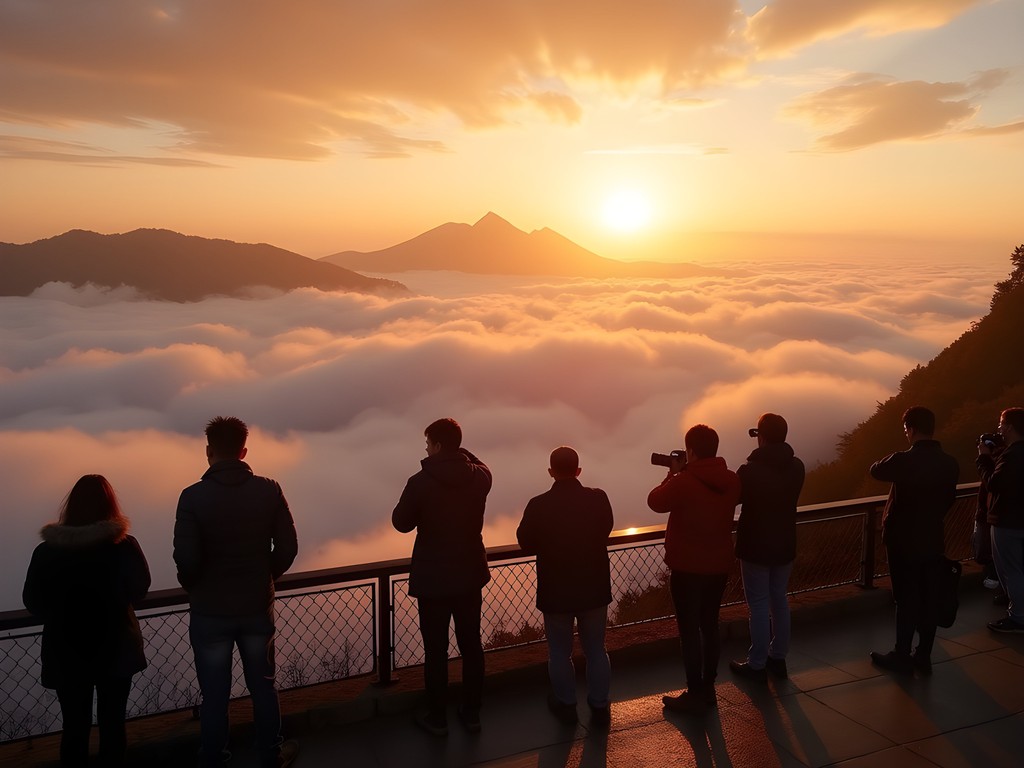
The sunrise viewing experience at Zhushan is equal parts natural wonder and cultural phenomenon. Arriving at the platform, you'll join a gathering of visitors—mostly Taiwanese and Japanese tourists—all united in anticipation. The platform itself is tiered with several viewing levels, allowing everyone a chance to witness the spectacle.
The show begins about 30 minutes before actual sunrise, as the eastern sky shifts through a palette of indigos and violets. Then comes what photographers call 'the golden moment'—when the first sliver of sun crests the distant mountains, casting golden light across the sea of clouds below. This is when you'll hear the collective gasps and see hundreds of cameras raised in unison.
During my last visit, I positioned myself slightly away from the main platform crowd, finding a quieter spot with an equally magnificent view. This strategy allowed me to fully absorb the moment without distraction. I recorded the experience using my handheld recorder to capture both the natural sounds and my whispered impressions—something I now treasure as much as my photographs.
After the main event, don't rush back down. The changing light continues to transform the landscape for at least an hour after sunrise, with the cloud formations shifting constantly. This is when I've captured some of my most memorable images, as the crowds thin and the morning light reveals the true scale and beauty of the mountain landscape.
💡 Pro Tips
- Arrive at the viewing platform at least 30 minutes before scheduled sunrise time
- Position yourself on the eastern side of the platform for the best direct view
- Bring a small towel to wipe condensation from camera lenses and binoculars

Beyond the Sunrise: Alishan's Other Treasures
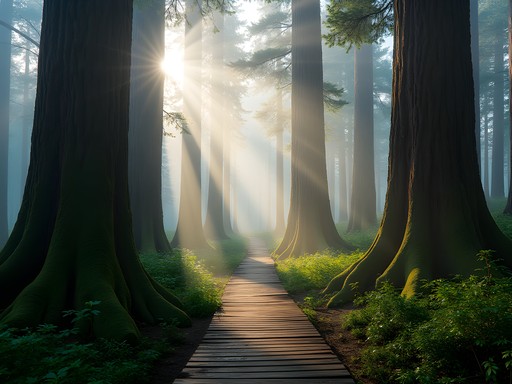
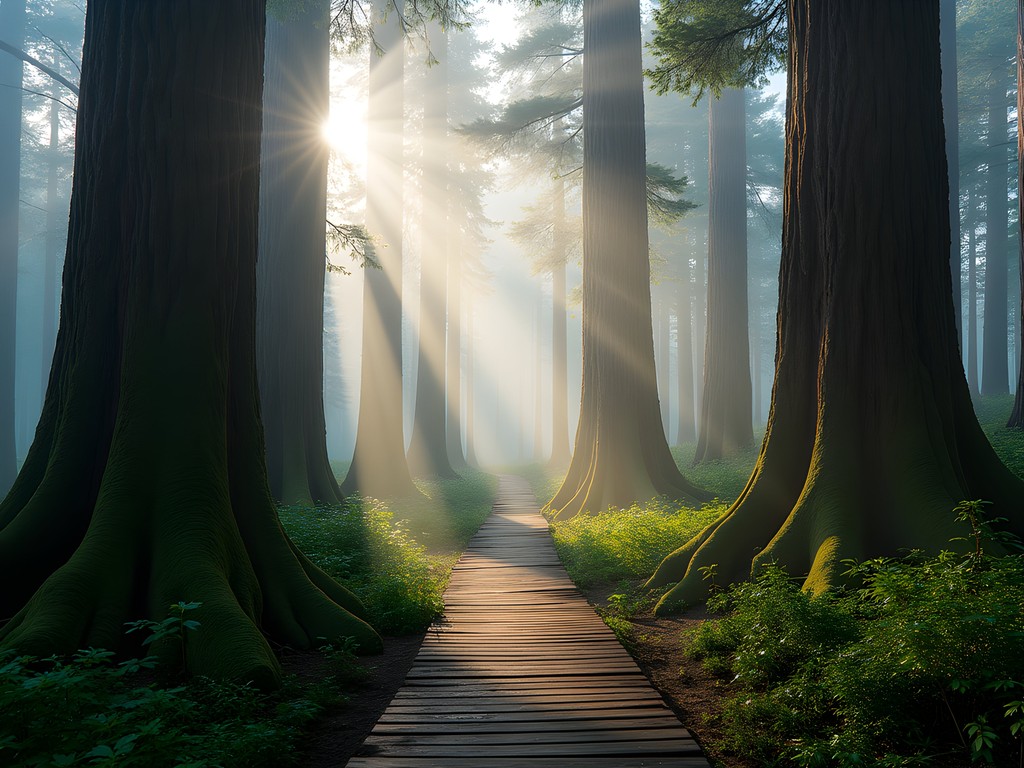
While the sunrise is undoubtedly Alishan's headline attraction, the area offers much more that deserves your attention. After returning from Zhushan, take time to explore the ancient cypress forests that give Alishan its distinctive character. The Giant Tree Trails wind through groves of trees that have stood for over 2,000 years—living witnesses to history that evoke the same reverence I've felt in California's redwood forests or Japan's sacred cedar groves.
As a tea enthusiast with Japanese heritage, I was particularly drawn to Alishan's high-mountain tea plantations. The region produces some of Taiwan's most prized oolong teas, grown at elevations that create a distinctive sweet flavor profile. Many tea farms offer tastings and demonstrations of traditional processing methods. I spent a delightful afternoon at a family-run plantation, learning about sustainable growing practices while sampling freshly harvested spring oolongs.
For nature lovers, the network of hiking trails throughout the recreation area offers opportunities to spot endemic wildlife like the Formosan rock macaque and over 100 bird species. I recommend investing in a quality pair of lightweight binoculars to enhance wildlife viewing opportunities. The trails range from easy boardwalks to more challenging forest paths, but all offer immersion in a misty, almost primeval landscape.
Don't miss the Sacred Tree—a 3,000-year-old red cypress that fell in 1998 but remains an important cultural site. Standing before its massive trunk, I was reminded of the Japanese concept of mono no aware—the poignant awareness of impermanence that makes natural beauty all the more precious.
💡 Pro Tips
- Purchase Alishan high-mountain oolong directly from local tea farms for the freshest quality
- Visit the Alishan Shouzhen Temple for cultural context and beautiful architecture
- The 4.5km Zhushan Trail offers the best overview of Alishan's diverse ecosystems
Where to Stay and Eat in Alishan
Accommodation options in Alishan range from simple forest cabins to more upscale hotels. For the authentic sunrise experience, I strongly recommend staying within the Alishan Forest Recreation Area itself rather than in the surrounding villages. This proximity eliminates the stress of early morning transportation and allows you to immerse fully in the forest atmosphere.
During my visits, I've stayed at both the Alishan House and the more budget-friendly Gou Gou House. The former offers more amenities including an excellent restaurant serving mountain specialties, while the latter provides clean, comfortable rooms with stunning forest views at a lower price point. Whichever you choose, book well in advance as accommodations within the park are limited.
For dining, Alishan offers a surprising variety of options celebrating local ingredients. The bamboo shoots harvested from surrounding forests feature prominently in spring menus, while high-mountain vegetables like cabbage and radishes appear year-round. Don't miss the opportunity to try aiyu jelly—a local dessert made from the seeds of a native fig species, often served with honey and lemon.
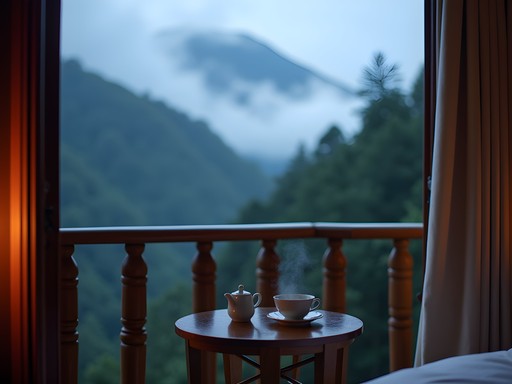
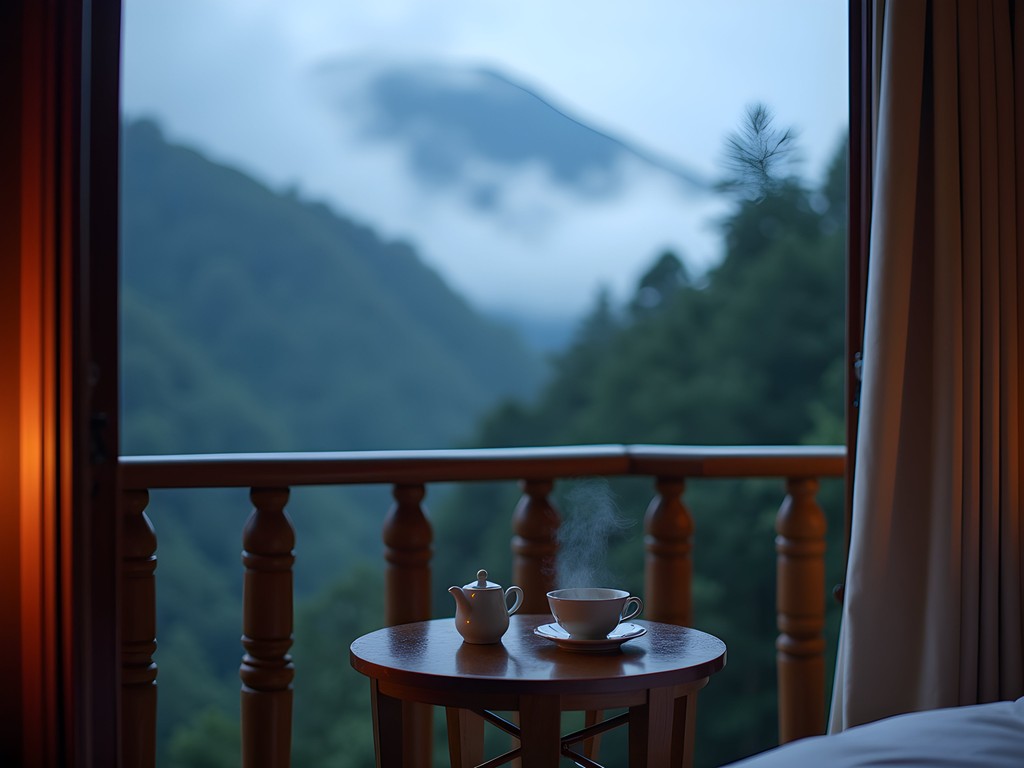
For tea enthusiasts, I recommend bringing a portable tea set to enjoy the local oolongs in your room or at scenic spots throughout the park. There's something magical about sipping freshly brewed Alishan tea while surrounded by the very mountains that nurtured it.
Most hotels offer packed breakfast options for sunrise viewers—a thoughtful touch that saved me from hunting for food at 4 AM. If they don't provide this service, stock up on snacks and breakfast items from the 7-Eleven in Alishan Village, which surprisingly carries high-quality local products including tea and preserved mountain vegetables.
💡 Pro Tips
- Book accommodations inside the recreation area at least 2-3 months in advance for spring visits
- Request a packed breakfast from your hotel if you're taking the sunrise train
- Try the wasabi-flavored mountain vegetable dishes—a unique local specialty
Final Thoughts
As my train wound its way down from Alishan, carrying me back toward Chiayi and eventually Taipei, I found myself already planning a return visit. There's something about witnessing the sea of clouds that feels both transcendent and deeply grounding—a reminder of our small place in nature's grand performance.
Alishan taught me that some experiences are worth the predawn alarm, the careful planning, and yes, even the occasional shiver in the mountain air. In our increasingly virtual world, standing physically present as the sun transforms a landscape remains one of travel's most profound gifts.
If you're considering a trip to Taiwan, I urge you to look beyond Taipei's vibrant streets and Taroko's dramatic gorges to this misty mountain realm. Come with patience, respect for the environment, and a willingness to surrender to nature's timetable. The sea of clouds may be fleeting, but the memory of floating above that ethereal white ocean will stay with you long after you've returned to solid ground. Gānbēi to your own Alishan adventure—may it be as soul-nourishing as mine.
✨ Key Takeaways
- Spring (March-May) offers the most reliable sea of clouds formations and pleasant hiking weather
- Stay within the Alishan Forest Recreation Area for the easiest access to sunrise viewing points
- Experience both the sunrise train and hiking options if time permits for different perspectives
📋 Practical Information
Best Time to Visit
March to May (spring)
Budget Estimate
$150-250 USD per day including accommodation, food, and activities
Recommended Duration
2-3 days minimum
Difficulty Level
Moderate



Comments
explorerider
Going next month! So excited now
greenexplorer6498
Can you do this as a day trip from Taipei or do you really need to stay overnight?
Hunter Thompson
Technically possible but you'd be absolutely knackered. You'd need to leave Taipei around 2am to catch the first train up. Definitely stay overnight in Chiayi or Alishan itself!
Taylor Moreau
Excellent guide. I've incorporated Alishan into several client itineraries over the years, and it never disappoints. One addition I'd suggest: the Alishan House is worth the premium if you can swing it - being steps from the sunrise viewing point makes a significant difference when you're operating on minimal sleep. The tea plantations you mentioned are also superb for afternoon visits. I always recommend travelers dedicate a full two days rather than rushing it.
triplife
Is it worth going if the weather forecast shows clouds? Or should I reschedule?
Taylor Moreau
That's actually the ideal condition - you want clouds below you, not above. Check the forecast for Chiayi (lower elevation), not Alishan itself. If it's cloudy down in the plains, you're likely to get that sea of clouds effect.
triplife
oh that makes sense! thanks
Hunter Thompson
Absolutely brilliant post, Savannah! I did this trek last spring and completely agree about arriving the night before - that early morning train is NOT a joke. The forest railway is gorgeous though, proper old-school vibes. Pro tip for anyone going: grab some of those steamed buns from the vendors near the viewing platform. They're cheap, hot, and perfect for warming up your hands while you wait. Also, the lesser-known Xiaoliyuanshan trail nearby is stunning if you want to escape the crowds a bit.
redrider
How cold does it actually get up there in the morning? Like what should I pack?
Hunter Thompson
Mate, it gets PROPER cold! I was there in March and it was around 5-8°C at sunrise. Definitely bring layers - I had a fleece and windbreaker and was still chilly. Worth it though!
redrider
Thanks! Good to know
globemate
Wow those cloud photos are incredible!
globeseeker
Can you do this as a day trip from Taipei or do you need to stay overnight? Your photos are amazing btw!
Savannah Yamamoto
Thanks! You really need to stay overnight. The first train up doesn't arrive early enough for sunrise, and you'd be exhausted. There are great guesthouses in Alishan village - I stayed at one for about $50/night.
Jean Wells
Agreed. The journey from Taipei takes 4-5 hours minimum. Budget at least two nights if you want to explore the forest trails and tea plantations as well.
Jean Wells
Excellent breakdown of the cloud formation patterns, Savannah. I've visited Alishan four times across different seasons and can confirm that late autumn through early spring (November-March) offers the most reliable cloud sea conditions. One thing I'd add: the temperature differential between the mountain and valley is crucial. Check the weather forecast for both Chiayi and Alishan the day before - if there's at least a 10°C difference, your chances improve dramatically. Also, the mid-week visits are significantly less crowded than weekends. I had the viewing platform nearly to myself on a Tuesday in February.
globeseeker
thats a great tip about the temperature! never thought about checking that
islandqueen
how early did you actually have to get up? trying to figure out if this is doable lol
Savannah Yamamoto
We woke up at 4:30am to catch the sunrise train at 5:00! It's brutal but SO worth it. The station is close to most hotels so you don't need much time to get there.
islandqueen
ok not as bad as i thought! thanks
Venture X
Premium card with 2X miles, $300 travel credit, Priority Pass