
Disclosure: This article contains affiliate links. We may earn a commission from purchases at no extra cost to you, which helps our travel content.
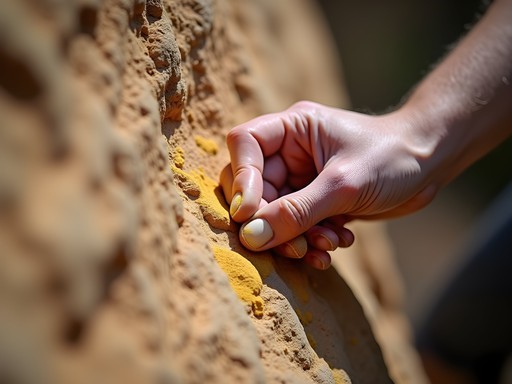
The first time I placed my chalk-dusted fingertips on Hampi's golden granite, I felt a connection that transcended the physical act of climbing. Here, in this surreal landscape where 14th-century temple ruins rise from boulder fields like mathematical poetry carved in stone, I discovered the perfect confluence of my passions: engineering precision, sacred geometry, and raw adventure. After three years living in Chennai working on renewable energy projects, I finally dedicated two full weeks to explore what many climbers consider India's bouldering mecca. What I found was a climbing paradise where every problem is set against the backdrop of ancient architectural marvels—a place where the lines between spiritual pilgrimage and athletic pursuit blur into something entirely transcendent.

The Sacred Geometry of Hampi's Boulders
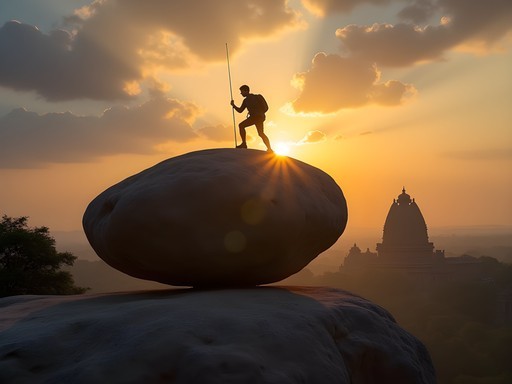
Hampi exists at the intersection of natural wonder and human ingenuity. As an engineer who studies sacred geometry in ancient structures, I was immediately struck by the mathematical harmony present in both the temple architecture and the surrounding boulder formations. These massive granite formations—some precariously balanced, others forming natural arches and corridors—follow patterns that echo the same principles of divine proportion found in the nearby Virupaksha Temple.
The climbing here offers a unique opportunity to experience this geometry through physical engagement. When working a problem on the famous Sleeping Beauty boulder in the Hampi Bazaar area, I found myself contemplating how my body positioning mirrored the triangular ratios present in the temple shikhara (spire) visible just beyond. My fingers sought holds along natural fracture lines that follow the same golden ratio proportions evident in the temple's construction.
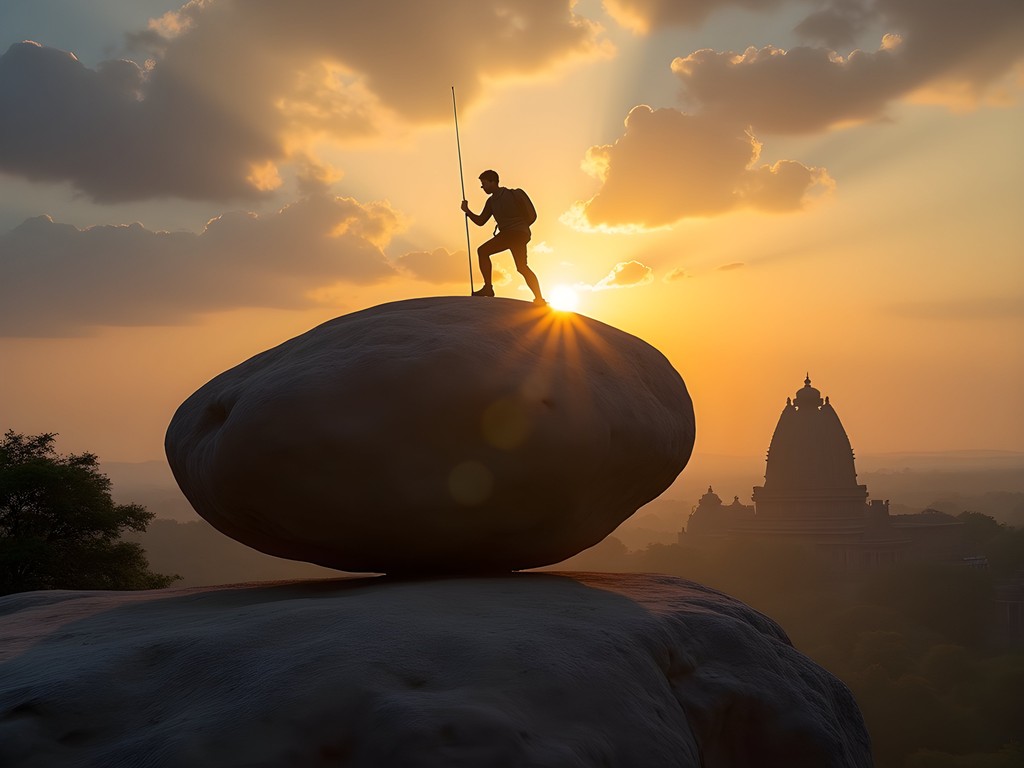
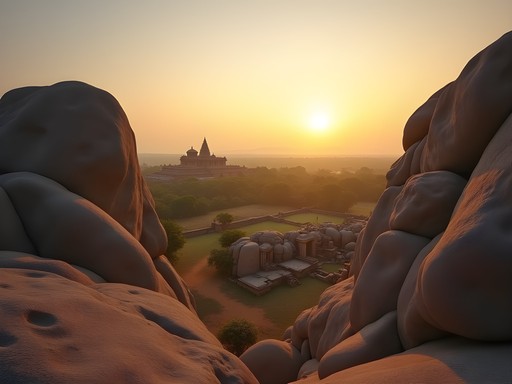
Each climbing area in Hampi has its own character. The Hemakuta Hill boulders offer moderate problems with stunning sunset views across the temple complex. The Tiruvengalanatha Temple area provides more challenging overhangs where crimps and slopers test even experienced climbers. Meanwhile, the boulders near the Tungabhadra River combine technical face climbing with the opportunity to cool off between attempts.
For documenting these climbs, my mirrorless camera proved invaluable—lightweight enough to carry in my climbing pack yet capable of capturing both the technical details of routes and the breathtaking juxtaposition of ancient architecture against natural rock formations.
💡 Pro Tips
- Visit during December-February for ideal climbing temperatures and dry conditions
- Respect the sacred nature of the ruins—many boulders near temples are off-limits for climbing
- Start climbing early morning (6-9am) and late afternoon (4-7pm) to avoid the midday heat
Mapping Your Bouldering Circuit
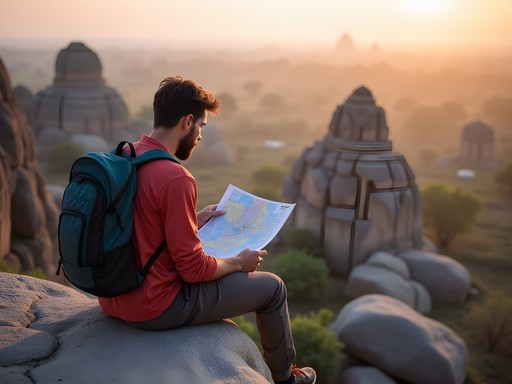
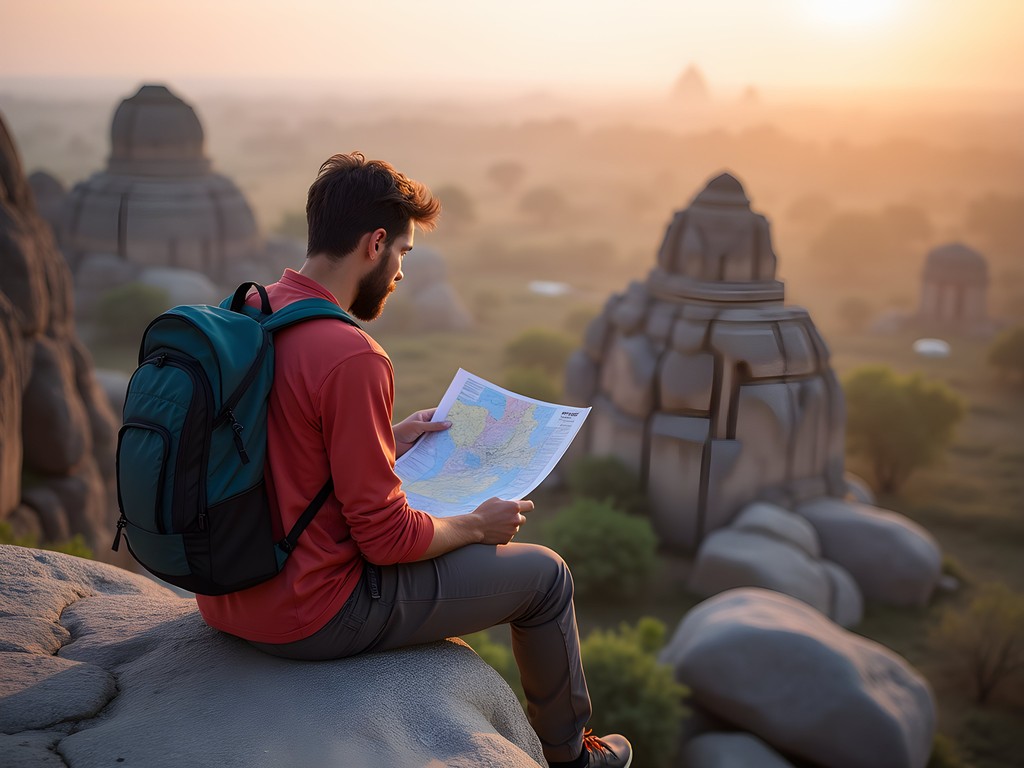
Planning an effective climbing circuit in Hampi requires understanding both the geography and the cultural significance of the area. The UNESCO World Heritage Site spans approximately 26 square kilometers, with climbing areas distributed throughout this ancient landscape. I approached my two weeks methodically, dividing the region into manageable sections and allowing time for both climbing and cultural exploration.
The Hampi Island (Virupapur Gaddi) area across the river serves as the primary base for most climbers. From here, you can access several major bouldering zones:
-
The Rishimukh Area: Home to classic problems like 'The Groove' (V5) and 'The Diamond' (V7), this area offers a high concentration of quality climbs within walking distance of guesthouses.
-
Hemakuta Hill: Perfect for morning sessions with moderate problems ranging from V0-V6 and spectacular views of the temple complex below.
-
Anegundi Boulders: Less frequented but offering some of the most aesthetic lines, including the challenging 'Golden Pillar' (V8) that tested my limits.
-
Tungabhadra Riverside: The 'Cosmic Cave' area combines riverside relaxation with technical roof problems that provide welcome shade during warmer hours.
I tracked all my climbs and discovered new problems using the climbing guidebook, which proved indispensable for navigating the thousands of documented problems and countless first ascent opportunities still waiting.
Rather than rushing to tick off as many problems as possible, I found the most rewarding approach was to select 3-4 quality lines each day and work them thoroughly, allowing time between sessions to absorb the historical significance of my surroundings. This rhythm created a beautiful balance between physical exertion and cultural immersion.
💡 Pro Tips
- Rent a scooter for easier access to distant bouldering areas
- Download offline maps as many climbing areas have poor cell coverage
- Join the Hampi Climbing community on Facebook to find climbing partners and get current beta
Technical Challenges: Engineering Solutions on the Rock
As an engineer accustomed to analyzing structural integrity in my renewable energy work, I found myself applying similar analytical thinking to Hampi's bouldering problems. The granite here presents unique technical challenges that differ significantly from other world-class bouldering destinations I've visited.
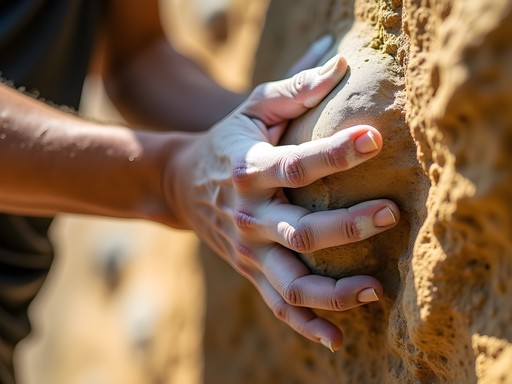
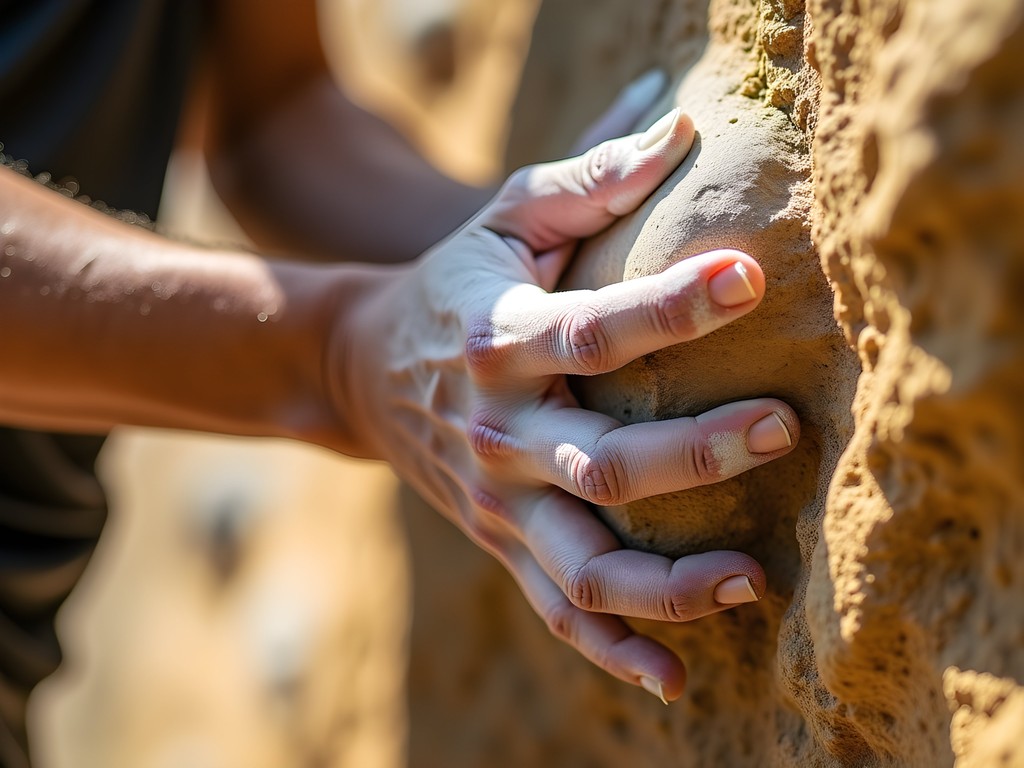
Hampi's granite is characterized by its remarkably high friction coefficient—a blessing for slab climbing but demanding precise footwork and body positioning. The rock features rounded slopers that require perfect weight distribution and core tension. On problems like 'The Monkey's Business' (V4) near Anegundi, success came only after I analyzed the problem as I would an engineering challenge: identifying the optimal force vectors, calculating momentum requirements for dynos, and finding the balance point where gravity works with rather than against your movement.
The rock's thermal properties also create a fascinating climbing dynamic. In early morning sessions, the cool granite offers exceptional friction, allowing for technical slab ascents that become impossible as the day warms. By midday, the sun-baked rock transforms completely, necessitating different climbing techniques and problem selection.
For protection during falls on higher problems, I relied on my crash pad which proved essential on the uneven landings common throughout Hampi. The durability of this pad stood up to the abrasive granite and provided confidence when attempting committing moves.
Many problems require specialized beta that combines traditional climbing techniques with approaches unique to Hampi's rock. Learning to trust the surprising friction of seemingly featureless slopers was a mental challenge that took days to overcome. Local climbers often demonstrated techniques that contradicted conventional wisdom but worked perfectly on this specific granite—a reminder that engineering principles must always adapt to local conditions rather than rigidly applying standardized approaches.
💡 Pro Tips
- Bring extra climbing shoes as Hampi's abrasive granite wears rubber quickly
- Use liquid chalk for longer-lasting grip in humid conditions
- Practice compression techniques and open-hand grips before your trip to prepare for Hampi's sloper-heavy problems

Cultural Immersion: Climbing in a Living Heritage Site
What distinguishes Hampi from other world-class bouldering destinations is the profound cultural context in which the climbing takes place. This isn't merely a boulder field—it's a living heritage site where ancient temples, active religious practices, and daily village life intertwine with the sport we pursue.
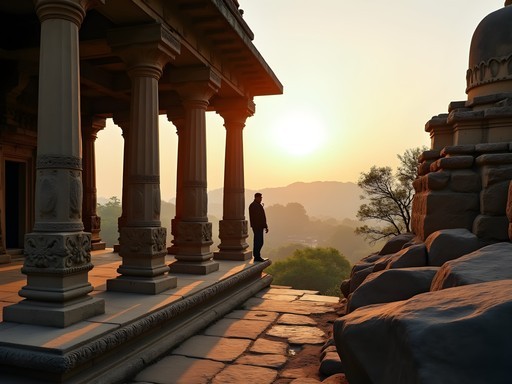
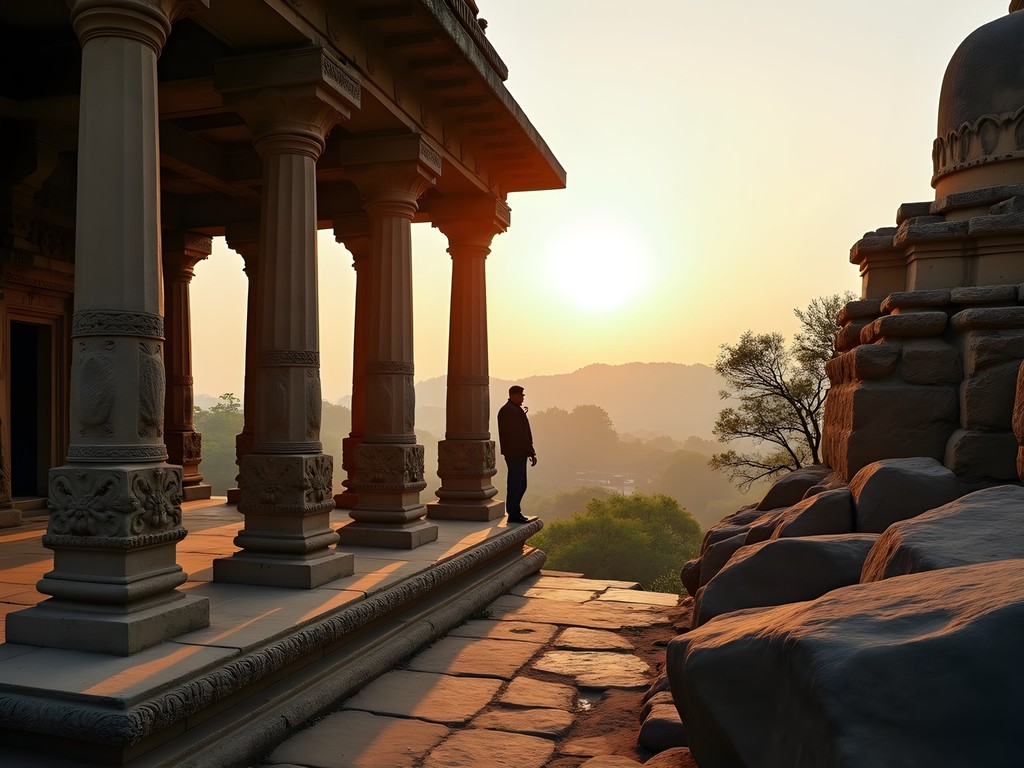
During my two weeks, I established a rhythm that honored both climbing objectives and cultural exploration. Mornings began with sunrise sessions on the Hemakuta Hill boulders, followed by mid-morning visits to temples when the light illuminated the intricate carvings at perfect angles for appreciating their mathematical precision. The geometric patterns carved into the Vitthala Temple columns—which demonstrate advanced understanding of harmonic principles—echo the natural fracture patterns in the climbing areas just meters away.
In the evenings, I often attended classical music performances at the Vittala Temple complex, where the famous stone chariot and musical pillars demonstrate the same principles of sacred geometry that govern the natural boulder formations. The resonance between these human-made structures and the climbing medium created a holistic experience that transcended pure athleticism.
Staying in a family-run guesthouse in Anegundi village provided insights into local life beyond what most short-term visitors experience. My hosts shared stories of how the landscape has changed since climbing began gaining popularity in the early 2000s, and how the community has adapted to the influx of international climbers while maintaining their traditional way of life.
For capturing both climbing action and cultural contexts, I relied on my compact binoculars which allowed me to study distant architectural details and spot potential new climbing lines from vantage points. This dual-purpose tool epitomized my approach to Hampi—seeing both the adventure potential and cultural significance simultaneously.
💡 Pro Tips
- Remove climbing shoes when approaching temple areas
- Learn basic Kannada phrases to connect with locals
- Consider hiring a local guide for one day to understand the historical context of the ruins you're climbing among
Sustainable Adventure: Preserving Hampi's Climbing Future
As both an environmental engineer and a climber, the sustainability of adventure tourism in Hampi concerns me deeply. The increasing popularity of this bouldering paradise creates tension between economic opportunity for local communities and preservation of both natural and cultural heritage.
The granite that forms Hampi's boulders is remarkably resistant to climbing impact compared to more fragile stone types, but the ecosystem surrounding the boulders is vulnerable. During my visit, I participated in a cleanup day organized by local climbing guides, collecting microtrash from popular areas near the Tungabhadra River. The contrast between the ancient temples—which have stood for centuries—and the modern waste left by visitors was stark and sobering.
Responsible climbing in Hampi means adhering to established access agreements that protect both cultural sites and local sensibilities. Several areas, particularly those near active temples or containing rock art, are explicitly off-limits to climbing. These boundaries aren't always obvious to visitors, making it essential to connect with local climbing guides who understand the complex relationship between adventure sport and heritage conservation.
The climbing community in Hampi has established several initiatives to ensure the sport's sustainability:
-
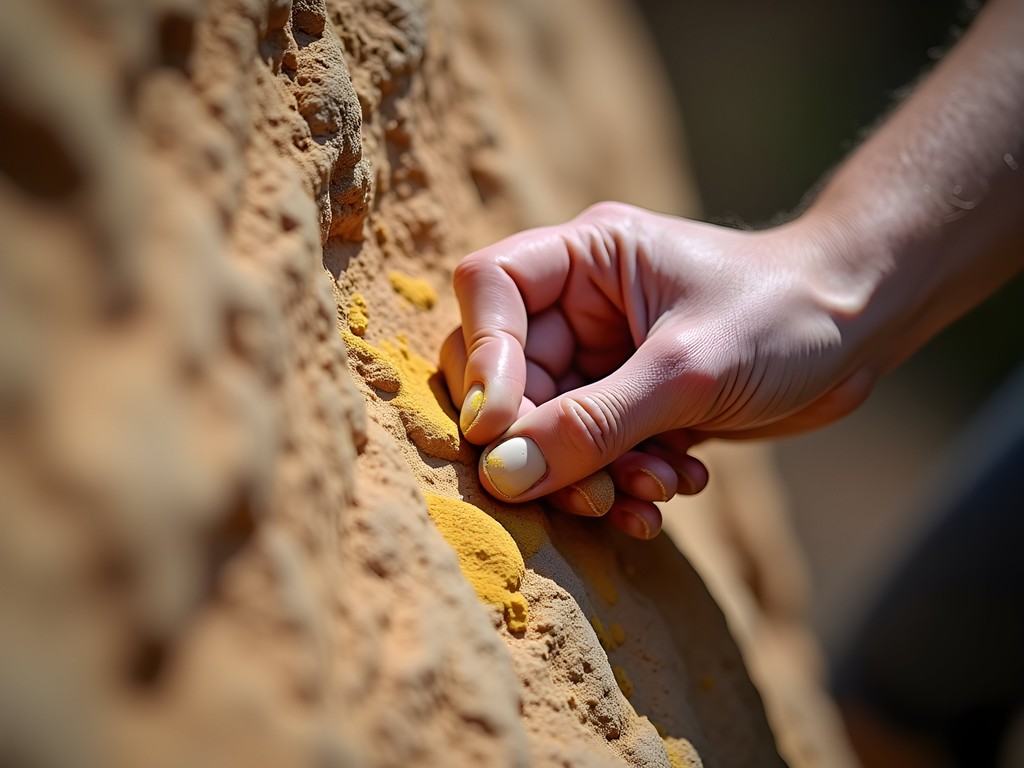
Chalk Management: Using colored chalk that matches the golden granite helps minimize visual impact on the landscape.
-
Waste Reduction: Many guesthouses and climbing shops now offer filtered water refill stations to reduce plastic bottle waste.
-
Community Reinvestment: Several climbing guide services direct a percentage of profits toward local education and conservation efforts.
For my part, I used a reusable chalk bag with refillable chalk to minimize packaging waste. This simple choice, multiplied across thousands of climbers, can significantly reduce the environmental footprint of our community in this precious landscape.
As Hampi continues to grow as a climbing destination, finding balance between access and preservation will require ongoing dialogue between climbers, local communities, archaeological authorities, and environmental stewards. The future of climbing here depends on our collective commitment to treading lightly among these ancient stones.
💡 Pro Tips
- Pack out all trash including organic waste like fruit peels
- Use colored chalk that matches the golden granite to minimize visual impact
- Support local businesses that demonstrate environmental responsibility
Final Thoughts
As I reluctantly brushed the last of Hampi's golden dust from my climbing shoes, I realized this landscape had fundamentally altered my relationship with both climbing and cultural heritage. In these ancient boulders, I discovered not just world-class problems that tested my physical limits, but a profound connection between the mathematical precision in both natural rock formations and human architectural achievement. Hampi offers a rare opportunity to pursue athletic challenges while simultaneously engaging with history, spirituality, and living culture. For climbers willing to approach this sacred landscape with respect and curiosity, the rewards extend far beyond sending projects—they include a deeper understanding of how humans have interacted with stone across centuries. Whether you come for the climbing, the culture, or both, Hampi demands presence and reverence. Its golden granite holds both climbing challenges and ancient wisdom for those patient enough to listen with both hands and heart.
✨ Key Takeaways
- Hampi offers world-class bouldering alongside UNESCO World Heritage temples and ruins
- December-February provides ideal climbing conditions with moderate temperatures and dry rock
- Responsible climbing practices are essential for preserving both the natural environment and cultural heritage
- Engaging with local culture enhances the climbing experience and provides context for the landscape
📋 Practical Information
Best Time to Visit
November through February (winter)
Budget Estimate
$30-60 USD per day including accommodation, food, and local transport
Recommended Duration
Minimum 10 days, ideally 2 weeks
Difficulty Level
Advanced (V2-V10 Problems Predominate)



Comments
happybuddy
Going to India in December and thinking of adding Hampi to the itinerary. How many days would you recommend for a beginner/intermediate climber? And are there guided options for someone traveling solo?
Lily Mills
December is perfect timing! I'd recommend at least 5-7 days if you're there for climbing. Tom & Jerry Climbing Shop in Hampi Bazaar offers guided sessions for all levels, and it's super easy to meet other climbers at the guesthouses on the north side of the river. Even as a solo traveler, you'll have a climbing crew by day two!
happybuddy
That's great to know, thanks! Will definitely check out Tom & Jerry shop. Can't wait!
Sage Dixon
Lily, your writing captures the magic of Hampi perfectly! I spent a month there in 2024 and it fundamentally changed me as a climber. There's something about the juxtaposition of ancient human history and timeless geology that gives the climbing there a spiritual dimension I haven't found elsewhere. For those planning a trip: respect the local customs around the temples (cover shoulders, remove shoes), and be aware that some areas near important ruins have climbing restrictions. The local climbing community has worked hard to maintain good relationships with archaeological authorities. Also, the monkeys are NO JOKE - they will absolutely steal your snacks, so keep food secured! The traverse problem called 'Cosmic Dance' near Matunga Hill remains one of my all-time favorite climbing experiences.
Lily Mills
Thanks for the thoughtful comment, Sage! 'Cosmic Dance' was a highlight for me too - that sequence in the middle is so fluid when you get it right. And yes, those monkeys are professional thieves! Lost half a mango to one particularly strategic little bandit.
Frank Garcia
Great write-up, Lily. The section on climbing ethics around the temple areas was spot on - really important to respect the local communities there. I found the best time to climb was early morning (6-9am) before it got too hot. Also worth noting that chalk can be an issue on some of the darker granite, so brush your holds well. The bazaar area has decent accommodation options if anyone's planning a trip. How long did you spend there total?
Lily Mills
Thanks Frank! I was there for 10 days which felt about right to hit most of the classic problems and still have time to explore the ruins properly. Completely agree on the morning sessions - afternoons were brutal.
exploreone
This looks amazing!! Do you need to be super experienced to climb there or can beginners try some routes?
Frank Garcia
Not Lily, but I was there last year. There's definitely stuff for beginners - lots of V0-V2 problems scattered around. The Virupaksha Hill area has easier routes. Just be careful in the heat and bring lots of water.
exploreone
Thanks! That's really helpful
wavelegend7229
Pro tip for anyone heading to Hampi - bring twice as much chalk as you think you'll need. That granite gets slippery in the humidity!
coffeephotographer
heading there in march! where did you stay?
starzone
not the author but i stayed in hampi bazaar area last year, super cheap guesthouses near the climbing spots
Savannah Walker
Lily, this brought back so many memories! I was in Hampi three years ago and still dream about those boulder fields. The way you described the "sacred geometry" is spot on - there's something almost spiritual about climbing there. I remember watching the sunrise from the top of one of the larger formations near the Virupaksha Temple and just being completely overwhelmed. Did you manage to climb near the Tungabhadra River area? Those riverside problems were some of my favorites. Also, totally agree about respecting the heritage aspect - I saw some climbers being disrespectful near temple areas and it really bothered the locals.
coffeephotographer
is it ok for beginners? never climbed before but this looks amazing
Savannah Walker
There are definitely easier routes for beginners! Just hire a local guide for your first few sessions. They know which boulders are good for learning.
starzone
wow this looks incredible!
roamguide
Those sunset photos on the boulders are incredible! Adding this to my bucket list ASAP.
Savannah Walker
What an incredible post, Lily! I visited Hampi in January and was blown away by how the climbing and cultural aspects blend so seamlessly. For anyone planning a trip: definitely stay on the Hippie Island (Virupapur Gaddi) side of the river if you're there primarily for climbing. The guesthouses there cater to climbers with early breakfasts and late dinners. We loved Goan Corner's community vibe - met so many international climbers there! Also worth noting that October-February is prime climbing season as summer gets brutally hot. I made the mistake of bringing too many crash pads - you can rent everything you need there. My climbing guide was super helpful for finding the best problems!
Venture X
Premium card with 2X miles, $300 travel credit, Priority Pass