


Disclosure: This article contains affiliate links. We may earn a commission from purchases at no extra cost to you, which helps our travel content.
Growing up in Australia's Northern Territory, I developed an intimate relationship with water that was both spiritual and practical. The lakes of Wisconsin might seem worlds away from the coastal waters of Darwin, but they share that same liminal quality—spaces where communities gather, where stories unfold, where cultural practices take shape along shorelines. When I found myself with a free weekend between academic conferences in Chicago and Minneapolis, I decided to explore Waukesha County's lake beaches, curious about how these inland waters shape local summer rituals and family traditions.

Pewaukee Lake: The Cultural Heart of Waukesha's Water Heritage
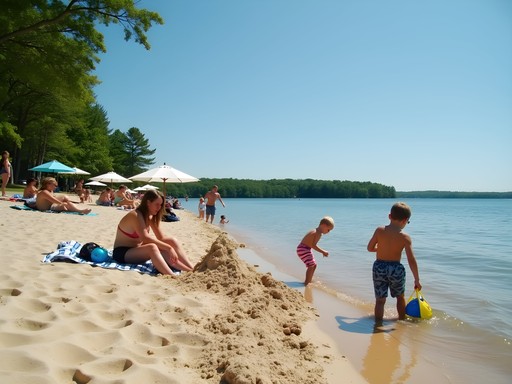
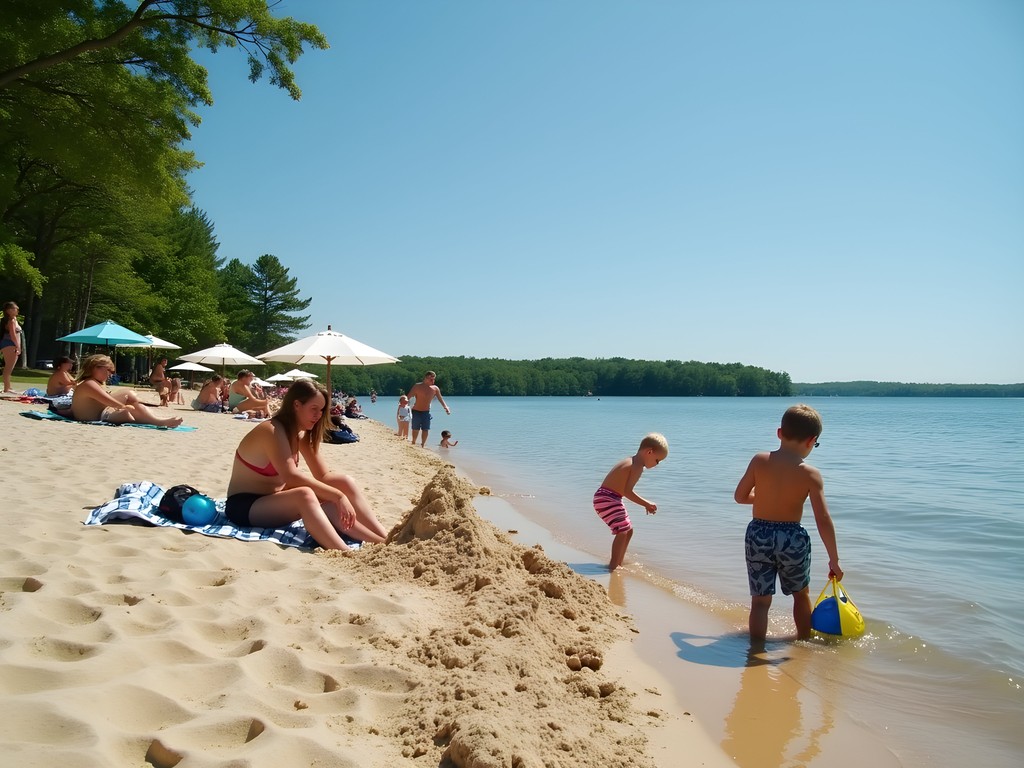
Pewaukee Lake stretches across 2,500 acres, making it the largest in Waukesha County and a fascinating microcosm of Midwestern beach culture. As an anthropologist, I'm drawn to observing how communities create rituals around natural spaces, and Pewaukee Beach doesn't disappoint. Families here have developed their own summer choreography—the morning arrival with coolers and beach beach shelter in tow, the careful claiming of territory with colorful towels, the children's negotiations over sand toys and swimming boundaries.
The public beach area along Lakefront Park provides clean sand, shallow swimming areas perfect for young children, and lifeguards during peak summer hours. What struck me most was the democratic nature of this space—unlike many tourist beaches I've studied globally, Pewaukee maintains a distinctly local character where economic differences seem temporarily suspended in favor of shared enjoyment of the water.
I spent an afternoon chatting with a grandmother who had been bringing her family to this same spot for four generations. She pointed out how the beach toys had evolved—from simple buckets to elaborate sand castle kit systems—but the fundamental experience remained unchanged: children learning water confidence under watchful eyes, parents alternating between supervision and brief moments of relaxation, and the collective sigh of contentment as the afternoon sun begins its descent.
💡 Pro Tips
- Visit on weekdays before noon for the least crowded experience
- The beach house has clean restrooms and changing facilities—rare amenities for a public beach
- Bring water shoes as some areas have pebbly lake bottom
Fox Brook Park: Reclaimed Nature and Communal Space
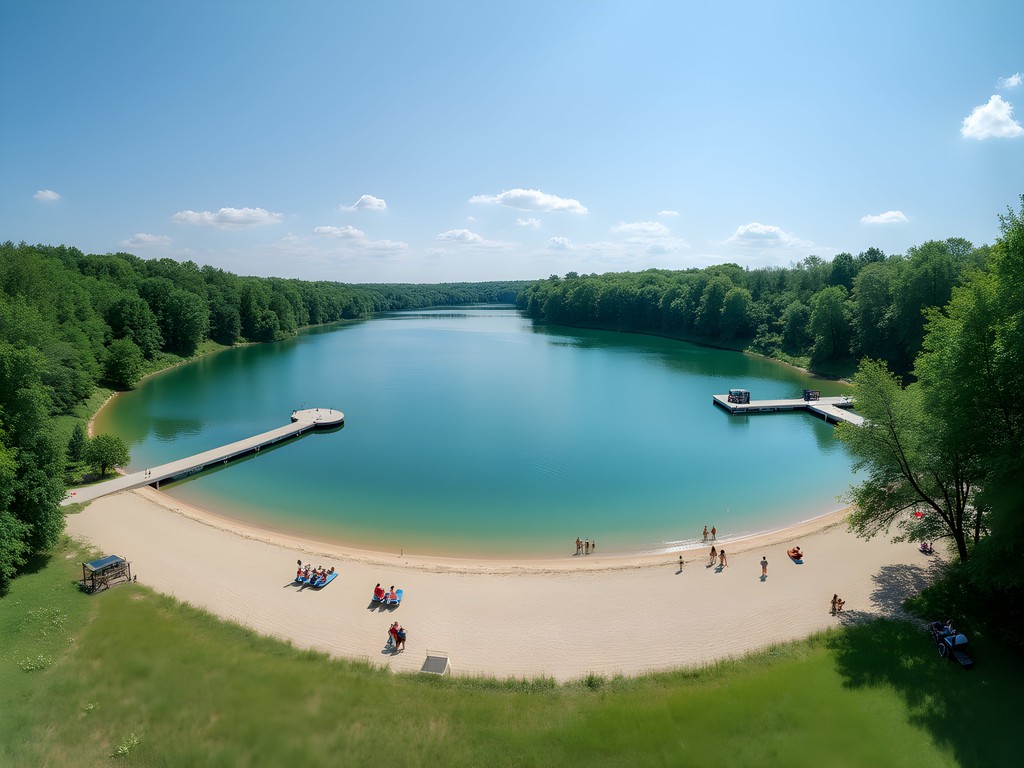
What fascinates me as an anthropologist is how communities transform industrial spaces into natural sanctuaries. Fox Brook Park represents this beautifully—a former quarry metamorphosed into a 223-acre park with a stunning 30-acre swimming lake. The water here has an almost surreal clarity that reminds me of certain cenotes I've studied in Central America, though with a distinctly Midwestern context.
The beach area feels more constructed than Pewaukee's natural shoreline, but this design creates excellent accessibility. The gradual entry and clearly marked swimming areas make this an ideal spot for families with mixed swimming abilities. During my visit, I observed several intergenerational groups where grandparents could wade comfortably while watching grandchildren venture to the floating platforms.
Beyond swimming, Fox Brook offers hiking trails that showcase Wisconsin's native flora. I spent a fascinating hour following a trail where interpretive signs explained the ecological restoration efforts. For families planning a full day, I'd recommend bringing a insulated cooler as the concession options are limited, and Wisconsin summer heat can be surprisingly intense.
The $5 entry fee (for county residents, slightly higher for non-residents) makes this an incredibly budget-friendly outing compared to commercial water parks, while offering a far more authentic connection to Wisconsin's landscape.
💡 Pro Tips
- Arrive early on weekends as the park occasionally reaches capacity
- The swimming area has designated deep and shallow sections clearly marked
- Bring your own shade as beach umbrellas are permitted and tree cover near the beach is minimal
Naga-Waukee Park: Where History Meets Recreation
The name 'Naga-Waukee' itself tells a story—combining 'Naga' from Nagawicka Lake and 'Waukee' from Waukesha—a linguistic blend that reflects the cultural intersections I often study in my anthropological work. This 416-acre park offers a more intimate beach experience than its larger neighbors, with a small swimming area that feels almost like a private lake access.
What makes Naga-Waukee particularly interesting is how the beach experience integrates with other recreational activities. Families can easily combine swimming with hiking, disc golf, or exploring the park's Ice Age Trail segment—a perfect way to understand how glacial forces shaped Wisconsin's distinctive landscape.
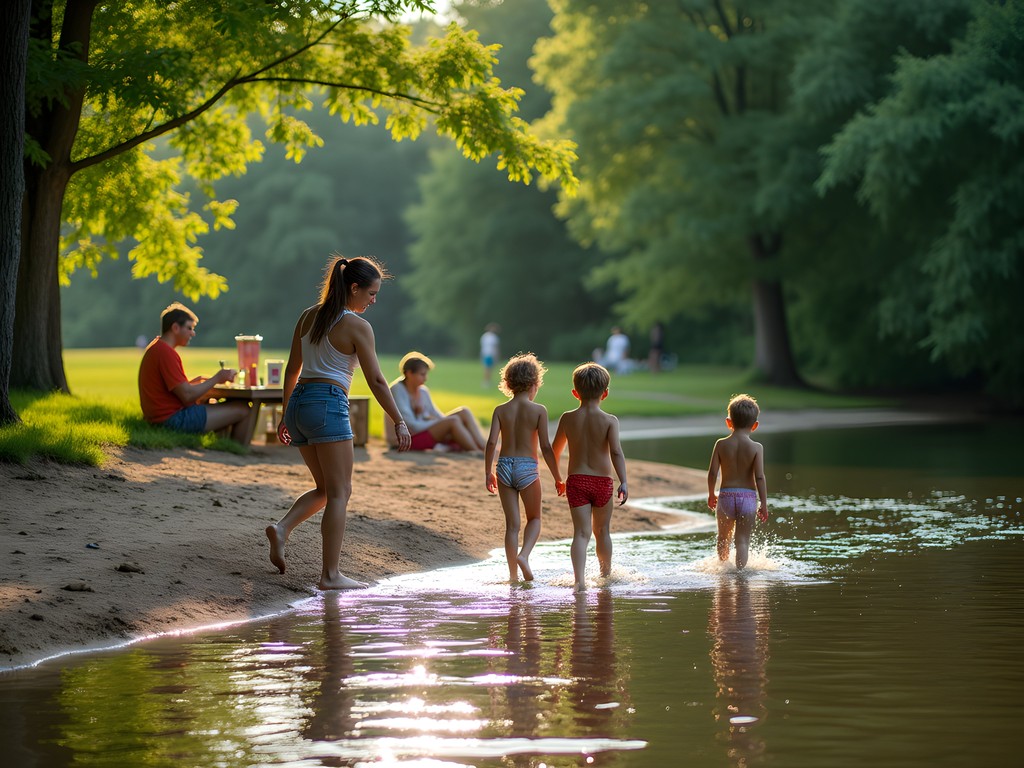
During my visit, I was struck by how many families incorporated water play into broader outdoor experiences. One family I chatted with had established a summer tradition of hiking first, swimming second, and picnicking third—a ritual reinforced by their children's waterproof trail shoes that transitioned seamlessly between activities.
The beach here doesn't have lifeguards, so parents remained particularly vigilant. I observed fascinating social dynamics where families would form informal supervision networks, taking turns watching the water while others prepared food or rested. This cooperative caregiving reflects patterns I've documented in many traditional communities worldwide—the understanding that children belong to the broader community, not just individual families.
💡 Pro Tips
- The beach is smaller than others in the county, so midweek visits are best for a relaxed experience
- Combine swimming with a hike on the Ice Age Trail for a full day of activities
- Bring a picnic blanket as the grassy areas near the beach are perfect for family meals

Minooka Park: The Textile Traditions of Beach Culture
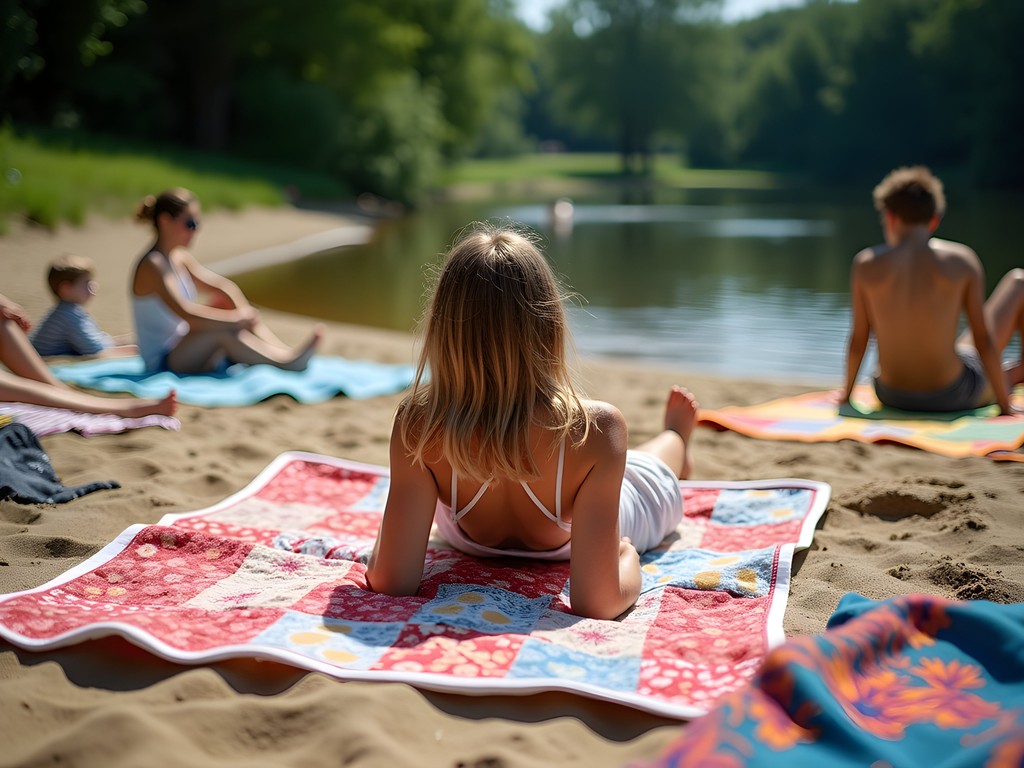
While most wouldn't connect beaches with textile arts—my academic specialty—Minooka Park revealed fascinating material culture aspects of Wisconsin's lake life. The beach at Minooka's small swimming pond became my impromptu field site for observing the rich tapestry of beach textiles that families bring to these spaces.
Unlike coastal beaches where minimalist swimwear often dominates, Wisconsin lake beaches feature a delightful array of textiles that reflect both practicality and cultural identity. Handmade quilts spread on sand, crocheted beach coverups passed through generations, and even the occasional hand-sewn swim diapers for environmentally-conscious families.
One grandmother I met was teaching her granddaughter to crochet while watching younger children swim—continuing a craft tradition in the same space where water play unfolds. This intergenerational knowledge transfer within recreational contexts mirrors patterns I've documented in maker communities worldwide.
The beach itself is modest but well-maintained, with a designated swimming area in a spring-fed pond. The water quality testing posted regularly at the entrance booth demonstrates Wisconsin's commitment to environmental monitoring—something I found consistently impressive throughout Waukesha County's parks.
Minooka's $5 entry fee ($7 for non-residents) provides access not just to swimming but to extensive hiking trails and picnic facilities, making it an excellent value for budget-conscious families seeking a full day of activities.
💡 Pro Tips
- Check the Waukesha County website for water quality updates before visiting
- The pond is smaller than natural lakes, making it easier to keep track of children
- The beach area has less natural shade than other parks, so bring sun protection like a beach umbrella
Muskego Park: Indigenous Heritage and Modern Recreation
As someone of partial Indigenous Australian heritage who studies cultural preservation, I was particularly drawn to Muskego Park. While the swimming beach here is relatively modest—a small pond with designated swimming area—the park itself sits on land with rich Native American history, including effigy mounds that speak to the long human relationship with these waterways.
The juxtaposition of ancient cultural sites with modern recreational facilities creates a powerful reminder of how landscapes hold multiple layers of human experience simultaneously. I spent time observing how today's families, likely unaware of the full cultural significance beneath their feet, create their own meaningful experiences in this space.
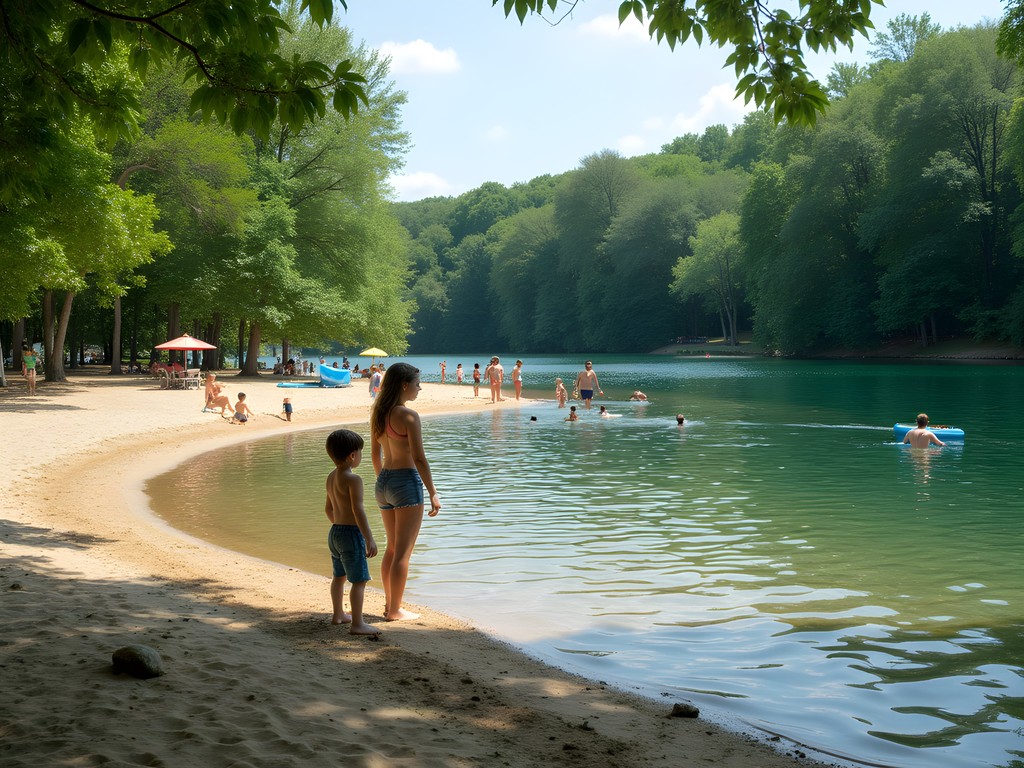
The swimming pond itself features clear water, a sandy beach area, and floating platforms that create natural boundaries for swimmers of different abilities. For families with younger children, I'd recommend a swim vest as there are no lifeguards on duty.
What makes Muskego particularly suitable for families is the combination of swimming with accessible hiking trails that feature interpretive signs about local ecology. One trail leads through a beech-maple forest that provides welcome shade on hot summer days—perfect for alternating between swimming and exploring.
The $5 entry fee ($7 for non-residents) makes this an affordable day out, especially considering the educational opportunities alongside recreation. I noticed several families incorporating impromptu nature lessons into their beach day, pointing out native plants or discussing how the glaciers formed the landscape—exactly the kind of contextual learning that creates deeper connections to place.
💡 Pro Tips
- Visit the park office for information about the cultural and natural history of the area
- The swimming pond is smaller than natural lakes but has excellent water quality monitoring
- Combine swimming with a short hike on the interpretive nature trails for a more educational experience
Final Thoughts
As I packed my quick-dry towel after a final swim in Pewaukee Lake, I reflected on how these Waukesha County beaches represent something far more significant than mere recreation spots. They are cultural classrooms where Wisconsin families enact seasonal rituals, where children learn water safety and environmental stewardship, where communities maintain connections to landscape across generations.
What struck me most was the accessibility of these experiences. Unlike many tourist destinations I've documented worldwide, Waukesha's lake beaches remain remarkably affordable, authentic, and uncommodified. For between $5-8 per vehicle, families can spend entire days creating memories in spaces that feel genuinely public—a rarity in our increasingly privatized world.
As an anthropologist who studies how communities maintain cultural practices in changing environments, I found hope in these lakeshores. Here, despite our digital age, families continue age-old traditions of gathering by water, sharing food, telling stories, and teaching children to swim—practices that connect us to our most fundamental human experiences. If you're seeking an authentic Wisconsin summer experience that won't strain your budget, Waukesha's lake beaches offer not just recreation, but a window into the cultural heart of Midwestern summer life.
✨ Key Takeaways
- Waukesha County offers diverse beach experiences for under $10 per vehicle
- Each lake beach has distinct characteristics—from the bustling community atmosphere of Pewaukee to the intimate forest setting of Muskego
- Combining swimming with hiking, picnicking, and nature education creates full day experiences on a budget
📋 Practical Information
Best Time to Visit
June through early September, with July offering warmest water temperatures
Budget Estimate
$5-8 per vehicle entry fee, plus picnic supplies
Recommended Duration
Full day or weekend with multiple beaches
Difficulty Level
Easy

Comments
Frank Garcia
Interesting take on Pewaukee Lake as a cultural centre. I've been analyzing how inland water destinations compete with coastal tourism, and Wisconsin's lake culture is genuinely unique. The community aspect you mentioned at Fox Brook Park reminded me of similar reclaimed spaces I've documented in the Netherlands. Question though - how accessible are these spots without a car? I typically rely on public transport and cycling when I'm covering destinations, and the Midwest can be tricky for that.
redqueen
not gonna lie, you'll want a car for waukesha county. buses are limited
Claire Spencer
Frank, you're right that it's car-oriented. There are some bus routes but they're not frequent. Bike rentals could work for Pewaukee Lake area if you're staying nearby, but getting between the different parks would be challenging without your own transport.
redqueen
Wait, how do the Wisconsin lakes compare to NT waters temperature-wise? Can you actually swim comfortably in summer?
Claire Spencer
Ha! Totally different experience. Wisconsin lakes are refreshing in July/August (around 70-75°F), whereas NT waters are bath-warm year-round. But honestly, I love both for different reasons. The cooler water here is perfect after hiking in the summer heat.
Douglas Bradley
Claire, your analysis of Waukesha's beach culture provides a fascinating perspective that most mainstream travel guides miss. Having researched recreational water spaces across North America, I found your observations about Minooka Park's textile traditions particularly insightful. The contrast between Wisconsin's lake beaches and coastal beaches creates a distinct cultural identity that deserves more attention. One element worth adding: the seasonal transformation of these spaces. I visited in early October last year, and the autumn colors reflecting on Pewaukee Lake created an entirely different experience than summer visits. The local food scene also shifts seasonally - the lakeside restaurants feature impressive fall harvest menus that complement the changing landscape. For anyone visiting outside peak summer season, the reduced crowds offer a more contemplative experience.
hikingnomad
Good point about fall visits! The colors are amazing and the beaches are practically empty. Best time to go IMO.
coolwalker
Thanks for sharing! Adding this to my summer list
Nicole Russell
Claire, this post really resonates! I solo traveled through Wisconsin last fall and completely underestimated how beautiful the lake regions would be. Your point about the spiritual connection to water is so true - there's something about those Midwest lakes that's different from ocean beaches. More intimate somehow? I loved Pewaukee for sunset watching. The community vibe around these lakes reminds me a bit of the Finger Lakes in NY but with their own distinct character. Did you rent a kayak at all? That's on my list for next time!
greenguy
Are any of these lakes good for paddleboarding? Thinking about bringing mine next month.
adventurepro
Pewaukee Lake is perfect for paddleboarding! Nice calm water most mornings. They even have rentals if you don't want to bring your own.
mountainclimber
We spent a week camping near Naga-Waukee last summer and absolutely loved it. The beach there is perfect for families - really gradual entry into the water and the swimming area is well marked. Fox Brook was our favorite for a quieter afternoon though. Pro tip: go on weekdays if you can, weekends get pretty packed especially in July. Also the concession stands close earlier than you'd think so bring snacks. We made that mistake on day one lol
hikingnomad
Great write-up! Visited Fox Brook Park last weekend. That quarry swimming is something else!
cooltime
Your photos are gorgeous!! Makes me want to go right now
journeyadventurer
Planning my first trip to Wisconsin - is the water warm enough to swim in June?
Nicole Russell
June can be hit or miss! I'd say late June is better. July and August are perfect though. The shallow areas warm up faster if you're not into cold water!
journeyadventurer
Thanks! I'll plan for July then
Venture X
Premium card with 2X miles, $300 travel credit, Priority Pass