
Disclosure: This article contains affiliate links. We may earn a commission from purchases at no extra cost to you, which helps our travel content.
The first light of dawn breaks over the Niger River, casting long shadows across Mopti's bustling port. I stand transfixed, my Canon 5D Mark IV poised to capture the symphony of wooden pirogues gliding across the water's surface like brushstrokes on canvas. Mali has called to me for years – this crossroads of West African cultures where ancient traditions persist despite modern encroachments. After documenting mountain communities from Nepal to Peru, I found myself drawn to this flatter landscape where the architectural and human elements create compositions that speak to both the eye and the soul. This weeklong journey between Mopti and Djenné during the winter dry season would challenge my artistic sensibilities and technical skills in equal measure – testing my ability to navigate complex cultural spaces with camera in hand while honoring the dignity of those I encountered. What follows is not merely a photography guide, but an invitation to witness a place where time seems suspended between centuries, where each photograph requires not just technical skill but genuine human connection.

Navigating Mopti's Waterfront Canvas
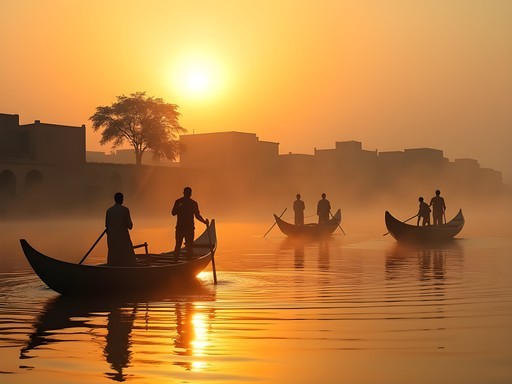
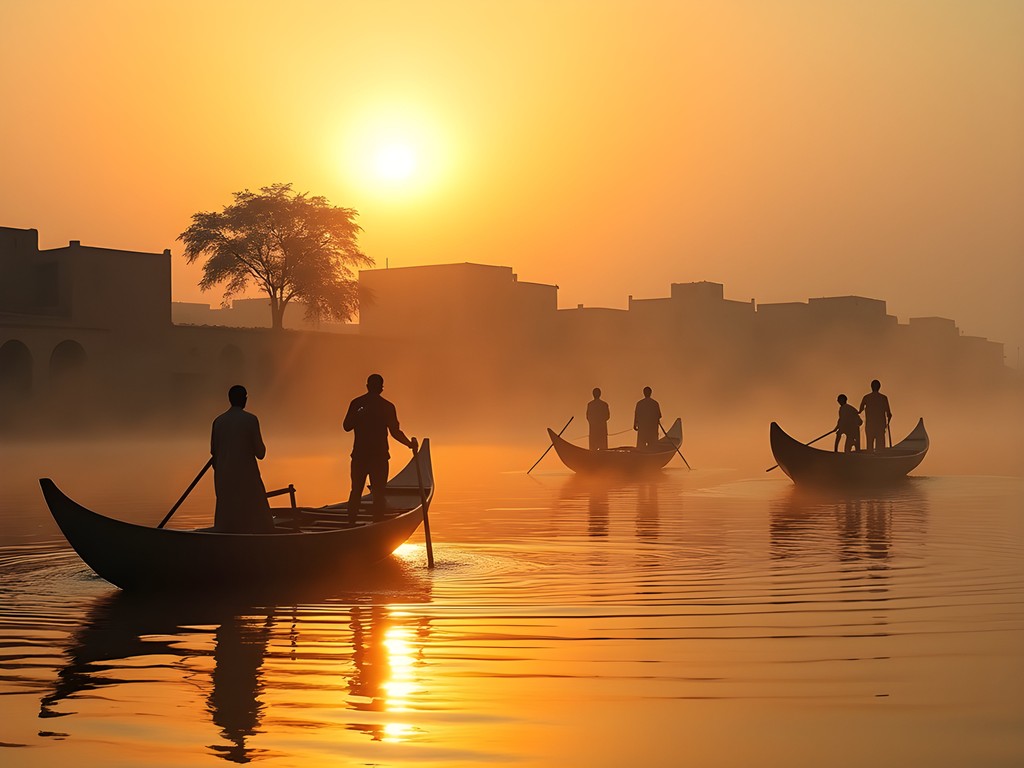
Mopti reveals itself most authentically from the water. Known as the 'Venice of Mali,' its position at the confluence of the Niger and Bani rivers creates a perpetually shifting tableau of commerce and daily life. I spent my first two mornings hiring a small wooden pirogue (negotiate around 10,000 CFA for two hours) to capture the golden hour light as it illuminated the port's activities.
From this vantage point, the layered composition possibilities become evident – fishermen casting nets in silhouette against the sunrise, women washing colorful fabrics along the shore, and the distinctive mud-brick architecture rising in the background. The light changes rapidly here, so I found myself constantly adjusting settings, often shooting in aperture priority mode to maintain control while working quickly.
The port area presents unique challenges – the constant movement, the contrast between shadowed boats and bright skies, the need to respect people's space and dignity. I found my 24-70mm lens invaluable here, allowing me to frame both intimate portraits and wider contextual shots without constantly changing equipment.
In the narrow alleys behind the port, Mopti's famous pink-hued buildings create a photographer's playground of light and shadow. Here, I switched to my 50mm prime for its low-light capabilities and to maintain a discreet presence. The markets near the Grande Mosquée offer particularly rich visual storytelling opportunities – spice merchants surrounded by pyramids of vibrant powders, textile sellers beneath canopies that filter light into ethereal patterns.
💡 Pro Tips
- Hire a local guide who speaks Bambara to help navigate cultural sensitivities around photography
- The hour after sunrise (6:30-7:30am) offers the most magical light with fewer tourists
- Always ask permission before photographing individuals, offering to share images via WhatsApp when possible
The Monday Market of Djenné: A Sensory Overload
The 30-kilometer journey from Mopti to Djenné traverses landscapes that shift from riverine to arid, each worthy of documentation. But timing this journey to arrive for Djenné's legendary Monday market is essential for any photographer seeking to capture Mali's cultural heartbeat.
I arrived in Djenné on Sunday evening, securing a basic guesthouse room (La Tapama offers simple but clean accommodations) to ensure I could be in position before sunrise. This foresight proved invaluable as the market begins assembling in darkness, offering rare opportunities to photograph vendors arranging their wares by lantern light – a challenging but rewarding low-light exercise that produces hauntingly beautiful images.
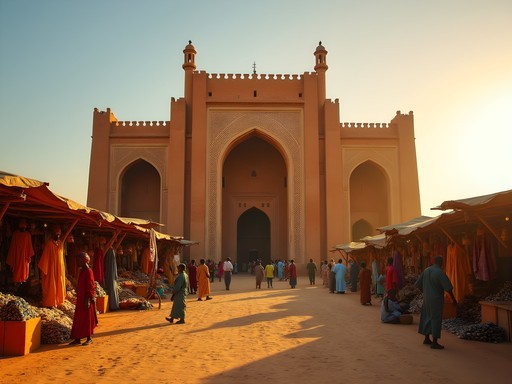
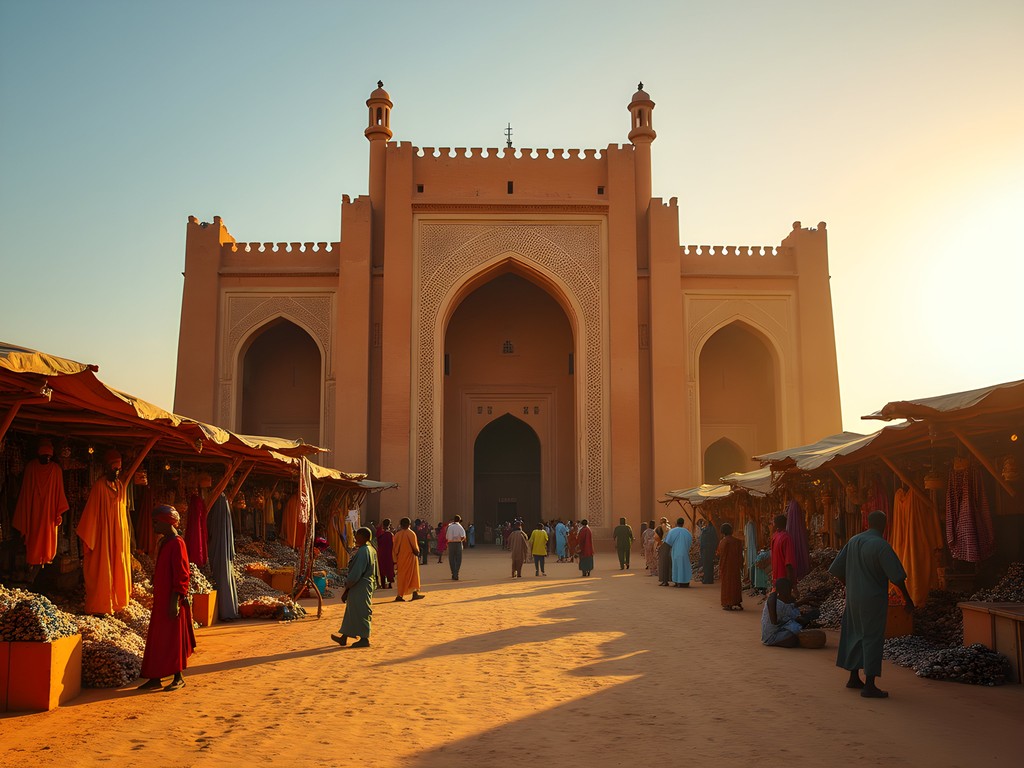
By mid-morning, the market engulfs the entire town square in a kaleidoscope of colors, sounds, and movement. Here, the photographic challenge shifts from light to composition – finding order within chaos. I found success by isolating small vignettes: hands exchanging weathered banknotes, a woman measuring millet with a calabash, the precise arrangement of mangoes in geometric patterns.
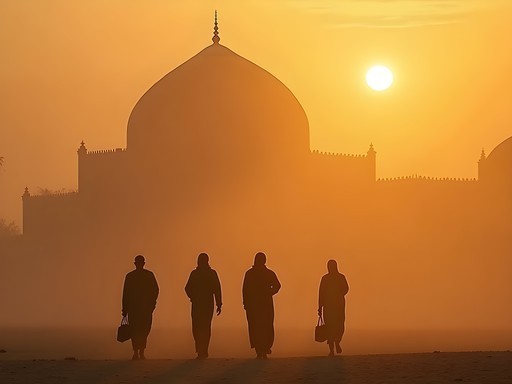
The market surrounds Djenné's crowning glory – the Grande Mosquée, the world's largest mud-brick structure. This UNESCO World Heritage site demands different approaches throughout the day. Early morning offers reflections in puddles and dramatic side-lighting that emphasizes its unique architectural elements. Midday presents harsh challenges but can yield striking high-contrast black and white opportunities. Late afternoon bathes the structure in warm light that makes its mud surface appear to glow from within.
For this architectural work, my wide-angle lens proved indispensable, allowing me to capture both the mosque's imposing scale and its intricate details while maintaining perspective control.
💡 Pro Tips
- Position yourself at the northeast corner of the mosque before sunrise for the best light on both the market and building
- Respect that photography inside the mosque is strictly forbidden for non-Muslims
- Consider using a polarizing filter to manage the harsh midday contrast and deepen the blue skies behind the mosque
Portraits and Permissions: Ethical Photography in Mali
Perhaps the most challenging aspect of photographing in Mali is navigating the complex ethics of portrait photography in a region where foreign cameras have not always been wielded respectfully. My approach, developed over years of cultural documentation, centers on connection before capture.
In both Mopti and Djenné, I spent significant time without my camera visible, engaging with local artisans and merchants. I learned basic Bambara greetings and questions, carrying a small notebook where people could write their contact information to receive images. This investment in relationship-building yielded not just more authentic portraits but richer stories to accompany them.
Technically, Mali's harsh contrasts and varied skin tones present exposure challenges. I often used spot metering on faces and exposure compensation of +1/3 to +2/3 stops to properly render darker skin tones, particularly in the contrasty light. For portraits, my 85mm prime lens created beautiful separation between subjects and the often busy backgrounds.
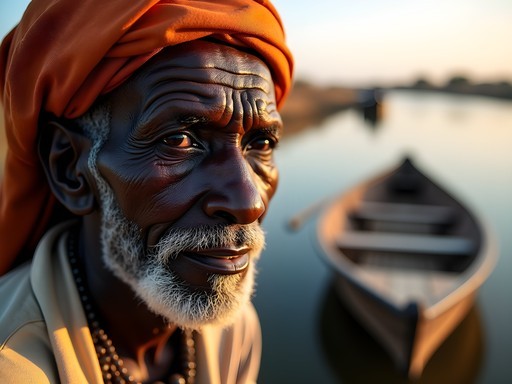
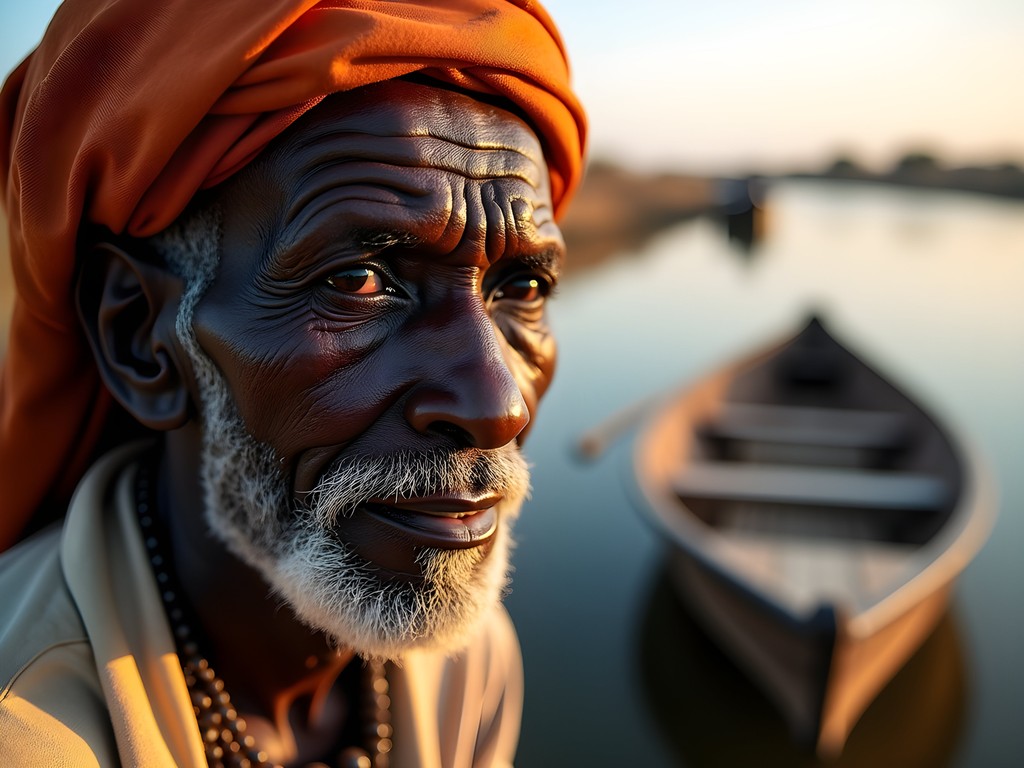
The Bozo fishermen along Mopti's waterfront and the Fulani herders who bring their goods to Djenné's market are particularly striking subjects, with cultural adornments and weathered faces that tell stories of generations. However, these communities have specific beliefs about photography. Some Fulani people believe images capture part of their soul, requiring particularly thoughtful approaches.
I found that showing subjects images on my camera's LCD screen after taking them built trust and often led to invitations to photograph ceremonies or family gatherings normally closed to outsiders. These intimate access points – a Bozo naming ceremony I was invited to attend, an impromptu music session with Dogon musicians – yielded my most meaningful images from the journey.
💡 Pro Tips
- Learn to ask for photo permission in Bambara: 'N'bé se ka i ja?' (May I take your picture?)
- Carry small prints from previous days to give as gifts to those you photograph
- Consider using a longer lens for candid street photography when direct permission isn't possible

The Mud Masons: Documenting Ancient Architectural Techniques
Beyond the spectacular finished structures, Mali offers rare opportunities to document ancient architectural practices still in active use. The annual replastering of Djenné's mosque (typically in April) is the most famous, but smaller-scale maintenance occurs year-round throughout both cities.
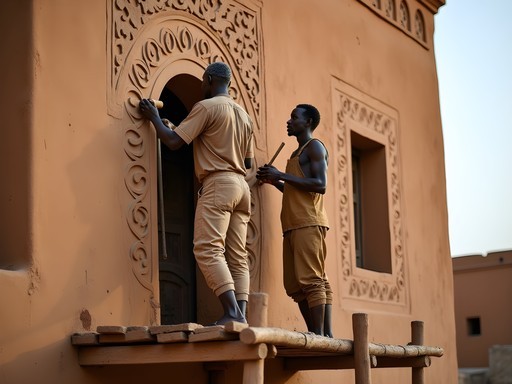
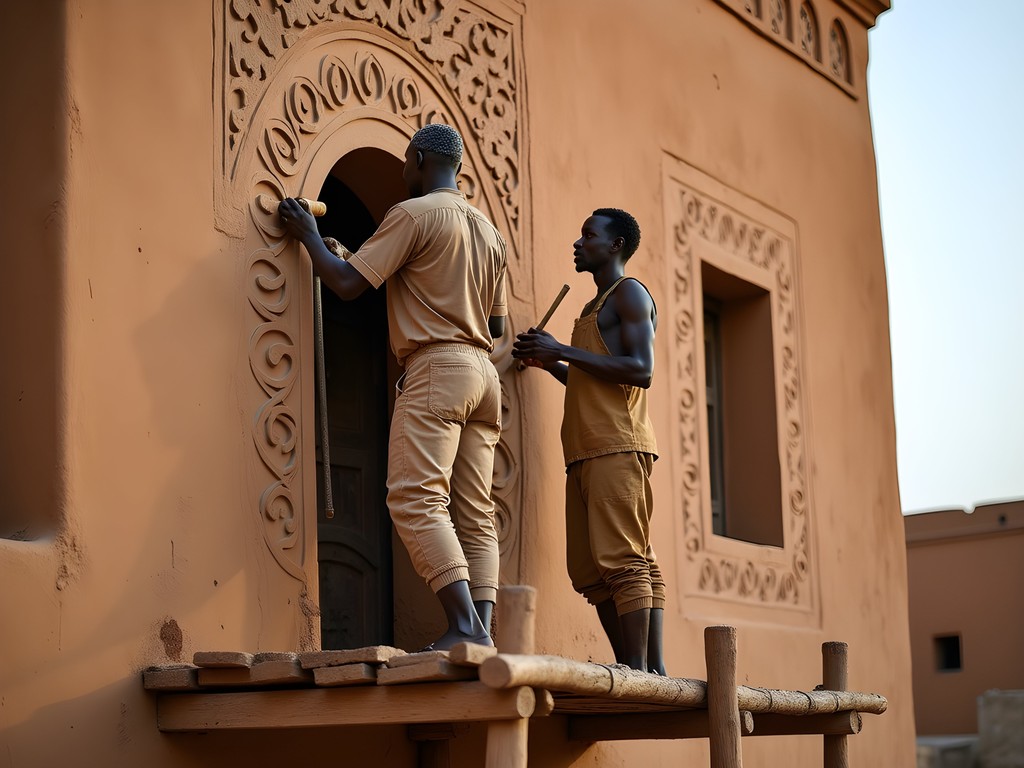
I was fortunate to encounter a team of mud masons repairing a family compound in Djenné's old town. After introducing myself and explaining my interest in traditional building techniques, they allowed me to document their work over two days. This slow immersion yielded intimate images of hands mixing mud with rice husks and shea butter, the precise application of wet material to damaged sections, and the specialized wooden tools passed through generations.
Photographically, these scenes required technical flexibility. The contrast between deeply shadowed interiors and bright exteriors meant bracketing exposures and occasionally using HDR techniques in post-processing. Dust is omnipresent, making frequent sensor cleaning essential and protective filters mandatory. My camera's weather sealing was tested daily by the fine Sahelian dust.
The masons work with remarkable efficiency, communicating through a combination of specialized terminology and unspoken understanding born of lifelong apprenticeship. Documenting their processes required patience and attentiveness to subtle details – the specific consistency of mud mixtures, the rhythmic patterns of application, the social hierarchy evident in who performs which tasks.
For this documentation, I alternated between video sequences and still photography, using a carbon fiber tripod to maintain stability in the challenging conditions. The resulting images reveal not just an architectural practice but a cultural ecosystem where building maintenance serves as both practical necessity and community ritual.
💡 Pro Tips
- Bring microfiber cloths and a rocket blower for frequent sensor and lens cleaning
- Consider using a variable ND filter when transitioning between bright exteriors and dim interiors
- When photographing building techniques, capture both wide contextual shots and extreme close-ups of hands and tools
Light and Shadow: Mastering Mali's Technical Challenges
Mali presents unique technical challenges that test even experienced photographers. The quality of light in the Sahel is unlike anything I've encountered elsewhere – simultaneously harsh and ethereal, creating extreme contrasts that standard exposure approaches simply cannot handle.
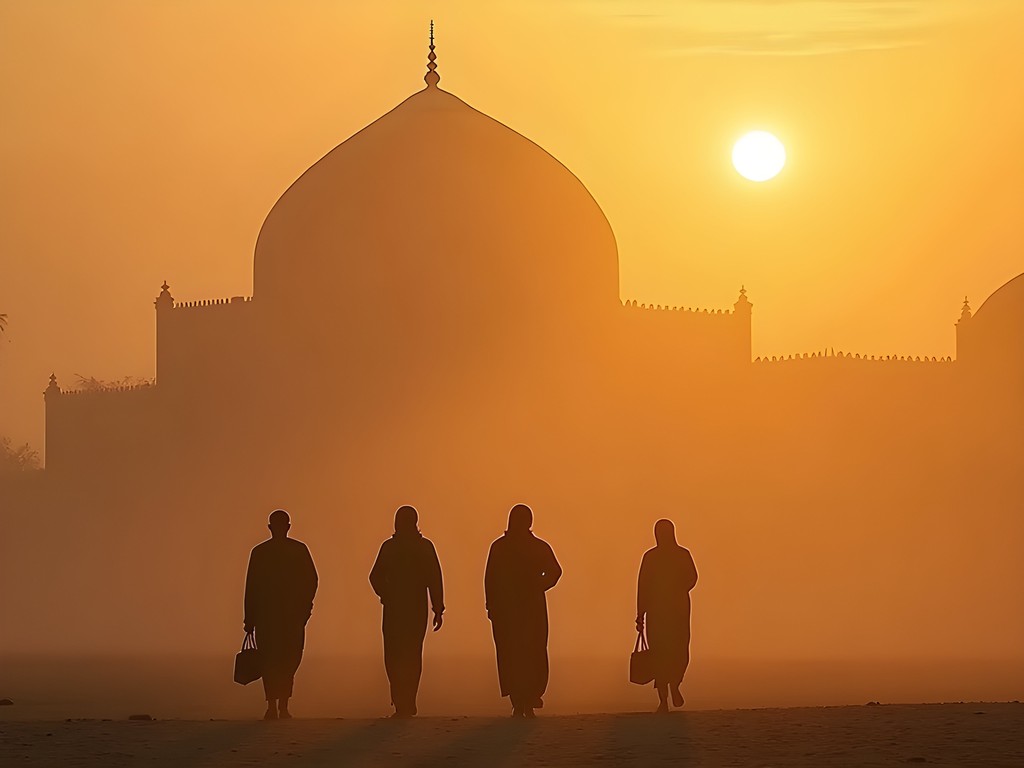
During winter (November-February), the harmattan winds periodically blow fine Saharan dust across the region, creating atmospheric conditions that frustrate autofocus systems but yield extraordinary diffused light. These days require patience but offer rare opportunities for evenly lit midday photography when the dust acts as a natural softbox.
I found myself constantly adapting to these conditions. For landscape work along the rivers, polarizing filters proved essential to manage glare while enhancing the rich earth tones of the environment. For architectural documentation, I often bracketed exposures extensively, sometimes merging them later to preserve both shadow and highlight detail.
Power infrastructure in both Mopti and Djenné is unreliable, making battery management critical. I traveled with four fully charged camera batteries and a solar charging system that allowed me to recharge in the field. Memory card capacity is another consideration – the richness of photographic opportunities means you'll likely shoot more than anticipated.
Night photography presents both challenges and opportunities. With minimal light pollution, the stars above these ancient cities are spectacular. However, tripods attract attention, and photographing after dark requires additional security awareness. I found that establishing relationships with local guides who could accompany me during blue hour and early evening shoots was the best approach.
Despite careful preparation, equipment failures are inevitable in these harsh conditions. My primary camera's shutter mechanism seized on day three due to fine dust infiltration. Having a backup body – even a less advanced model – proved essential to continuing the documentary project.
💡 Pro Tips
- During harmattan dust events, protect your gear with rain covers and change lenses inside a protective bag or vehicle
- The hour before sunset offers the most forgiving light for capturing Mali's earthen architecture
- Carry lens cleaning supplies in a sealed container to prevent them from becoming contaminated with dust
Final Thoughts
As my pirogue pulled away from Mopti's shore for the final time, I watched the mud-brick skyline recede into the morning mist, my memory cards heavy with images but my mind aware of all I had not captured. Mali defies complete documentation – its visual complexity and cultural depth ensure that every photographer's journey here will yield different treasures. The technical challenges of dust, contrast, and unpredictable conditions are balanced by extraordinary light, architectural wonders, and the profound dignity of its people. For photographers willing to approach this landscape with patience, respect, and technical flexibility, Mali offers rare opportunities to create images that speak not just to the eye but to the soul. The ancient rhythms of river life in Mopti and the timeless architectural wonder of Djenné await those prepared to look beyond headlines and engage deeply with one of West Africa's most visually compelling regions. When will you answer its call?
✨ Key Takeaways
- Building relationships before photography yields both better images and more meaningful cultural exchanges
- Mali's extreme lighting conditions require technical adaptability and specialized equipment protection
- The Monday market in Djenné offers unparalleled documentary photography opportunities when approached respectfully
- Architectural photography in Mali benefits from understanding the cultural significance of building techniques and materials
📋 Practical Information
Best Time to Visit
November through February (dry season)
Budget Estimate
$50-75 USD per day (excluding international flights)
Recommended Duration
Minimum 7 days to explore both cities properly
Difficulty Level
Challenging
Comments
freeguide
I visited Djenné last year and your post brought back so many memories! The Monday market is absolutely wild - sensory overload is right haha. One tip for photographers: bring extra memory cards because you'll take WAY more photos than you think. The light in the early morning is magical. Also the boat ride from Mopti to Djenné was one of my favorite travel experiences ever. So peaceful watching the villages go by. Thanks for sharing this!!
luckyclimber
How long was the boat ride? And did you book it in advance or just show up?
freeguide
About 2-3 hours depending on the boat. We just arranged it through our guesthouse the day before, super easy!
Bryce Diaz
Amit, this brought back vivid memories of my own time in Mali. I remember sitting on the roof of a guesthouse in Djenné, watching the sun set behind the Grand Mosque, and thinking I'd never seen anything quite like it. The way you captured the mud masons at work is phenomenal - that's a dying art form and documenting it is so important. I'm curious about your experience with the ferry crossings between Mopti and Djenné. When I went, the water levels were low and we got stuck on a sandbar for two hours. Did you time your visit for high water season?
skyrider
Really cool!
moonseeker
Great post! For anyone planning to go, bring way more memory cards than you think you need. The market alone will fill up cards fast and you don't want to be deleting photos to make space. Also the light changes so dramatically throughout the day that you'll want to shoot the same scenes multiple times.
sunnyclimber
I was in Mali in 2018 and your photos brought it all back. The light on the Niger at dawn is something else. Did you get to photograph any of the pinasse boats being built? I spent a morning watching craftsmen in Mopti and the whole process is done by eye, no measurements. Also curious what you did about dust protection for your gear - my camera sensor was a disaster by the end of the trip.
moonseeker
Not OP but I always travel with a rocket blower for sensor cleaning. Saved me so many times in dusty places.
Taylor Moreau
Excellent piece, Amit. Your section on ethical photography really resonates with me. I've found that in Mali, taking the time to build rapport before photographing people - even when they've given permission - results in far more authentic portraits. The mud masons you documented are incredibly skilled artisans. Did you have the opportunity to photograph the annual re-plastering of the Great Mosque? That would be quite the spectacle to capture. Also, for anyone planning a similar journey, I'd strongly recommend hiring a local fixer in Mopti who can facilitate introductions and help navigate cultural sensitivities.
sunnylover
Great advice about the local fixer! How did you find yours?
Taylor Moreau
Through my hotel in Mopti - they connected me with someone reputable. Worth arranging before you arrive if possible.
luckyclimber
This is going on my bucket list!! Quick question - is Mali safe for solo travelers right now? I've been reading mixed things online and would love to hear from someone who's actually been there recently.
Taylor Moreau
I'd recommend checking current FCO advisories before booking. The situation can change quickly in the region. Mopti and Djenné were generally accessible with proper arrangements when I visited in 2022, but always use local guides and stay informed.
wanderlusttime
Added to my bucket list!
Jean Wells
Your section on ethical photography really resonates. I spent three weeks in the Dogon Country region in 2022, and the permission protocols were similar - always ask, always offer to share the photo, never photograph sacred ceremonies without explicit consent. The genuine connections you make when you approach people respectfully create far better portraits than stolen shots ever could. One question: did you find language barriers challenging? My French got me by in Mopti, but in smaller villages around Djenné, I relied heavily on guides for translation.
sunnyclimber
This is such an important point. Too many travel photographers treat locals like props. Respect goes a long way.
starperson
How hard is it to get to Djenné from Bamako? Is the Monday market worth planning the whole trip around?
Bryce Diaz
Not Amit, but I made that journey in 2019. It's about 6-7 hours by bush taxi to Mopti, then you catch a pirogue or 4x4 to Djenné. The market is absolutely worth it - arrive Sunday evening so you wake up to the chaos. Pure magic.
starperson
Thanks! That's super helpful
Venture X
Premium card with 2X miles, $300 travel credit, Priority Pass