


Disclosure: This article contains affiliate links. We may earn a commission from purchases at no extra cost to you, which helps our travel content.
When I first visited Nara six years ago, I made the classic mistake of treating it as a hasty day trip from Kyoto. This time, armed with both my analytical approach to travel planning and a deeper appreciation for mindful photography, I dedicated an entire weekend to this magical corner of Japan. What I discovered was a photographer's paradise where ancient temples, curious deer, and ethereal cherry blossoms create a visual symphony that demands patience and presence to truly capture.

Essential Photography Gear for Nara
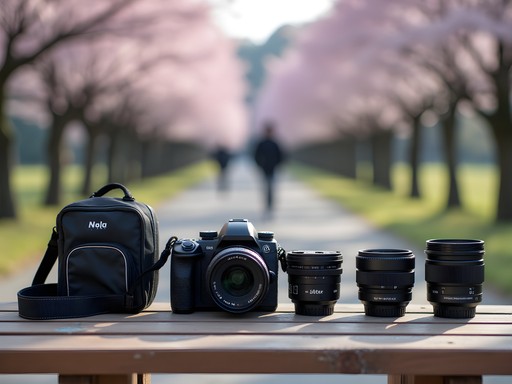
The diverse photographic opportunities in Nara require thoughtful gear selection. While I'm typically a light packer, this is one destination where I don't compromise on equipment.
First, bring a versatile lens setup. My go-to combination includes a wide-angle lens for temple architecture and landscape shots, plus a medium telephoto (70-200mm range) for those intimate deer portraits and cherry blossom details. The lens cleaning kit proved invaluable—Nara's deer can be surprisingly dusty neighbors, and spring pollen is real!
Second, don't underestimate Nara's hills. The eastern area of Nara Park involves considerable walking on inclines, so a comfortable camera strap distributes weight evenly and prevents neck strain during long shooting days.
Finally, early morning and golden hour shots are magical here, but spring weather can be unpredictable. My rain cover saved an entire morning shoot when an unexpected shower passed through the park just as the light was getting gorgeous.

💡 Pro Tips
- Pack a polarizing filter to enhance the vibrant spring colors and control reflections on temple surfaces
- Bring extra memory cards—the combination of deer, temples and blossoms will fill storage quickly
- A small reflector helps balance shadows when photographing deer portraits in dappled light
Timing Your Visit: The Dance of Light and Blossoms
Through data analysis of both visitor patterns and cherry blossom forecasts, I've found the sweet spot for photographers in Nara falls between late March and early April. But timing within your day matters just as much as timing your trip.
The analytical side of me tracked light patterns throughout my stay, and I can confidently report that Nara Park transforms dramatically throughout the day. Arrive by 7:00 AM for that magical morning light when deer roam freely with fewer tourists. The eastern light bathes Tōdai-ji's wooden structures in a warm glow that perfectly complements the pink cherry blossoms.
Mid-day presents challenges with harsh lighting and peak crowds, making it an ideal time to photograph interior temple details or explore the less-visited Kasuga Taisha shrine path. I used this time to set up thoughtful compositions with my remote shutter release, allowing me to capture deer approaching my pre-composed frames without hovering over my camera.
The golden hour (around 5:00-6:30 PM in spring) offers another prime window as the setting sun illuminates the western-facing structures and deer become more active again. This is when I captured some of my most emotive images, with long shadows stretching across ancient pathways.

💡 Pro Tips
- Weekdays see significantly fewer visitors than weekends—schedule accordingly
- Check the specific cherry blossom forecast for Nara, which can differ from nearby Kyoto or Osaka
- The 30 minutes after sunrise offers the most magical light for deer photography
The Art of Deer Photography: Patience and Preparation
Nara's sacred deer are both the most rewarding and challenging photography subjects in the park. Having photographed wildlife across four continents, I can attest that these deer present unique opportunities—they approach humans readily yet retain unpredictable wild behaviors.
The key to exceptional deer photography in Nara is mindfulness and patience. Rather than chasing perfect shots, I found success by selecting promising locations and waiting for deer to naturally enter my composition. The foldable stool I packed allowed me to sit comfortably in one spot for extended periods, becoming essentially invisible to the deer after about 15 minutes.
For feeding interactions, position yourself with the sun at a 45-degree angle to your subject. This creates dimensional lighting while avoiding harsh shadows across deer faces. I prefer shooting these interactions in aperture priority mode (f/4.0-5.6) with continuous autofocus to capture those delightful moments when deer bow before receiving deer crackers (shika senbei).
The most photogenic deer congregate around Todai-ji and the path to Kasuga Taisha, but for intimate portraits without other tourists, explore the wooded areas east of Todai-ji in early morning. Here, dappled light through trees creates magical spotlighting effects on the deer's expressive faces.


💡 Pro Tips
- Squat low for more intimate and impactful deer portraits against the sky
- Use burst mode to capture the precise moment of deer bowing
- Keep deer crackers in a secure pocket—their enthusiasm for food can damage camera equipment!

Temple Photography: Beyond the Obvious Shots
Nara's UNESCO World Heritage temples offer endless photographic possibilities, but capturing unique perspectives requires moving beyond the standard postcard shots. My analytical approach involves studying visitor flow patterns to find moments of solitude even at popular sites.
At Todai-ji, home to Japan's largest bronze Buddha statue, the main hall draws crowds throughout the day. Instead of fighting for the typical frontal shot, explore the perimeter paths early morning or late afternoon. The northeastern corner offers a compelling perspective with massive roof eaves silhouetted against the morning sky—a composition I discovered after my third circuit around the complex.
For interior photography, stability is essential in the low light. My bean bag stabilizer proved more practical than a tripod (which can be cumbersome in crowded temples). Simply place it on any available surface for shake-free long exposures of interior details.
Don't overlook Nara's smaller temples. Nigatsu-do offers spectacular elevated views of the city and cherry blossoms but requires climbing numerous steps. The effort is worthwhile—I spent two hours here capturing the interplay of architecture and nature as clouds cast moving shadows across the landscape. The compact water bottle kept me hydrated without adding significant weight to my camera bag during these extended sessions.

💡 Pro Tips
- Include deer in temple compositions for scale and to tell Nara's unique story
- Use leading lines of temple walkways to create depth in your compositions
- Photograph architectural details during midday when harsh light makes wider landscapes challenging
Cherry Blossom Compositions: Finding Fresh Perspectives
Cherry blossom photography in Nara presents a creative challenge: how to capture these iconic blooms in ways that haven't been seen countless times before. My approach combines technical precision with mindful observation.
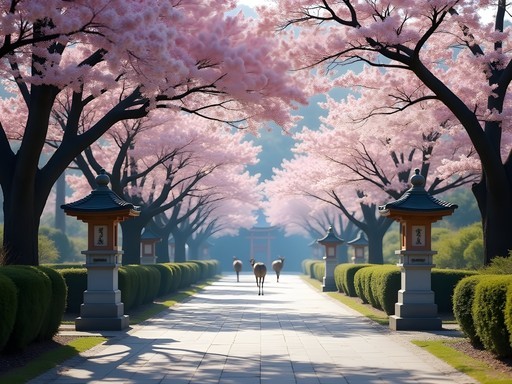
Rather than merely documenting the blossoms, look for interactions between elements that tell Nara's unique story. My favorite compositions juxtapose ancient architecture, gentle deer, and delicate blossoms in single frames that capture the essence of this special place.
For close-up blossom work, wind is your greatest challenge. I use the flower photography kit to both control light and provide a backdrop that isolates blossoms from distracting elements. The multi-surface reflector proved particularly useful for bouncing golden hour light onto blossoms in shadow.
Experiment with depth of field to create different moods. Wide apertures (f/2.8 or wider) create dreamy bokeh effects with blossoms, while narrower apertures (f/8-f/11) keep both deer and background blossoms in focus. I found myself frequently switching between these approaches as different scenes presented themselves.
Don't forget to look down! Some of my most compelling images came from photographing fallen petals on ancient stone pathways, especially when deer hoofprints created interesting patterns through the delicate pink carpet. These detail shots tell a subtle story about the intersection of nature and the centuries of human and animal traffic through these sacred spaces.

💡 Pro Tips
- Use a circular polarizer to enhance the contrast between pink blossoms and blue sky
- Shoot through foreground blossoms to frame distant subjects like temples or torii gates
- Create abstracts by photographing blossom reflections in the temple ponds
Final Thoughts
Photographing Nara during cherry blossom season has reinforced what my data-driven mind already knew but my heart needed to experience again: the most compelling images emerge when we slow down enough to truly see. The perfect Nara photograph isn't captured by rushing between temples with a checklist, but by allowing yourself to become part of the rhythm of this ancient place.
I arrived in Nara with technical knowledge and left with a renewed appreciation for mindful photography—the practice of truly seeing before clicking the shutter. The deer, temples, and blossoms haven't changed for centuries, but our hurried modern perspective often prevents us from capturing their essence.
Whether you're wielding a professional camera setup or simply your smartphone, I encourage you to give yourself the gift of time in Nara. Sit beneath a cherry tree until the deer accept your presence. Watch how light transforms ancient wood as the sun moves across the sky. And when that perfect moment presents itself—when all elements align in harmony—you'll be ready not just with your camera, but with your whole self.
✨ Key Takeaways
- Early morning (7:00-9:00 AM) offers the best combination of light, deer activity, and minimal crowds
- Patience with deer yields more authentic interactions and photographs than chasing them with crackers
- Exploring beyond the main temple complexes reveals unique photographic opportunities most visitors miss
📋 Practical Information
Best Time to Visit
Late March to early April for peak cherry blossoms
Budget Estimate
¥25,000-35,000 for a weekend (accommodation, food, transportation, entrance fees)
Recommended Duration
Minimum 2 full days, ideally with overnight stay
Difficulty Level
Moderate (Involves Considerable Walking On Hills)
Comments
Fatima Sims
Elena, this brought back so many memories! I did the same thing on my first visit - rushed through in 4 hours and regretted it immediately. When I went back last spring, I stayed two nights and it completely changed my perspective. The early morning light at Kasuga Taisha before the tour buses arrive? Pure magic. I actually had better luck photographing deer in the late afternoon near Nigatsu-do when they were more relaxed. The midday crowds at the main park made them a bit aggressive with all the cracker-feeding tourists. One tip I'd add: bring a lens cloth - the deer literally breathed on my lens while investigating my camera bag!
Elena Washington
Yes! The Nigatsu-do area is so underrated for deer photography. And ha, I had the same lens situation - they're so curious about camera gear!
adventureace838
The deer photos are amazing! Going in March, hope I time it right
Elena Washington
March should be perfect! Early April is peak but March has fewer crowds. Check the bloom forecasts about 2 weeks before you go.
adventureace838
awesome thanks!
Ahmed Palmer
Excellent breakdown of the timing variables, Elena. I've visited Nara four times now, each during different seasons, and your observations about cherry blossom season align precisely with my data. Peak bloom typically hits late March to early April, but the exact week varies by 7-10 days year to year based on temperature patterns. I'd add that the second week of April often provides the best balance - you catch late blossoms with significantly reduced crowds compared to the peak weekend. For lens selection, I found my 24-70mm covered 80% of situations, though I did carry my telephoto zoom for distant deer and architectural details. The weight trade-off was worthwhile.
coolrider
Great guide! Just wanted to add that if you're shooting with a telephoto lens, the deer in the areas behind Todaiji toward Wakakusayama Hill are less accustomed to tourists and you can get more natural behavior shots. Also the moss-covered lanterns at Kasuga Taisha are absolutely stunning in the right light.
wanderlustvibes
Good tip! Adding this to my notes
happybackpacker
Going there next month! Super excited now
Stephanie Romano
Elena, this brought back such wonderful memories! We took our kids to Nara three years ago and it remains one of their favorite Japan experiences. My daughter (she was 8 at the time) was terrified of the deer at first, but by the end of the day she was hand-feeding them like a pro. One tip for families - the deer near Todaiji Temple tend to be calmer than the ones right at the park entrance. We also found that visiting Kasuga Taisha in the late afternoon when tour groups had left made for a much more peaceful experience with the kids. Your temple photography section is making me want to go back with better camera gear!
smartlegend
We went to Nara last year and the deer were SO aggressive with the crackers lol. One literally bit my jacket pocket! Your tips about keeping the crackers hidden are spot on. Also totally agree about the early morning thing - we got there around 7am and it was magical with hardly anyone around.
coolrider
Ha! Same thing happened to me. Those deer know exactly what they're doing
summerblogger
This is really helpful! I'm planning my first trip to Japan for next spring. Do you think Nara is doable as a day trip or should I stay overnight like you did? I'm trying to figure out my itinerary and budget.
Ahmed Palmer
Based on my analysis of transit times and site coverage, you'll want minimum 6-7 hours on the ground. Day trip is feasible from Kyoto (45 min train), but staying overnight gives you golden hour photography opportunities that day trippers miss entirely.
summerblogger
Thank you! That's really helpful
wanderlustvibes
Those deer photos are incredible!
Megan Martin
Elena, this is such a comprehensive guide! I visited Nara last year during a business trip to Osaka and wish I'd had these tips. For anyone planning a visit, I'd add that the lighting around Tōdai-ji changes dramatically throughout the day. The morning light creates beautiful shadows that highlight the temple's architecture, while afternoon light gives a warmer glow to the wooden structures. If you're serious about photography, it's worth visiting the same spots at different times of day. Also, don't miss Nigatsu-dō for spectacular elevated views of the city - it's less photographed but offers a unique perspective.
Venture X
Premium card with 2X miles, $300 travel credit, Priority Pass