
Disclosure: This article contains affiliate links. We may earn a commission from purchases at no extra cost to you, which helps our travel content.
While most visitors to Alaska arrive seeking untamed wilderness and glacial vistas, I found myself drawn to Sitka for entirely different reasons. Nestled between mountains and sea on Baranof Island, this former Russian colonial capital harbors a remarkably preserved architectural heritage that speaks volumes to the discerning urban explorer. Having spent decades documenting the world's built environments, I can confidently say that Sitka's compact historic downtown offers a density of cultural intrigue that rivals destinations twice its size.

Russian Colonial Footprints: St. Michael's Cathedral and Beyond
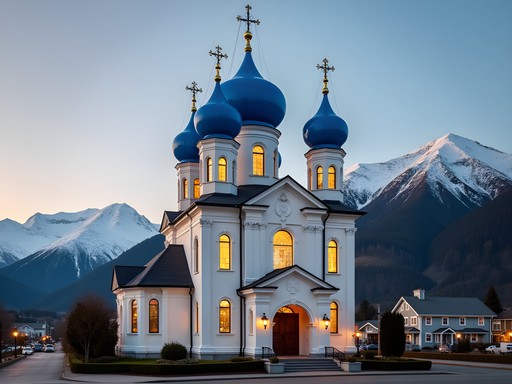
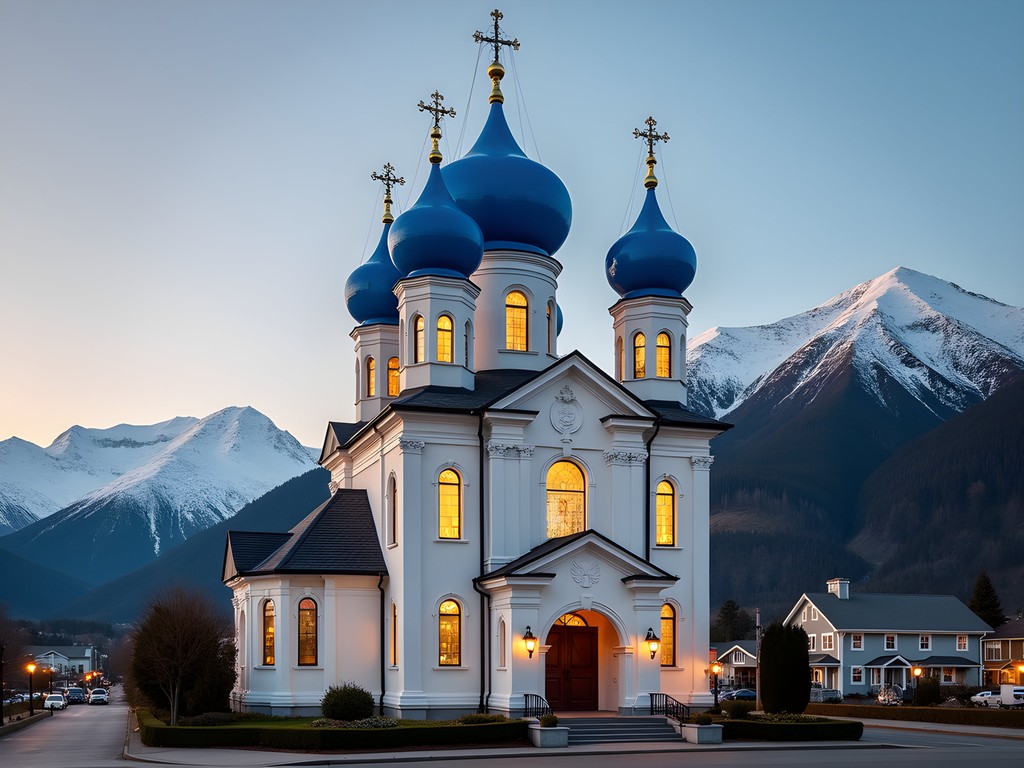
The onion domes of St. Michael's Cathedral rise unexpectedly from Sitka's skyline—a striking reminder that this land once represented Russia's American frontier. As a patent attorney with a passion for historical preservation, I found myself utterly captivated by this 1848 Orthodox church, reconstructed after a 1966 fire with meticulous attention to original specifications.
What most guidebooks won't tell you is that the cathedral's acoustics are best experienced during the early morning hours, when the light streams through eastern windows and illuminates the intricate iconostasis. The interior's remarkable collection of Russian Orthodox artifacts deserves unhurried contemplation. I spent nearly two hours examining the detailed workmanship of the religious icons, many of which survived the devastating fire.
Beyond the cathedral, Russian colonial influence permeates Sitka's downtown. The Russian Bishop's House (1842) stands as one of the few surviving examples of Russian colonial architecture in North America. Its restoration by the National Park Service provides a fascinating glimpse into colonial administrative life. For proper documentation of these architectural marvels, I relied on my portable light meter to capture the subtle nuances of light on these historic façades, particularly useful in Sitka's variable weather conditions.
💡 Pro Tips
- Visit St. Michael's Cathedral before 10am to avoid tour groups and experience the morning light
- Purchase the combination ticket that includes both the Cathedral and Bishop's House for savings
- The Russian American Company manager's house contains often-overlooked architectural details on its second floor
Totem Tales: Cultural Layers at Sitka National Historical Park
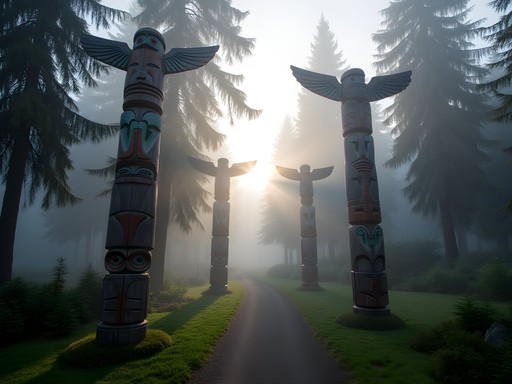
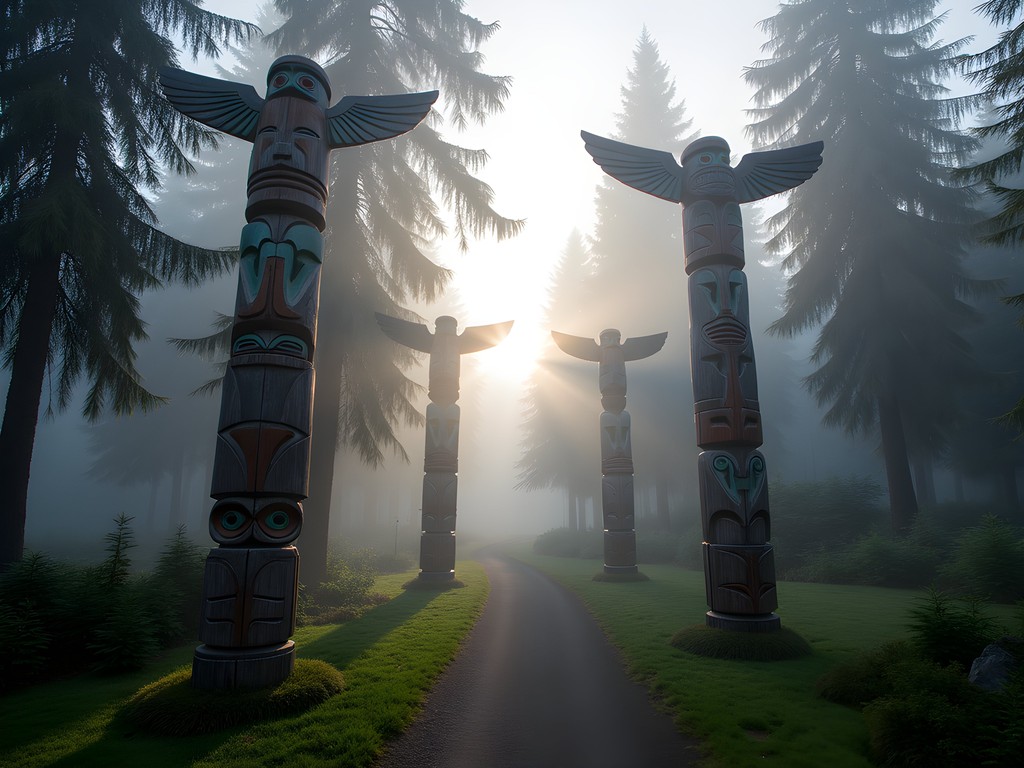
While technically on the edge of downtown, the Sitka National Historical Park serves as a fascinating threshold between urban development and indigenous heritage. As someone who's explored cave systems across three continents, I've developed a profound appreciation for how human cultures interface with natural landscapes—and nowhere is this more evident than along the park's totem-lined coastal trail.
The Russian-Tlingit battle site now preserved within the park boundaries tells a complex story of cultural collision and resilience. What captivated me most was how the totems—some original, others masterful reproductions—create an architectural dialogue with the surrounding hemlock and spruce forest. Each carving represents a sophisticated visual language that predates Russian arrival.
The Southeast Alaska Indian Cultural Center, located within the park's visitor center, offers demonstrations by Tlingit artists that illuminate the continuing traditions. I spent a fascinating afternoon watching a master carver transform cedar into cultural narrative. For this experience, I was grateful for my waterproof notebook which proved invaluable during a typical Sitka drizzle as I sketched totem designs and noted their symbolic elements.
💡 Pro Tips
- Walk the coastal trail at low tide to see intertidal marine life alongside the cultural artifacts
- Visit on Wednesdays when local artisans typically demonstrate traditional crafts
- Pick up the audio guide which includes Tlingit pronunciations and stories rarely found in written materials
Architectural Eclecticism: Pioneer Houses and Victorian Influences
What truly distinguishes Sitka's urban fabric is its remarkable architectural diversity within such a compact area. Having documented urban environments from Budapest to Bangkok, I'm particularly drawn to locations where historical layers remain visibly intact. Sitka delivers this in abundance.
The Pioneer House on Lincoln Street, with its distinctive mansard roof, exemplifies the late 19th-century transition as American architectural influences supplanted Russian colonial styles. Nearby, the Sitka Historical Society Museum (housed in Harrigan Centennial Hall) contains an exceptional collection of photographs documenting this architectural evolution.
For serious architectural exploration, I recommend the architectural field guide which provided invaluable context for understanding Sitka's unique built environment. I found myself constantly referencing its detailed descriptions of construction methods and stylistic influences.
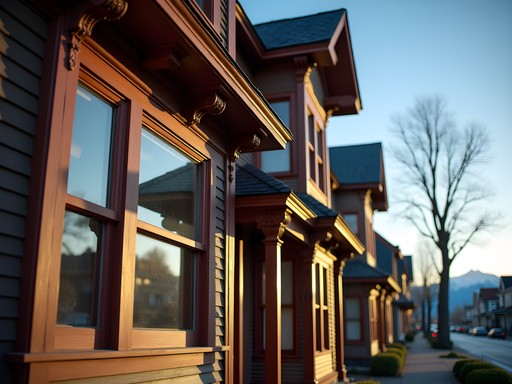
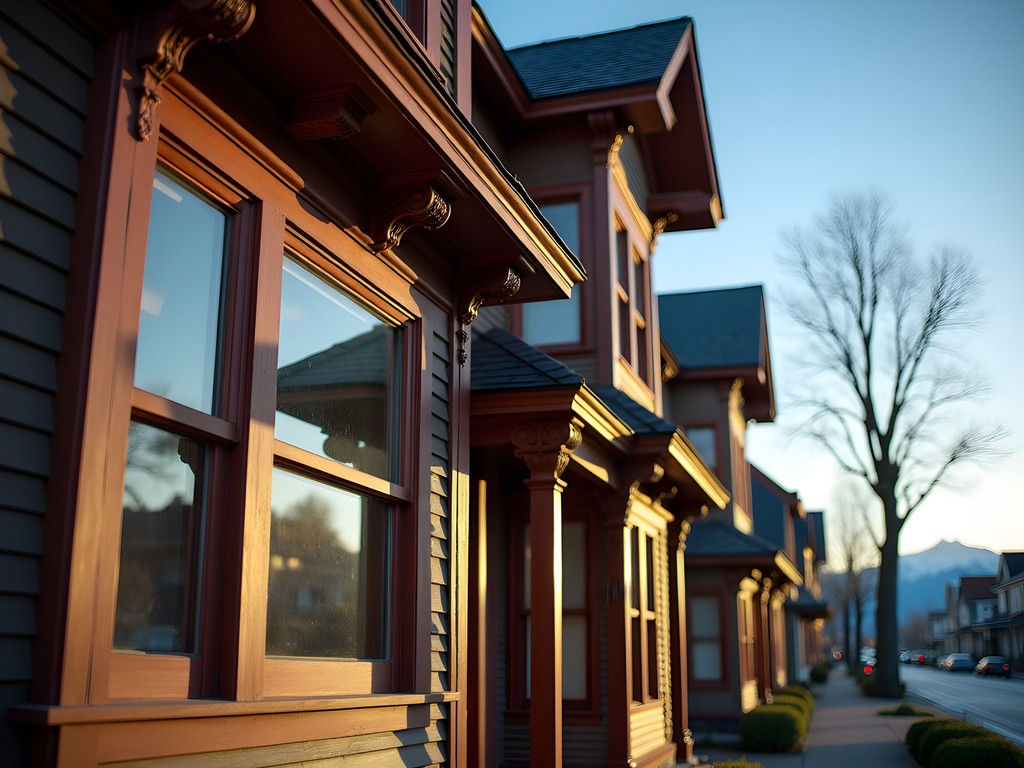
The true gems, however, are the modest wooden homes scattered throughout downtown, many featuring distinctive Russian-influenced details alongside Victorian embellishments. These hybrid structures tell the story of cultural transition more eloquently than any historical text. My favorite discovery was a small blue clapboard house on American Street featuring Russian proportion ratios but decorated with distinctly American gingerbread trim—a perfect architectural metaphor for Sitka itself.
💡 Pro Tips
- The Historical Society offers an excellent walking tour map highlighting architectural points of interest
- Many private homes have historical placards with construction dates and original owner information
- Photography is best during the 'golden hour' when low-angle light accentuates architectural details

Vintage Treasures: Sitka's Unexpected Antiquing Scene
As someone who has scoured vintage shops from Dublin to Dubrovnik, I approached Sitka's secondhand scene with measured expectations. How delightfully wrong I was. This remote Alaskan community harbors a surprising concentration of vintage treasures, largely due to its unique maritime history and relative isolation.
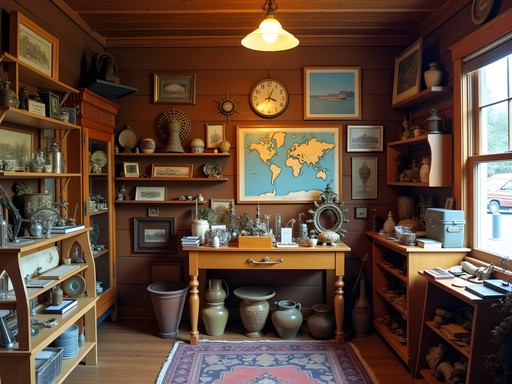
The Russian American Company building, now repurposed as a collection of shops, houses several vendors offering genuine Russian samovars, nautical instruments, and indigenous artifacts with documented provenance. While prices reflect the rarity of these items, serious collectors will find pieces unavailable elsewhere.
For those sharing my passion for vintage textiles, Sitka's secondhand shops offer remarkable finds. I discovered a 1940s Pendleton blanket with Tlingit-inspired designs that now holds pride of place in my Spokane home. The portable garment steamer I always pack for textile-hunting expeditions proved invaluable for assessing the condition of several delicate pieces.
Most unexpected was my discovery of a trove of mid-century Scandinavian homewares in an unassuming thrift shop near the harbor—evidence of the significant Nordic fishing community that settled in Sitka. The proprietor, a third-generation Norwegian-Alaskan, shared fascinating stories of cultural exchange between Scandinavian immigrants and Tlingit neighbors, stories reflected in the hybrid aesthetic of many items.

💡 Pro Tips
- Ask shopkeepers about maritime salvage sales, which occasionally yield remarkable historical items
- Visit the harbor-side shops mid-week when new estate items typically arrive
- Bring cash as many smaller establishments offer discounts for non-credit transactions
Culinary Heritage: Where Russian, Tlingit and Pacific Northwest Flavors Converge
Urban exploration inevitably leads to culinary discovery, and Sitka's food scene represents a fascinating confluence of cultural influences. After decades documenting global urban environments, I've learned that a location's architectural heritage often finds parallel expression in its cuisine.
Ludwig's Bistro on Lincoln Street exemplifies this principle perfectly. Housed in a restored 1890s building, the restaurant serves Mediterranean-inspired dishes featuring local Alaskan seafood—a culinary reflection of Sitka's position as a historical trading crossroads. Their seafood paella with locally-harvested spot prawns proved transcendent after a day of architectural photography.
For a more direct connection to indigenous foodways, the Sitka Tribal Tours' cultural tasting experience offers samples of traditional Tlingit preparations including various forms of smoked salmon, herring roe on kelp, and beach asparagus harvested from nearby shores. I was particularly impressed by the spruce tip tea, which captured the essence of the surrounding forest.
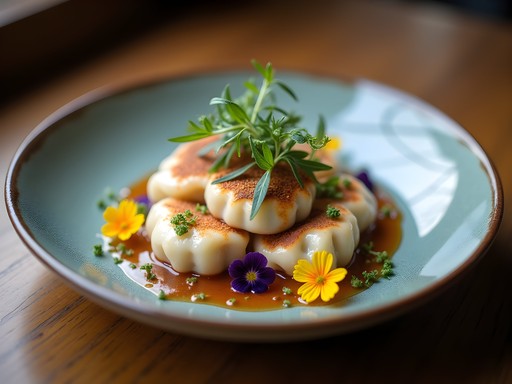
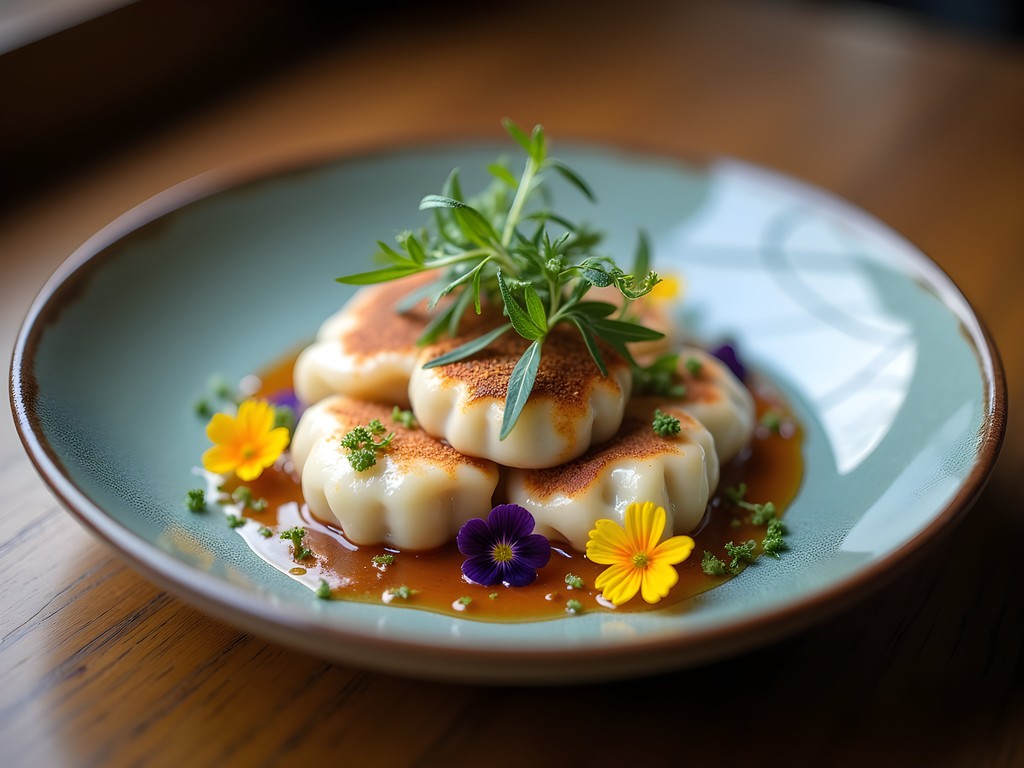
Perhaps most representative of Sitka's unique position is the Russian-American fusion found at the Larkspur Café. Their salmon pelmeni (Russian dumplings) served with local foraged herbs creates a dish that could exist nowhere else. For documenting these culinary discoveries, I relied on my food photography lighting kit which allowed me to capture properly illuminated images of these distinctive dishes even in dimly-lit historic interiors.
💡 Pro Tips
- Reserve Ludwig's Bistro at least two days in advance during summer months
- The Sitka Food Co-op occasionally offers tasting events featuring local producers
- Several restaurants offer early-bird specials before 5:30pm with identical menu items at reduced prices
Final Thoughts
Sitka defies conventional Alaskan travel narratives by offering an urban exploration experience as rich and rewarding as its surrounding wilderness. Its compact downtown presents a remarkable architectural palimpsest where Russian colonial heritage, indigenous Tlingit traditions, American frontier influences, and maritime history converge within walkable distances. For the discerning urban explorer seeking destinations that transcend typical tourist circuits, Sitka delivers exceptional value.
What distinguishes this remote outpost is not merely its individual landmarks but the coherent narrative they collectively present—a story of cultural collision, adaptation, and synthesis visible in everything from church domes to doorway proportions to fusion cuisine. As someone who has documented urban environments across five continents, I find Sitka's authenticity particularly refreshing in an era of homogenized tourist experiences.
I encourage fellow architectural enthusiasts and urban explorers to allocate at least three full days for proper documentation and appreciation. Bring comfortable walking shoes, versatile camera equipment for variable lighting conditions, and most importantly, a willingness to engage with local knowledge-keepers who hold the keys to Sitka's most compelling stories. The wilderness may draw most travelers to Alaska, but Sitka's historic downtown offers a different kind of exploration—one equally rewarding for those attuned to the human imprint upon remarkable landscapes.
✨ Key Takeaways
- Sitka offers North America's best-preserved example of Russian colonial architecture
- The compact downtown area contains an exceptional density of architectural styles spanning three centuries
- Cultural fusion is evident in everything from building techniques to culinary traditions
- Summer provides optimal exploration conditions with extended daylight hours and cultural programming
- Local experts and shopkeepers often hold the most valuable historical information not found in guidebooks
📋 Practical Information
Best Time to Visit
May through September, with June-August offering optimal weather and extended daylight
Budget Estimate
$150-250 per day including mid-range accommodation, meals and activities
Recommended Duration
3-4 days minimum for thorough urban exploration
Difficulty Level
Moderate (Some Hills And Uneven Historic Pavements)


Comments
Taylor Moreau
I was in Sitka last year on business and had an extra day to explore. The architectural contrast between the Russian Orthodox influence and the later American buildings is fascinating. I spent hours at the Sitka National Historical Park - the totem poles against the forest backdrop create stunning compositions. I'd recommend visiting the Russian Bishop's House too - it wasn't mentioned in your post, but it offers excellent guided tours that really bring the colonial period to life. The docents are incredibly knowledgeable about the restoration process.
explorephotographer
Great post! I'm heading to Alaska next summer and never considered Sitka. What's the best time to visit for photography of those Russian buildings without too many tourists around?
Grace Boyd
May is fantastic - you get longer daylight hours but before the cruise ship season really ramps up. Early morning light on St. Michael's Cathedral is magical!
explorephotographer
Thanks! Adding it to my itinerary for sure.
happyking
Been to Sitka three times now and completely agree about the urban experience. The totem park is incredible - I recommend getting the audio guide if you really want to understand the stories behind each totem. Also, don't sleep on the Russian Bishop's House tour. It's run by the Park Service and the guides are phenomenal. Last time I was there, our guide had lived in Sitka for 40 years and knew every family story. Best $5 I spent on that trip!
Sophia Gomez
What a refreshing take on Alaska travel! I visited Sitka for a conference last fall and squeezed in a morning at the historical park between meetings - wish I'd had more time after reading this. The layering of cultures you describe is spot-on. For anyone planning a visit, I'd recommend staying at least 2-3 days to really absorb the town's character. It's not a place to rush through between wilderness adventures. The Victorian houses near Castle Hill are gorgeous too - great for an evening walk.
mountainlegend
This is exactly what I needed to see! Everyone keeps telling me Alaska is just about hiking and fishing but I'm way more interested in history and culture. Booking flights this weekend - so excited!!!
adventureexplorer
This is amazing!! Never knew about the Russian history there
starwanderer
Love the cathedral photos! The blue domes are stunning.
Hunter Thompson
Brilliant post Grace! I'm usually all about the backcountry but you've convinced me to spend more time in town on my next Alaska trip. The Russian colonial angle is fascinating - reminds me of some of the historic quarters I explored in Quebec City. Question: are the antique shops you mentioned cruise-ship-tourist oriented or more authentic local spots? Always trying to avoid the tourist traps!
Grace Boyd
Mix of both honestly! The ones on Lincoln are more local. Try Backdoor Cafe area - less cruise ship traffic and better finds.
mountainhero
Going there in June! How walkable is the downtown area? Can you cover most of these spots on foot?
Grace Boyd
Super walkable! Downtown is compact - you can easily walk from the cathedral to the national park in about 20 minutes. Bring good rain gear though, June can be wet!
mountainhero
Perfect, thanks!!
freestar
YES! I spent 3 days in Sitka last summer and completely agree about the antiquing scene - nobody talks about it! Found an amazing vintage Russian samovar at one of the shops on Lincoln Street. The mix of Russian, Tlingit, and American influences makes the architecture so unique. Did you get to see any of the totem carving demonstrations at the park? That was a highlight for me.
starwanderer
Wait there's totem carving demos?? Adding that to my list!
freestar
Yeah! Not every day but check the park schedule when you go. Worth it!
Venture X
Premium card with 2X miles, $300 travel credit, Priority Pass