
Disclosure: This article contains affiliate links. We may earn a commission from purchases at no extra cost to you, which helps our travel content.
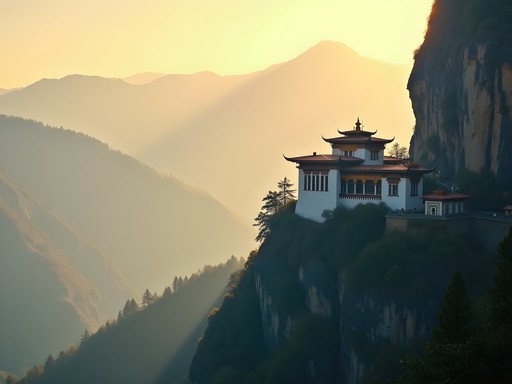
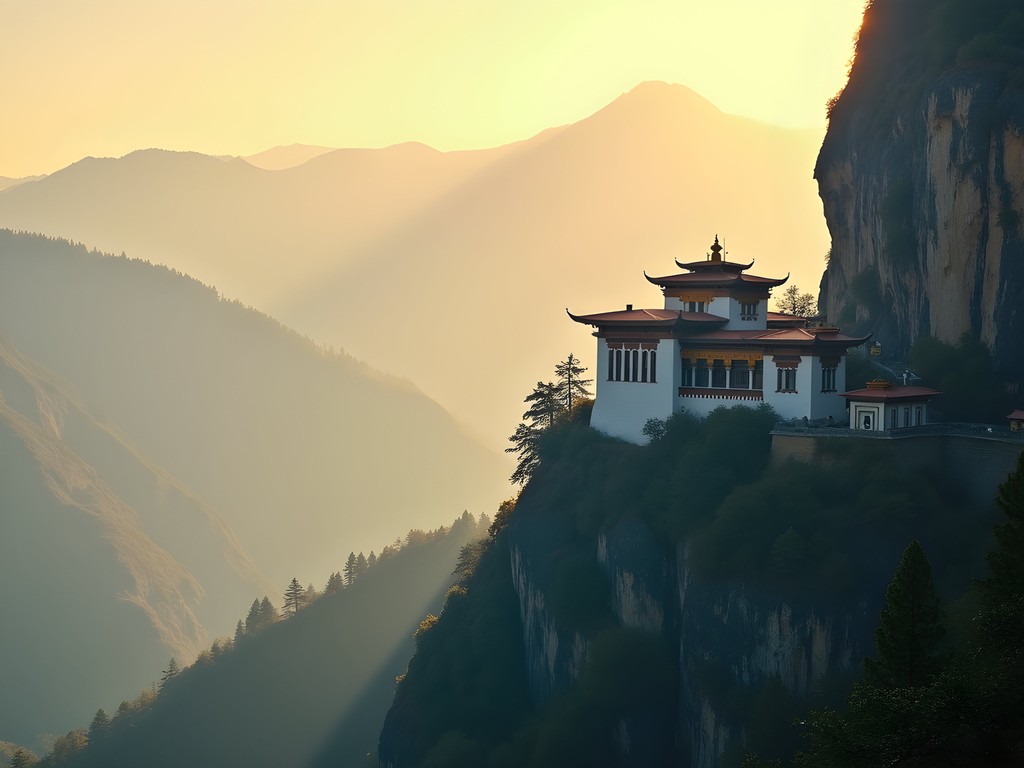
The morning mist clung to the pine-covered mountains like gossamer veils, creating what we in filmmaking call 'atmospheric perspective' – those ethereal layers that give depth to a landscape shot. I stood at the trailhead in Paro Valley, my trusty hiking boots laced tight, gazing upward at the impossible: a monastery seemingly painted onto the vertical cliff face 3,000 feet above. After decades of documenting wildlife across six continents, I've developed a particular appreciation for places where human spirituality and natural grandeur converge. Tiger's Nest – or Paro Taktsang as the locals call it – represents perhaps the most dramatic marriage of these elements I've encountered. This 7th-century sacred site, where Guru Rinpoche is said to have meditated for three years, three months, three weeks, three days and three hours, has been calling to me since I first glimpsed it in a National Geographic spread decades ago. Now, at 60, with my camera gear carefully distributed in my daypack, I was finally answering that call.

Preparing for the Ascent
Before embarking on any adventure, especially one at high altitude, preparation is your best companion. My journey to Tiger's Nest began months before in my Hamburg apartment, researching the physical demands and cultural significance of this sacred pilgrimage.
Bhutan sits at elevation, with Paro at approximately 7,300 feet. The monastery itself perches at 10,240 feet. For those coming from sea level (as I initially did when I left Honolulu years ago), I strongly recommend spending at least two days in Paro before attempting the hike. This acclimatization period is crucial – your body needs time to adjust to the thinner air.
For physical preparation, I incorporated incline training on my treadmill and stair climbing into my routine three months before departure. At 60, I'm fortunate to maintain my fitness through regular hiking in Germany's beautiful forests, but Tiger's Nest demands respect regardless of age.
Equipment-wise, invest in proper hiking boots with ankle support. The trail combines dirt paths, stone steps, and occasionally slippery sections. My hiking poles proved invaluable for maintaining balance and reducing strain on my knees during the descent – a filmmaker's knees bear the scars of decades crouching for the perfect wildlife shot!
Perhaps most importantly, research Bhutanese customs and Buddhist etiquette before visiting. This isn't merely a hike; it's a spiritual pilgrimage to one of Bhutan's most sacred sites. Understanding appropriate behavior shows respect for both the culture and those who practice their faith there.
💡 Pro Tips
- Acclimatize in Paro for 2-3 days before attempting the hike
- Train on stairs and inclines for at least 6 weeks before your trip
- Pack light but bring essentials: water, snacks, rain protection, and sun cover
The Path to Enlightenment: Trail Breakdown
The journey to Tiger's Nest unfolds like a well-crafted three-act narrative, each segment with its distinct character and challenges. The complete round trip covers approximately 4-5 miles with an elevation gain of nearly 3,000 feet.
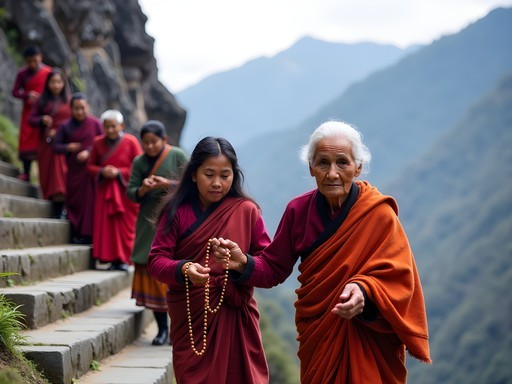
Act One: The Forest Ascent (1-1.5 hours) The trail begins gently enough, winding through blue pine forests scented with mountain herbs. This first section features a wide, dusty path with a consistent uphill grade. About 30 minutes in, the monastery makes its first appearance through the trees – a perfect moment to capture what we call an 'establishing shot' in film. I found myself stopping frequently, not just to catch my breath but to observe the local Bhutanese making the same pilgrimage, many elderly villagers moving with remarkable ease despite the elevation.
Act Two: The Midpoint Plateau (30-45 minutes) Roughly halfway up stands a welcome sight: a charming cafeteria with a panoramic viewpoint. This plateau offers your first unobstructed view of Tiger's Nest, seemingly close enough to touch across the ravine (though you're still an hour from arrival). I savored butter tea here while adjusting settings on my camera, preparing for the dramatic lighting conditions ahead. The prayer wheels and fluttering flags at this rest point make for compelling cultural footage.
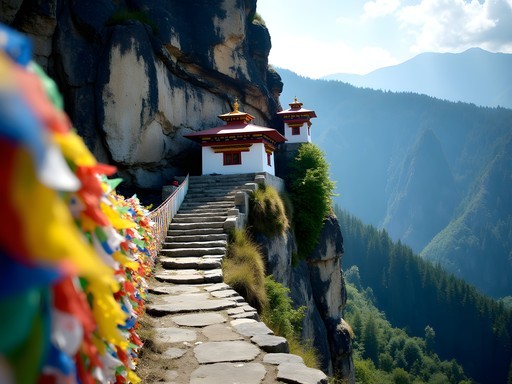
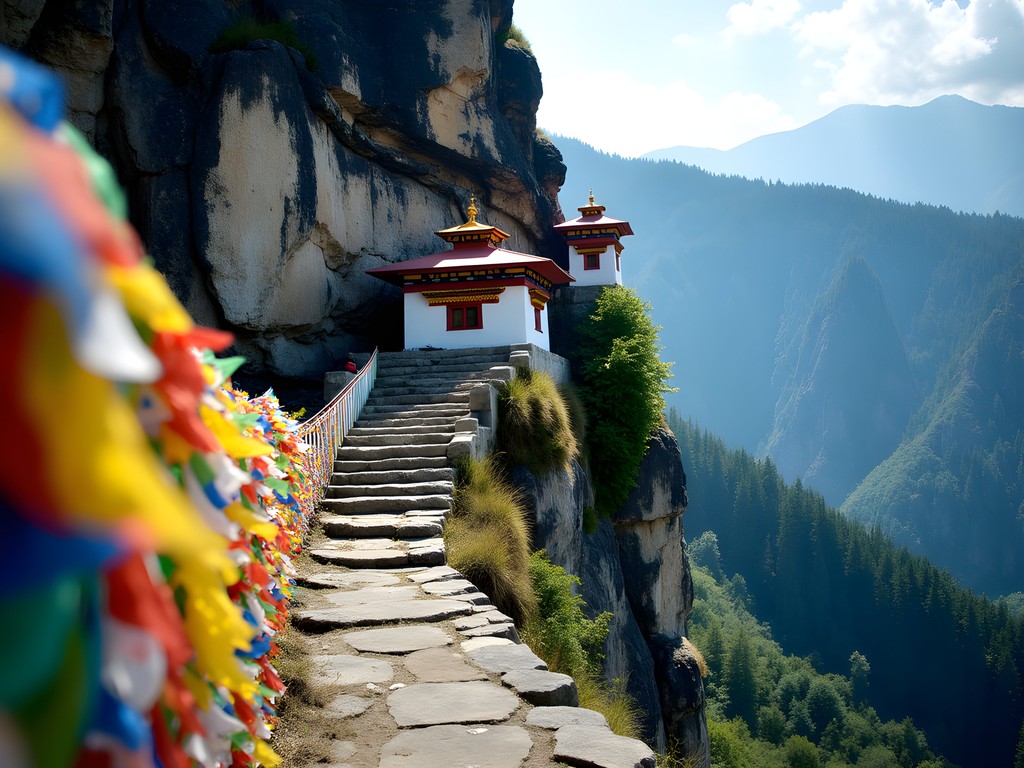
Act Three: The Final Ascent (1-1.5 hours) After the café, the trail becomes more technical. You'll descend slightly before encountering the infamous 700+ stone steps that lead first down to a waterfall and then up to the monastery entrance. These ancient steps, uneven and sometimes slick with spray from the sacred waterfall, demand full attention. The final approach includes a narrow path along the cliff face that might challenge those with severe vertigo, though safety railings are in place.
The entire ascent takes 2-4 hours depending on your pace and acclimatization. I recommend starting early (around 8:00 AM) to avoid both afternoon clouds that often obscure the monastery and the midday heat that can make the climb more taxing.
💡 Pro Tips
- Break the hike into thirds mentally and pace yourself accordingly
- Use the cafeteria stop to adjust layers, as temperature varies significantly with elevation
- Carry small denominations of Bhutanese ngultrum for offerings and the cafeteria
Inside the Sacred Sanctuary
After surrendering your electronics at the entrance (no photography is permitted inside), you enter a realm that has remained largely unchanged for centuries. This policy initially frustrated the filmmaker in me, but I quickly recognized its wisdom – some experiences deserve to be preserved in memory rather than pixels.
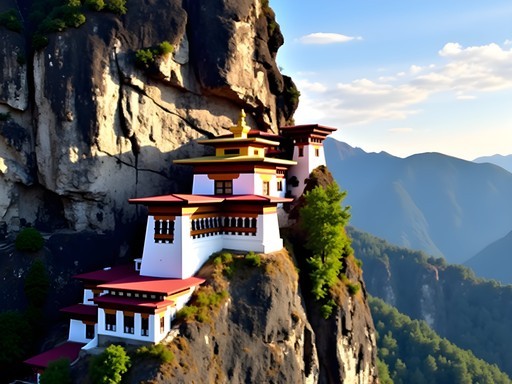
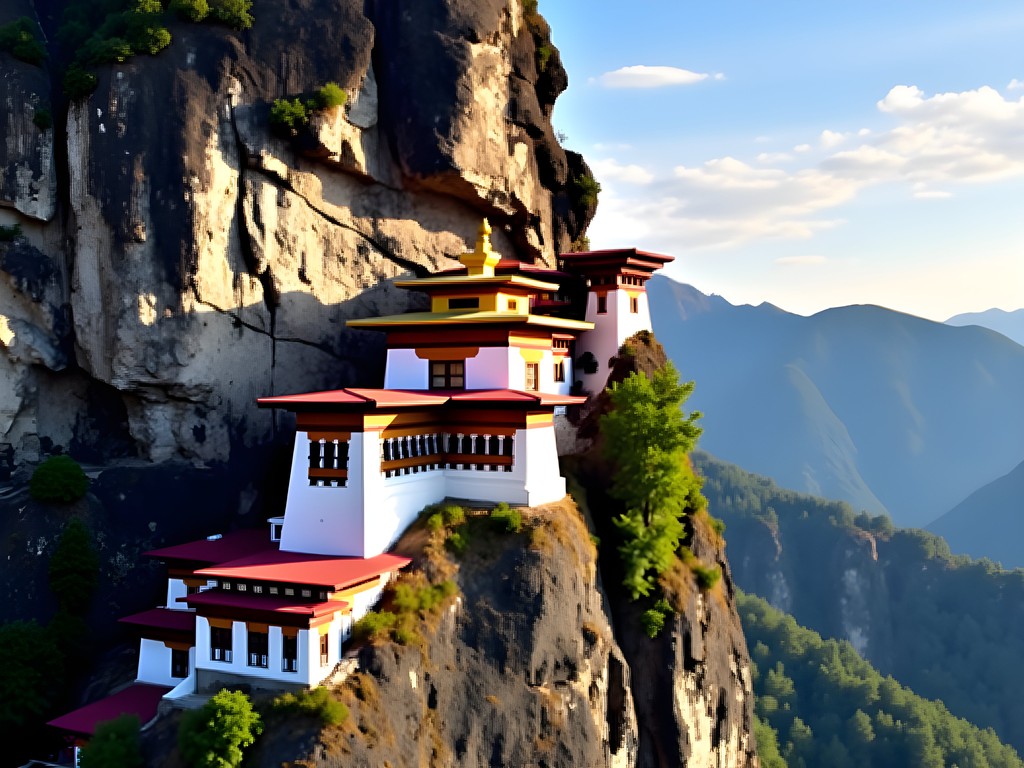
The monastery complex consists of four main temples and residential shelters, each built around the cave where Guru Rinpoche meditated. The architecture itself defies logic – structures seemingly growing from the sheer cliff face, connected by narrow wooden bridges and precipitous stairways.
Inside, butter lamps cast flickering shadows across walls adorned with intricate murals depicting Buddhist deities and teachings. The scent of juniper incense permeates everything. Monks move silently through the chambers, some engaged in prayer, others maintaining the sacred spaces.
What struck me most was the acoustic quality within the temples – the low drone of mantras creates a resonance that seems to vibrate through your very being. As a documentary filmmaker who has spent decades capturing sound in remote locations, I found myself wishing I could record this auditory texture, this sonic landscape that complements the visual drama so perfectly.
Visitors are welcome to sit in meditation in designated areas. I found a quiet corner in the main temple where I spent nearly an hour absorbing the atmosphere, watching the interplay of light through small windows illuminating centuries-old paintings with dramatic chiaroscuro effect.
The monks are generally open to questions if approached respectfully. A young monk named Tenzin explained the significance of the tiger in the monastery's mythology – how Guru Rinpoche rode a tigress (a manifestation of his consort) to this seemingly inaccessible location. These personal interactions often provide the emotional core that elevates a mere visit to a meaningful cultural exchange.
💡 Pro Tips
- Wear socks as you'll remove shoes before entering temples
- Learn basic Dzongkha phrases to greet monks respectfully
- Bring a small journal to record thoughts and observations since photography isn't allowed inside

Capturing the Perfect Shot
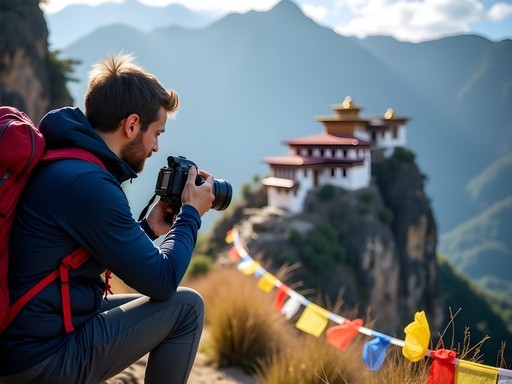
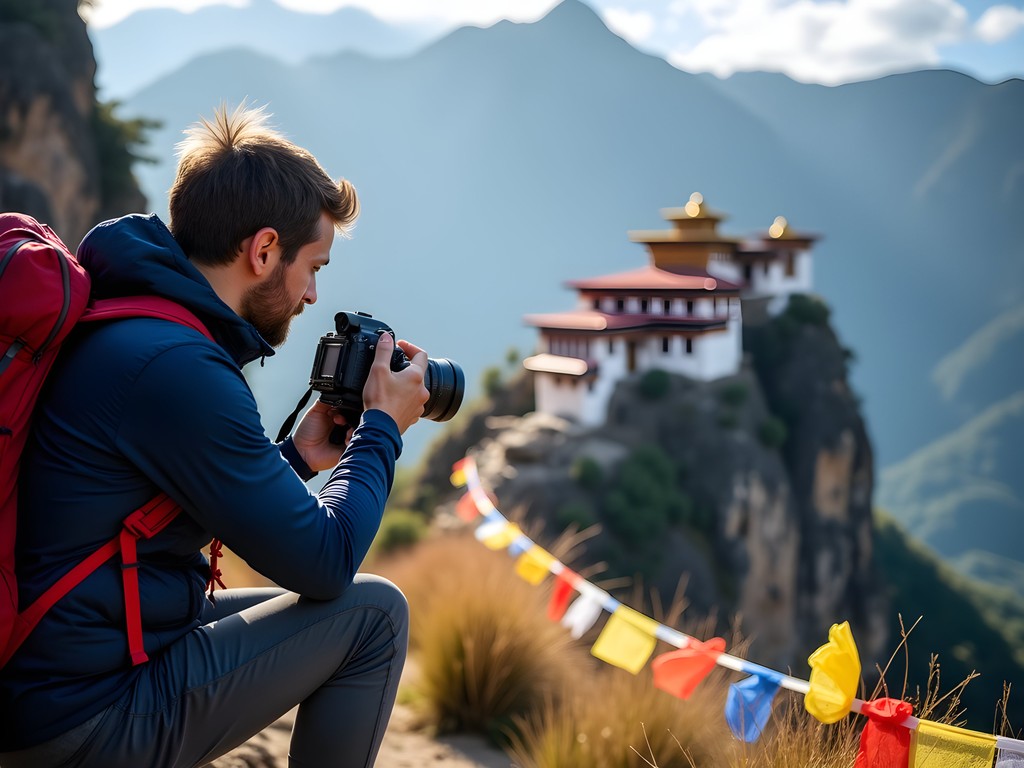
While interior photography is prohibited, the exterior of Tiger's Nest offers endless compositional possibilities for photographers and filmmakers. As someone who's spent decades behind the camera for National Geographic and BBC, I'd like to share some technical insights for those looking to capture this architectural marvel.
The classic shot – the monastery suspended on the cliff face – is best captured from the cafeteria viewpoint. However, this popular perspective often appears in postcards and travel brochures. For something more unique, consider these alternative vantage points:
Early Morning Atmospheric Play
Arrive at the first viewpoint about 30 minutes after sunrise. The morning mist creates dramatic layers in the valley below while the first light kisses the monastery's white walls. Use a telephoto lens to compress the scene and emphasize the monastery against the cliff face. A polarizing filter helps manage glare and enhances the blue sky.
The Waterfall Perspective
Near the final approach, a small bridge crosses beside a sacred waterfall. From here, you can frame the monastery through prayer flags with water elements in the foreground – symbolizing purification before reaching the sacred site. This location works best mid-morning when light reaches into the ravine.
Scale and Humanity
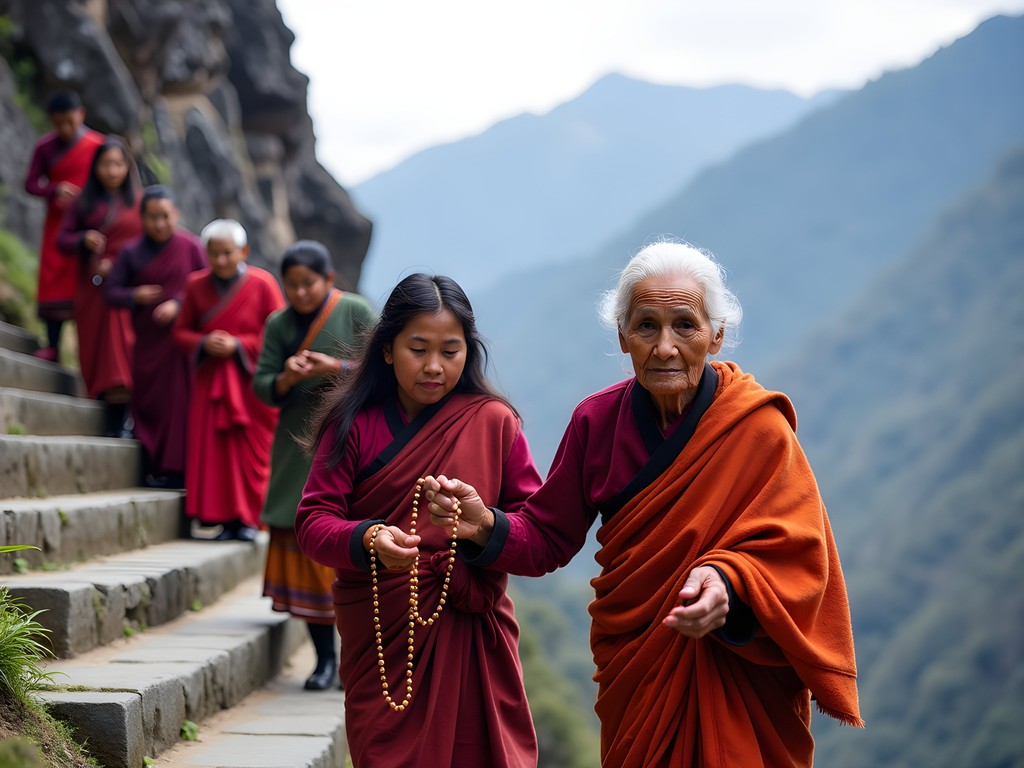
Incorporate pilgrims on the path for scale and human interest. The juxtaposition of tiny human figures against the massive monastery tells the story of devotion and pilgrimage more effectively than architecture alone.
Technical Considerations
The extreme contrast between bright sky and shadowed cliff faces challenges even professional equipment. I recommend bracketing exposures for later HDR processing or using graduated ND filters. My carbon fiber tripod proved invaluable for low-light situations and precise compositions, despite adding weight to my pack.
Most importantly, remember that the best images emerge when you balance technical precision with emotional response. Allow yourself time to simply experience the place before attempting to capture it.
💡 Pro Tips
- Scout compositions during your ascent to execute efficiently on the descent when lighting may be different
- Bring a lightweight microfiber cloth to manage condensation on lenses when moving between temperature zones
- Consider a lens with image stabilization as tripods aren't permitted in some viewing areas
Cultural Etiquette and Spiritual Significance
Approaching Tiger's Nest merely as a photogenic hiking destination misses the profound cultural and spiritual dimensions that make this place truly extraordinary. Throughout my career documenting indigenous cultures, I've learned that respectful engagement enhances not only your experience but preserves these traditions for future generations.
Tiger's Nest (Paro Taktsang) ranks among Bhutan's most sacred sites, associated with Guru Rinpoche who introduced Buddhism to Bhutan in the 8th century. The mythology tells us he meditated in a cave here after arriving on the back of a flying tigress. This isn't merely folklore to Bhutanese people – it's living spiritual history.
During my visit, I observed local pilgrims circumambulating sacred structures, always clockwise, while softly chanting mantras. Some carried infants, others supported elderly parents – a multi-generational demonstration of devotion that transcends tourism.
Essential Etiquette:
-
Dress modestly – shoulders and knees covered for all genders. I found my lightweight hiking pants perfect for balancing respect with comfort during the ascent.
-
Remove hats and shoes before entering temples. Bring slip-on footwear to simplify this process.
-
Speak softly inside the monastery complex.
-
Ask permission before photographing monks or worshippers (though again, no photography inside temples).
-
Never touch or climb on religious structures, including stupas and prayer wheels.
-
If participating in rituals like lighting butter lamps, follow the lead of local practitioners or guides.
Perhaps most importantly, approach with genuine curiosity rather than treating the monastery as a backdrop for social media. The monks who maintain Tiger's Nest are not performers in cultural theater but practitioners of living traditions. The questions you ask and observations you make should reflect genuine interest in understanding their spiritual practice.
💡 Pro Tips
- Learn basic Buddhist terms and concepts before visiting to appreciate the symbolism you'll encounter
- Consider bringing a small, appropriate offering (consult your guide about what's suitable)
- Allocate time for quiet contemplation – the site's spiritual energy is palpable even to non-Buddhists
Final Thoughts
As I made my final descent from Tiger's Nest, legs weary but spirit soaring, I found myself mentally editing the footage I'd captured – not just with my camera, but with all my senses. The journey had delivered everything I seek in travel: physical challenge, cultural immersion, and moments of transcendent beauty. This sacred site, defying architectural logic as it clings to the cliff face, serves as a perfect metaphor for Bhutan itself – a nation balancing precariously yet gracefully between ancient traditions and modern pressures. Whether you approach Tiger's Nest as a spiritual pilgrim, an adventure seeker, or a visual storyteller, the experience will undoubtedly become one of those defining travel moments that reshapes your perspective. As we say in filmmaking, it's not just about capturing the perfect shot, but about finding the perfect story. And here, 3,000 feet above the Paro Valley, your own story awaits.
✨ Key Takeaways
- Physical preparation is essential – train specifically for elevation and inclines
- The journey is as significant as the destination – pace yourself and absorb the experience
- Approach with cultural sensitivity and genuine curiosity about Buddhist traditions
📋 Practical Information
Best Time to Visit
March-May (spring) or September-November (fall)
Budget Estimate
$200-300 USD (including mandatory guide, transportation, and permits)
Recommended Duration
Full day (6-8 hours round trip)
Difficulty Level
Moderate To Challenging Due To Elevation And Steep Sections

Comments
sunnyseeker
Those photos are stunning!
Fatima Sims
Beautiful post, Nicole! Your filmmaker's eye really shines through in how you described the landscape layers. I did this trek in monsoon season (not recommended btw!) and it was slippery as anything, but the clouds rolling through the valley created this otherworldly feeling. One thing I wish I'd known - bring a small portable charger because my phone died right before the monastery and I missed some shots inside. The monks were so welcoming and the butter lamp ceremony was deeply moving. Did you get to witness any of the prayer rituals while you were there?
waveking
good tip about the charger!
dreamone
This is literally on my bucket list!!! Your photos are making me want to book flights right now. The way you described the spiritual atmosphere gave me chills!
explorerider
How's the fitness level needed? I'm reasonably fit but not a hardcore hiker. Is it doable?
Fatima Sims
It's challenging but totally manageable! Take your time, there are rest stops along the way. The altitude is more of a factor than the actual climb. I saw people of all ages and fitness levels making it up. Just pace yourself and bring lots of water!
explorerider
thanks! that's reassuring
Kimberly Murphy
Nicole, absolutely brilliant guide! I did this hike last year and your description of that final push to the monastery is spot on. The atmospheric mist you captured is EXACTLY what made my experience so magical. One tip I'd add - start EARLY, like 6am early. We had the trail nearly to ourselves for the first hour and the lighting was phenomenal. Also loved your photography tips - that golden hour shot from the viewpoint halfway up is chef's kiss! Did you stay in Paro town before the hike?
sunnyseeker
6am start sounds brutal but worth it!
waveking
wow this looks incredible!
roamstar
Just got back from Bhutan last month and Tiger's Nest was definitely the highlight! One thing I wish I'd known - there are actually mules/horses available for the first part of the climb (up to the cafeteria) for anyone with mobility issues or who's worried about the ascent. I hiked the whole way, but saw many people using this option. The monastery complex is much larger than I expected with multiple temples inside. Make sure to ask your guide to explain the significance of each one - the stories are fascinating!
journeyvibes
That's good to know about the mules! My mom wants to come with me but was worried about the hike. How long did the entire experience take you?
roamstar
We spent about 6 hours total - roughly 2 hours up, 2 hours exploring the monastery complex, and 1.5 hours down, plus breaks. It's definitely doable with the mule assistance for the first section!
Megan Martin
Nicole, excellent guide that balances both practical information and the spiritual essence of the journey. As someone who's led small tour groups to Bhutan, I'd emphasize the importance of respecting local customs at Tiger's Nest. Visitors should remember to remove shoes, hats, and sunglasses before entering the temples, and photography is prohibited inside most sacred areas. Also worth noting that while the cafeteria at the halfway point serves decent food, packing some energy-dense snacks is advisable. The permit fees for Bhutan have changed recently, so potential visitors might want to check the latest requirements before planning their trip.
wavephotographer
Your photography tips are gold! I'm an amateur photographer and I'm curious - what time of day did you take that stunning shot with the monastery emerging from the mist? The lighting is perfect!
Nicole Henderson
Thank you! That particular shot was taken around 9:30am when the morning mist was still lingering but the sun was high enough to create that dramatic lighting. I used my mirrorless camera with a polarizing filter to cut through some of the haze while preserving the atmospheric layers.
vacationseeker7555
Great post! How difficult would you say the hike is for someone with moderate fitness? And is October a good time to visit?
Nicole Henderson
With moderate fitness, you'll be fine if you pace yourself! The trail is steep but well-maintained. October is actually perfect - clear skies, comfortable temperatures, and less rain. Just bring layers as mornings can be chilly.
vacationseeker7555
Thanks Nicole! That's really helpful. Would you recommend hiring a guide or is the trail easy to follow on your own?
Nicole Henderson
You'll need a guide in Bhutan regardless - it's part of their tourism policy. The good news is they're incredibly knowledgeable and enhance the experience tremendously!
Venture X
Premium card with 2X miles, $300 travel credit, Priority Pass