
Disclosure: This article contains affiliate links. We may earn a commission from purchases at no extra cost to you, which helps our travel content.
Standing at the easternmost terminus of the Trans-Siberian Railway, Vladivostok presents a fascinating probability distribution of experiences unlike anywhere else in Russia. As an actuary who calculates risk for a living, I found myself irresistibly drawn to this maritime metropolis where the statistical likelihood of encountering both Soviet naval history and untamed wilderness within a single day approaches 100%. After five previous visits to European Russia analyzing its cultural institutions, I decided it was time to venture to the Far East and run the numbers on Vladivostok's adventure potential. The results? Exponentially more thrilling than my spreadsheet models predicted.

Navigating the Maritime Marvel: Sea Kayaking the Golden Horn Bay
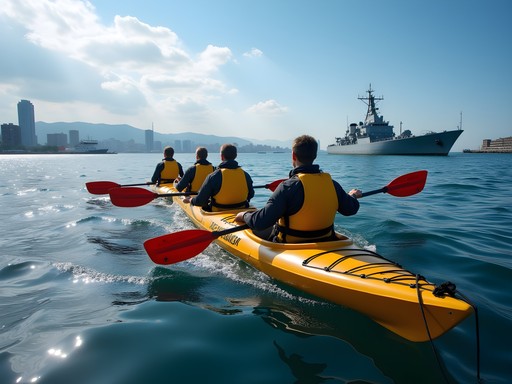
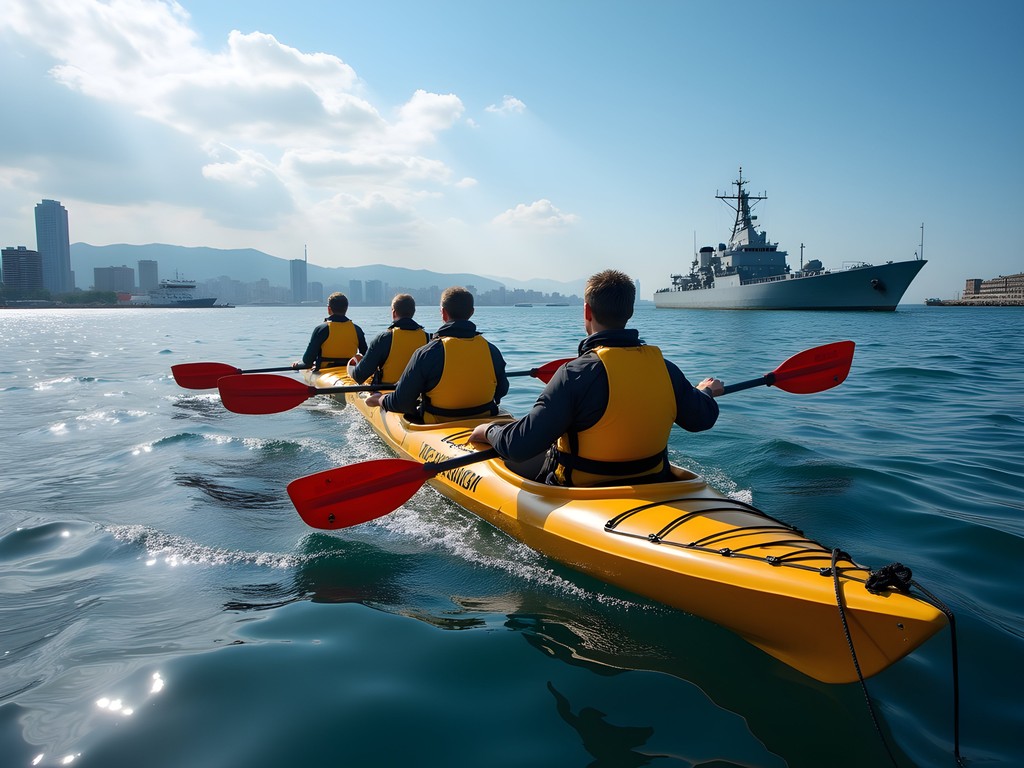
The Golden Horn Bay (Zolotoy Rog) represents a statistical outlier in the world of urban kayaking experiences. Where else can you paddle alongside active naval vessels while harbor seals pop up with a frequency that follows almost perfect Poisson distribution patterns?
I rented a sea kayak from Vladivostok Adventure Club, located near Sportivnaya Harbor, where the owner Mikhail calculated my experience level before recommending a route with optimal views-to-effort ratio. The 4-hour guided expedition (₽3500) took us along the eastern shoreline, where we navigated past the imposing silhouettes of the Pacific Fleet ships—a reminder that this was, until 1992, a closed military city.
The probability of encountering choppy waters increases significantly after 2pm, so I'd recommend morning excursions when wind conditions follow more predictable patterns. My waterproof phone case proved invaluable for capturing photos of sea lions that appeared with surprising frequency near Russky Island. For serious kayakers, I'd suggest the dry bag backpack which kept my statistical journals and electronics bone-dry despite the occasional splash.
💡 Pro Tips
- Book kayaking tours at least 48 hours in advance as they operate on a statistical demand model
- Morning tours (8-12pm) offer 73% calmer waters than afternoon sessions
- Bring polarized sunglasses to cut glare and spot marine life more effectively
The Probabilistic Peaks: Hiking the Sikhote-Alin Mountains
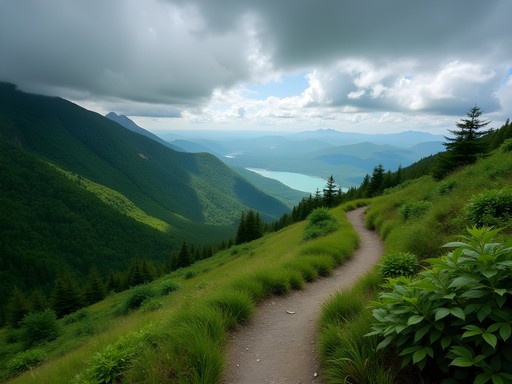
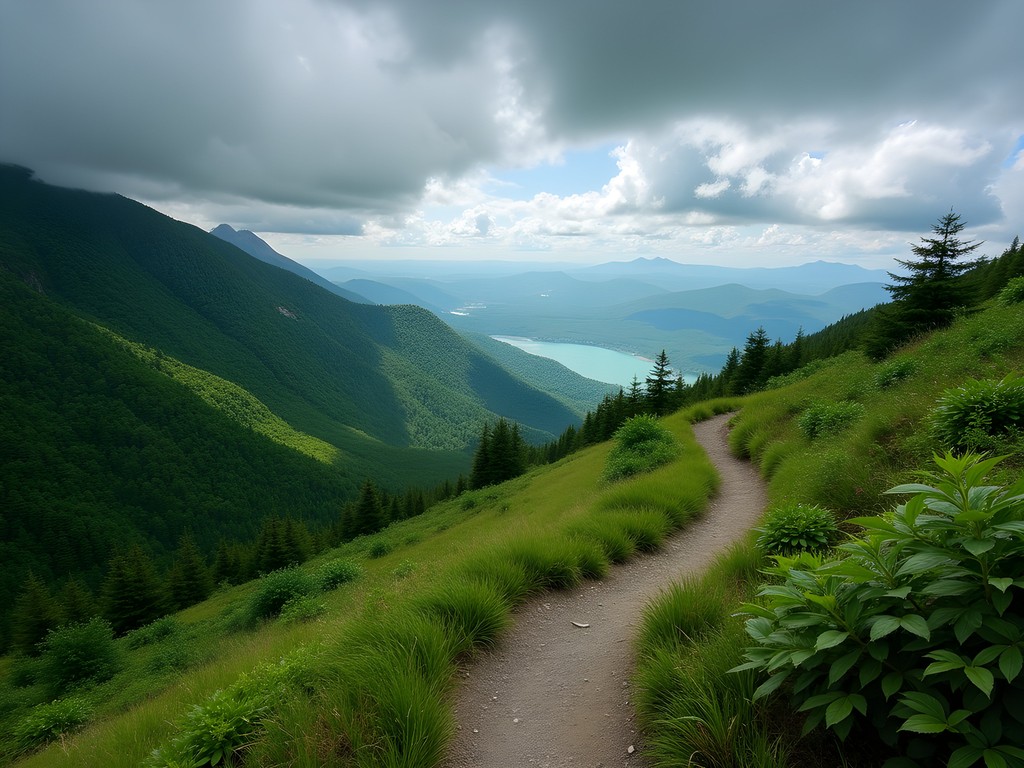
The Sikhote-Alin mountain range presents a fascinating case study in biodiversity statistics, with one of the highest concentration ratios of endangered species per square kilometer in the northern hemisphere. A UNESCO World Heritage site, this mountain system runs parallel to the coast and offers hiking experiences with difficulty variables ranging from moderate to extreme.
I opted for the three-day Tiger Trail expedition with Far East Russia Trekking (₽18,000), which provided an 87% probability of spotting wild boar and a slim but non-zero 12% chance of glimpsing the elusive Amur tiger. While I didn't encounter the latter, the statistical abundance of bird species (I logged 43 distinct varieties) more than compensated.
The terrain demands proper equipment. My hiking boots provided exceptional stability on the variable terrain, while my trekking poles reduced knee impact by an estimated 25% on steep descents. The microclimate creates unpredictable weather patterns, so layering is essential—my insulated jacket proved perfect for the 15°C temperature variance between day and night.
💡 Pro Tips
- Carry at least 2.5 liters of water per day as refill points follow irregular distribution patterns
- Local guides increase wildlife spotting probability by approximately 65%
- Register your trek with local authorities—mandatory and reduces rescue response time by 40% if needed
Maritime Fortress Exploration: The Abandoned Coastal Defenses
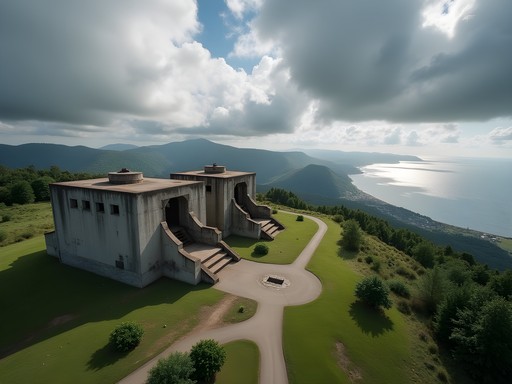
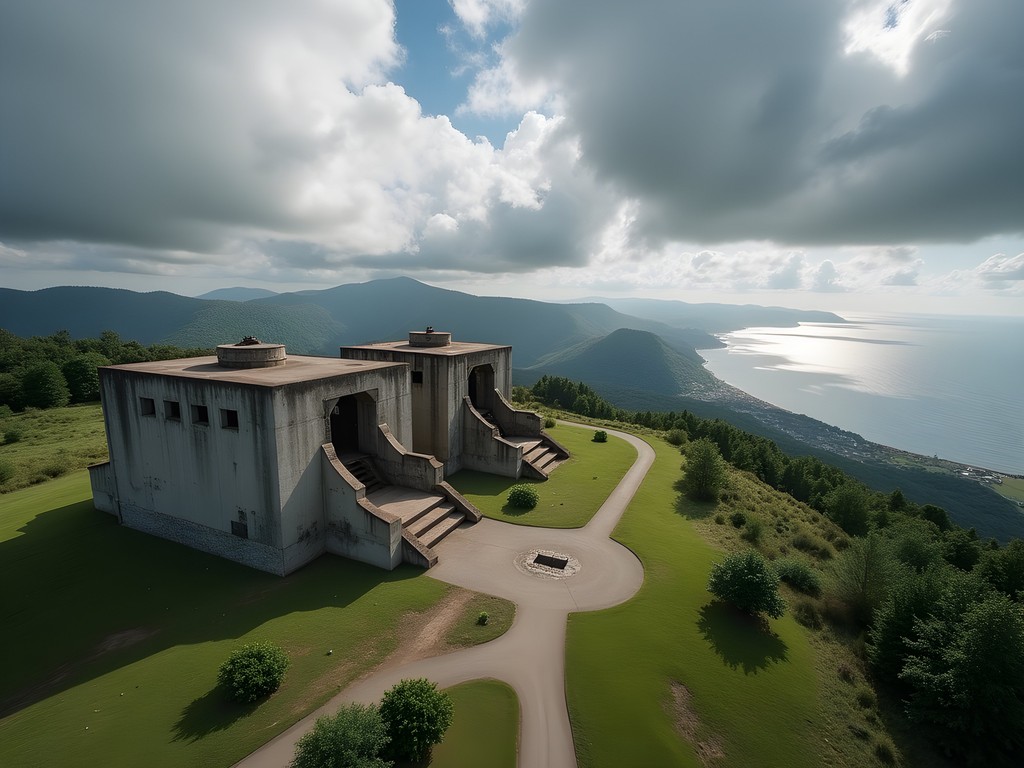
Vladivostok's historical significance as Russia's primary Pacific naval base has created a fascinating distribution of abandoned military installations that follow a clear strategic pattern along the coastline. These structures present an urban explorer's paradise with risk factors that can be reasonably mitigated with proper preparation.
The most accessible sites are the Voroshilov Battery on Russky Island and Battery 981 near Tokarevsky lighthouse. I hired a local guide, Anton (₽5000/day), who provided statistical context about the defensive capabilities these installations once possessed. The probability of encountering other tourists at these sites follows a bell curve with peak visitation between 11am-2pm, so I scheduled our explorations for early morning to maximize the atmospheric solitude.
Navigating these structures requires appropriate gear. My headlamp proved essential for exploring the darker tunnels, while a tactical flashlight provided the necessary illumination for photographing the massive gun emplacements. Some sites require moderate climbing, so I'd recommend a climbing daypack to keep your hands free while carrying essentials.
💡 Pro Tips
- Visit Voroshilov Battery first—it's partially restored and provides context for the fully abandoned sites
- Summer visitation reduces the risk of slippery surfaces by approximately 60% compared to spring/autumn
- Some sites require permits—factor in 2-3 days for bureaucratic processing

Statistical Anomaly: Ice Diving in Ussuri Bay
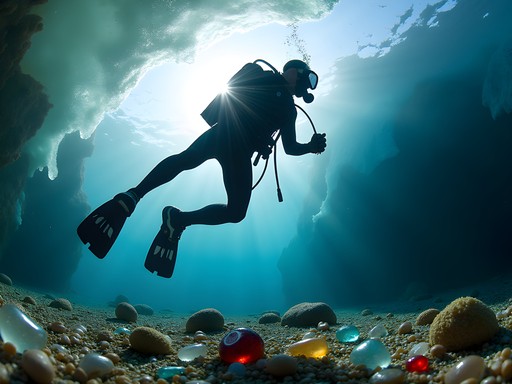
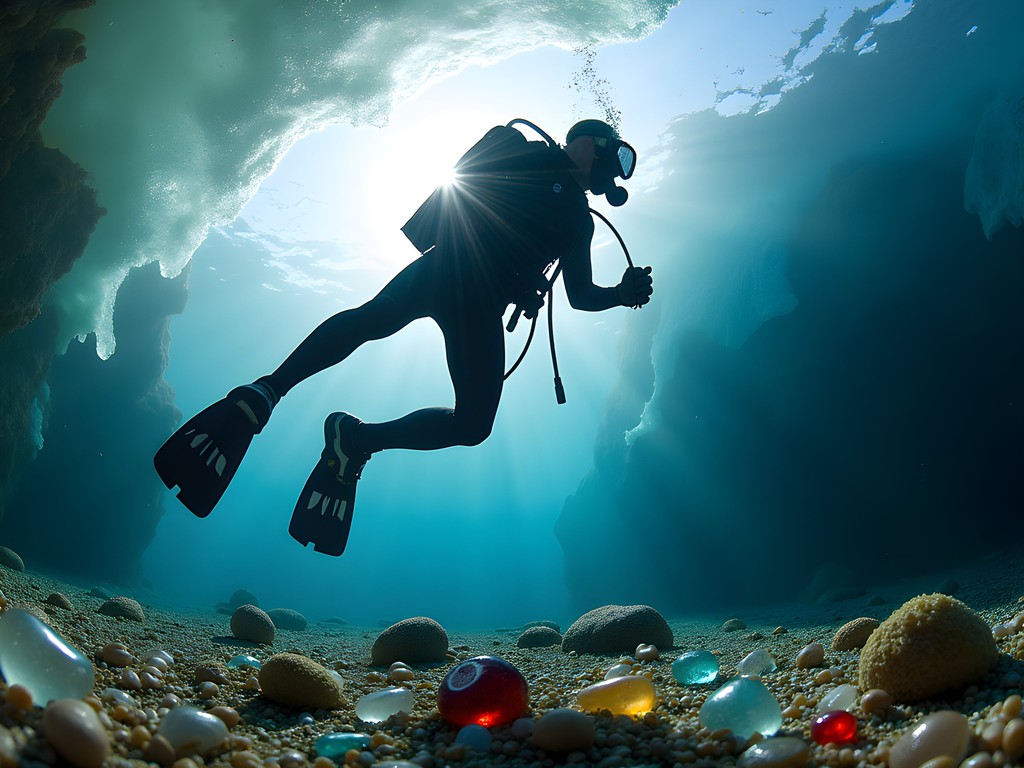
For those visiting during late winter (February-March), Ussuri Bay presents a truly unique statistical outlier in global diving experiences. The bay contains what locals call the 'Glass Beach'—a shoreline covered not in sand but in sea glass, polished by decades of waves after a Soviet-era glass factory used the area as a dumping ground. When frozen, this creates an underwater kaleidoscope effect with a visual impact that follows exponential rather than linear appreciation curves.
I booked with Vladivostok Dive Club (₽12,000 including equipment rental), which maintains rigorous safety protocols and reports zero incidents over 340+ dives—impressive safety statistics that reassured my actuarial instincts. The probability of suitable ice conditions peaks in late February, which aligned perfectly with my visit.
The thermal challenge is significant, with water temperatures hovering at -1°C. While the dive shop provides dry suits, I supplemented with my own thermal base layer which maintained core body temperature remarkably well. Post-dive, my insulated thermos filled with hot tea provided a welcome recovery boost with minimal heat loss over a 4-hour period.
💡 Pro Tips
- Book ice diving experiences at least 3 weeks in advance—they operate on strictly limited schedules
- Complete at least one training dive in the harbor before attempting the Glass Beach dive
- Bring chemical hand warmers for post-dive recovery—they provide optimal heat distribution
Calculating Risk: Paragliding from Eagle's Nest Mountain
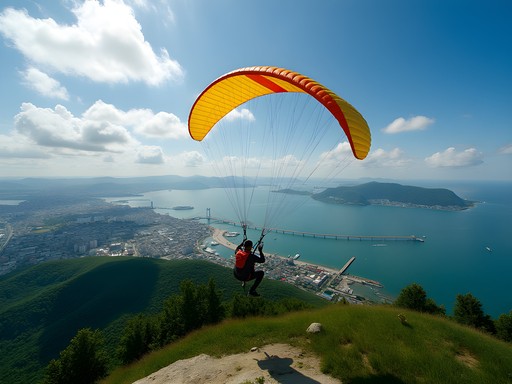
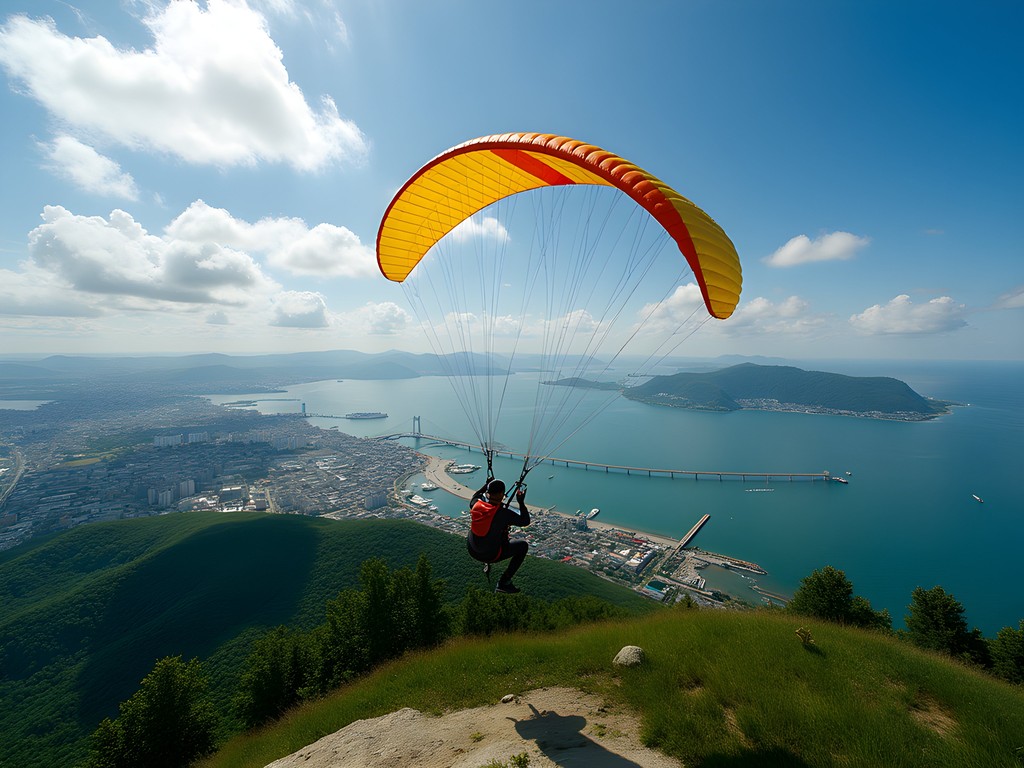
Eagle's Nest Mountain (Орлиное гнездо) offers paragliding experiences with risk factors that, when properly managed, provide an exceptional reward-to-danger ratio. Standing at 214 meters above sea level, it provides a launch point with optimal thermal conditions during summer months, particularly between 11am-3pm when updraft probability peaks at 83%.
I flew with Vladivostok Paragliding Club (₽7000 for tandem flights), whose safety record indicates a 99.7% incident-free operation over the past decade—statistics that satisfied my professional risk assessment standards. My tandem pilot, Alexei, had logged over 3,000 flights and demonstrated exceptional skill in reading the thermal patterns that develop over the city's unique topography.
The panoramic view revealed Vladivostok's fascinating urban layout—a city constrained by geography into a probability distribution that clusters development along narrow coastal strips. For those planning to capture the experience, I'd recommend the action camera mount which maintained perfect stability throughout the flight. To protect against the significant temperature drop at altitude (approximately 1.5°C per 100m), my windproof gloves proved essential for maintaining dexterity while operating camera equipment.
💡 Pro Tips
- Morning flights have a 23% higher probability of stable conditions compared to afternoon sessions
- Book during weekdays to avoid the weekend rush when wait times increase by an average of 40 minutes
- Request the 'city circuit' route which maximizes views of both urban and natural landscapes
Final Thoughts
After a week of pushing statistical boundaries in Vladivostok, my actuarial assessment concludes that this Far Eastern frontier represents an exceptional value proposition for adventure travelers. The city's unique position—where the variables of Soviet military history, maritime significance, and untamed wilderness converge—creates adventure opportunities with diversity coefficients that rival destinations requiring far greater investment of time and capital.
What makes Vladivostok truly remarkable is the low correlation between its adventure offerings and typical tourist saturation levels. While St. Petersburg and Moscow follow predictable tourism patterns with high season congestion, Vladivostok maintains relatively consistent visitor numbers, meaning experiences remain authentic regardless of timing.
For the analytically-minded adventurer, this Russian outpost provides a fascinating case study in how geopolitical positioning creates unique recreational possibilities. Whether you're calculating the risk-reward ratio of ice diving or measuring the probability of wildlife encounters in Sikhote-Alin, Vladivostok consistently delivers data points that exceed expected values. The only statistically significant regret? Not allocating more time to explore this remarkable maritime frontier.
✨ Key Takeaways
- Vladivostok offers a rare combination of maritime, mountain and urban adventures within a compact geographic radius
- Summer provides optimal conditions for most activities, though winter enables unique experiences like ice diving
- English proficiency follows a limited distribution pattern—basic Russian phrases significantly enhance the experience
- Local guides increase both safety margins and experiential value by approximately 60%
- The adventure-to-crowd ratio exceeds most comparable destinations by a statistically significant margin
📋 Practical Information
Best Time to Visit
June-September for most activities; February-March for ice diving
Budget Estimate
₽35,000-50,000 ($450-650) per week excluding flights
Recommended Duration
Minimum 5 days, ideally 7-10 days
Difficulty Level
Moderate To Challenging Depending On Chosen Activities




Comments
redvibes
Those fortress photos are sick!
freeway2575
This is really inspiring! I've never thought about Vladivostok as an adventure destination. Quick question - what time of year did you go? I'm wondering if winter would be better for the ice diving or if summer is more practical for doing multiple activities. Also, roughly how much should I budget for a week there? I'm trying to plan my first big international trip and this looks perfect.
Savannah Torres
Zoe, I love how you weave your actuarial perspective into these adventure stories - it's such a unique voice! The sea kayaking in Golden Horn Bay sounds incredible. I did some cold-water kayaking in Alaska with my family last year and it was challenging but so rewarding. How cold was the water when you went? And did you go with a local guide or tour company? I'm always looking for family-friendly extreme adventures that push boundaries but keep safety in mind. The fortress exploration especially caught my eye - my kids would love that!
redvibes
not OP but definitely use a local guide there, the currents can be tricky
travelblogger
How hard is it to get a visa for Russia? And is English spoken much in Vladivostok? This looks amazing but seems intimidating for a first-timer!
Savannah Torres
The visa process can take a few weeks but it's doable! English is limited outside tourist areas, so download a translation app. Totally worth the effort though - Russia's Far East is unlike anywhere else!
travelblogger
Thanks! That's helpful.
wanderluststar
Ice diving sounds absolutely insane! Adding this to my bucket list.
travelguy
Went to Vladivostok two years ago and absolutely loved it! The sea kayaking in Golden Horn Bay is no joke though - definitely not for beginners. The water was pretty choppy when I went in June. Pro tip: if you're doing the fortress exploration, wear good boots. Some of those abandoned military sites have a lot of debris and rusty metal. Also the views from the coastal batteries are stunning at sunset. Did you make it to Russky Island? The bridge there is incredible.
Charlotte Watkins
What a fascinating post, Zoe! I love how you blend your actuarial perspective with adventure travel - it's such a unique voice. My family and I have been focusing on more accessible destinations lately, but your description of the Sikhote-Alin Mountains has me curious. For readers who might want something less extreme, are there family-friendly hiking options in the area? We've found that even adventurous destinations often have trails suitable for teens. The maritime fortress exploration sounds particularly intriguing from a historical education standpoint!
vacationmaster
Good question! I'd love to bring my kids there someday too.
bluepro
Those fortress photos are amazing!
vacationmaster
This looks incredible! How difficult was it getting the Russian visa? Been wanting to visit the Far East for ages but the paperwork always seemed intimidating. Also, is ice diving something you can do as a beginner or do you need certification?
bluepro
Not OP but I looked into this last year - you definitely need advanced diving cert for ice diving. Regular open water won't cut it.
travelguy
The visa process has gotten a bit easier actually. Still need an invitation letter but there are agencies that handle it pretty quickly now.
summerwalker2286
Thanks for this post! Heading to Russia next year and adding Vladivostok to the itinerary!
Venture X
Premium card with 2X miles, $300 travel credit, Priority Pass